
By Gary Bennett
Last Updated: 12-6-25
The Truth About Dog Years: It’s Not 7-to-1 Anymore
For decades, we’ve heard that one dog year equals seven human years — but that’s an oversimplification.
Modern veterinary science shows that dogs age at different rates depending on breed, size, and genetics. A small-breed dog might still act like a puppy at 6, while a large-breed dog could already be entering its senior years.
According to the American Veterinary Medical Association (AVMA), most dogs reach adulthood by age 2 — meaning their first year of life equals roughly 15 human years, and the second adds about 9 more. After that, each additional year adds about 4–5 human years, depending on the dog’s size.
Read: Senior Dog Life Expectancy
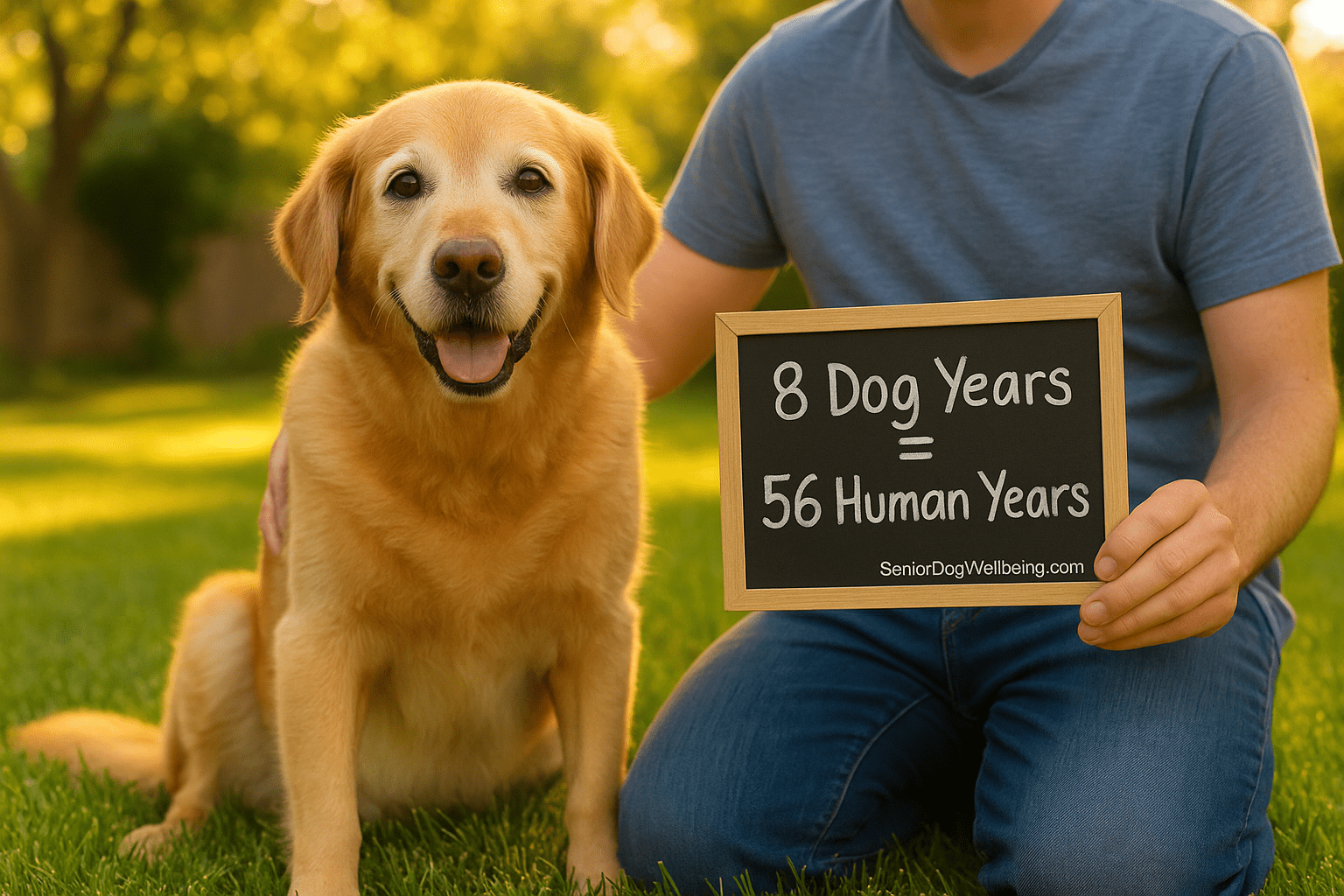
How Old Is Your Dog in Human Years?
Understanding your senior dog’s real age can be confusing—especially because different breeds and sizes age at dramatically different speeds. At SeniorDogWellbeing.com, we use research-backed canine aging data and real-world senior dog caregiving experience to help you interpret your dog’s true life stage.
This calculator gives you a more accurate human-years estimate than the outdated “multiply by 7” rule, using size-based aging curves supported by veterinary research.
🐶 Dog Age in Human Years Calculator (By Size)
Dog Age in Human Years Calculator
Convert your dog’s age to human years using size-adjusted science (not the 7:1 myth). Add your dog’s years and months, choose a size, then calculate.
Calculator
FAQ
Is the 7-to-1 dog years rule accurate?
No. Dogs age quickly in the first two years, then the rate depends on size. Our model reflects that pattern.
What life stage is my dog in?
Puppy: 0–1 yr · Adult: ~1–6 yrs · Senior: ~7+ (earlier for large/giant breeds).
How This Calculator Works (The Science Behind It)
Veterinary aging research has shown that dogs do not age at a constant or universal rate. Instead, lifespan varies heavily by size:
- Small breeds age more slowly and tend to live the longest
- Medium breeds follow a moderate aging curve
- Large & giant breeds age much faster, especially early in life
To calculate your dog’s true human-age equivalent, this tool uses:
- Breed-size categories
- Senior dog life expectancy data
- Median lifespan ranges from veterinary sources
- Updated canine aging curves
- Principles of canine gerontology (the science of aging)
By combining these, your dog’s “human-age equivalent” becomes far more realistic and useful for health planning.
As dogs age, their calorie needs change. Use our dog food calculator to adjust overfeeding as dogs age, and adjust the amounts as your dog moves into senior years.
As dogs get older, calorie needs drop, making overfeeding as dogs age a common but often overlooked issue.
Why This Matters for Senior Dogs
Understanding your dog’s human-age equivalent is especially important once they enter their senior years. Knowing this helps you:
✔ Adjust nutrition
Senior dogs often need different calorie levels, protein profiles, or joint-support ingredients.
See: Senior Dog Nutrition Guide
✔ Modify exercise
Older dogs often benefit from shorter, more frequent walks, mobility support, and low-impact activities.
✔ Recognize age-related changes
A 10-year-old small breed ≠ a 10-year-old large breed. Their health risks and care needs differ significantly.
Learn more: Senior Dog Health Guide
✔ Know when to increase vet visits
Senior dogs typically need exams every 6–12 months, depending on age and breed size.
✔ Predict aging-related conditions
Dogs age differently across cognitive, mobility, metabolic, and organ systems.
Helpful: When is a Dog Considered a Senior
This calculator makes it easier to understand where your dog is on the aging curve—and what support they may need next.
Dog Age Charts by Size (For Reference)
Even without the calculator, here are typical senior-stage transitions:
| Dog Size | Senior Age | Typical Lifespan | Notes |
|---|---|---|---|
| Small Breeds | 9–11 years | 12–16+ years | Slowest aging; longest lifespan |
| Medium Breeds | 8–10 years | 10–14 years | Moderate aging rate |
| Large Breeds | 7–9 years | 8–12 years | Faster aging; earlier senior stage |
| Giant Breeds | 6–7 years | 7–10 years | Fastest aging curve |
For longevity insights, see:
👉 Senior Dog Lifespan Guide
How to Use This Calculator Effectively
To get the most accurate human-age estimate:
- Select your dog’s age
- Select your dog’s size category
- Use the human-age result to guide:
- Exercise adjustments
- Food transitions
- Senior wellness checkups
- Mobility support
- Enrichment and cognitive games
If you’re noticing changes in mobility, appetite, or energy levels, read:
👉 Early Signs of Pain in Senior Dogs
🐶 The Dog-to-Human Age Chart (By Size)
Here’s a general guide to convert your dog’s age to human years:
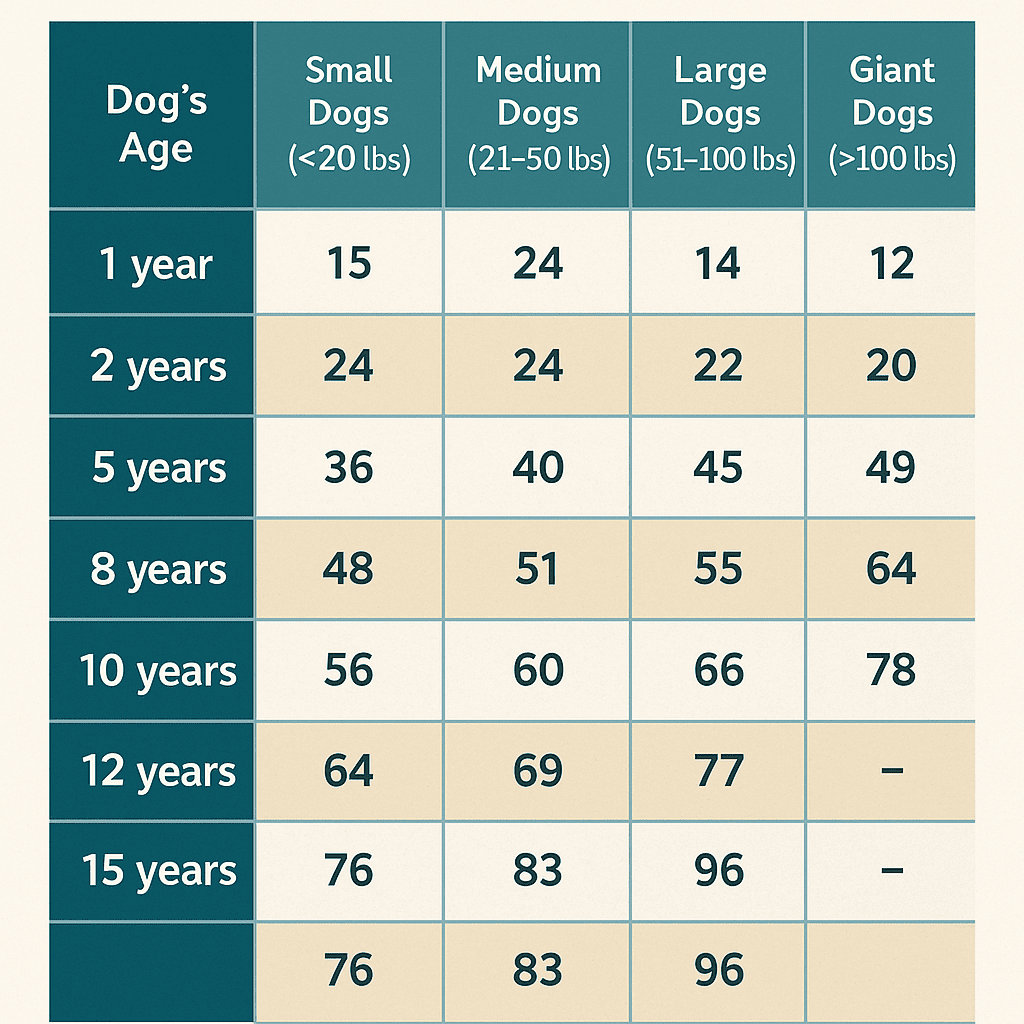
📋 Tip: Download our free Senior Dog Age Chart PDF to print or share with your vet.
Why Breed and Size Matter
Not all dogs age the same way. Small breeds like Chihuahuas and Toy Poodles tend to live longer, often reaching 15–18 years. Giant breeds like Great Danes or Mastiffs, however, may be considered senior by age 6.
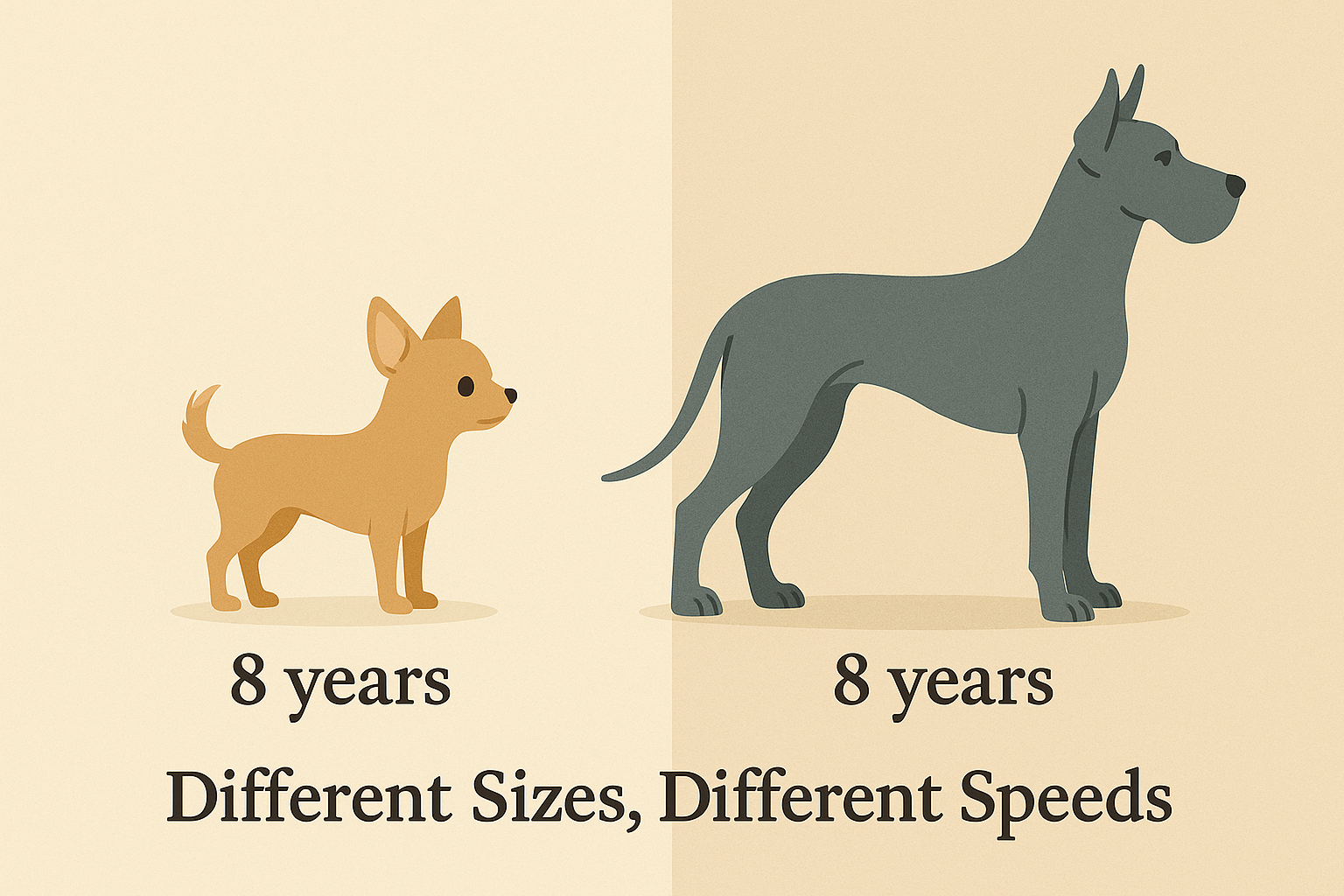
This difference comes down to metabolic rate and growth speed — large dogs grow faster, which may accelerate cellular aging.
Veterinarians generally classify dog life stages as:
- Puppy: 0–1 year
- Adult: 1–6 years
- Senior: 7+ years (for most breeds)
- Geriatric: 10+ years for large/giant breeds
Knowing where your dog falls helps you adjust their nutrition, exercise, and veterinary care for optimal quality of life.
Signs Your Dog Is Entering Their Senior Years
If you’re unsure whether your dog is “officially” senior, watch for these common aging signs:

- Gray hairs around muzzle and eyes
- Slower movement or stiffness after resting
- More naps and less enthusiasm for play
- Vision or hearing loss
- Changes in weight or appetite
- Cloudy eyes or dental issues
These signs don’t necessarily mean illness — they’re part of the natural aging process. However, regular vet checkups can catch early conditions like arthritis, dental disease, or hypothyroidism that affect older dogs’ comfort. As dogs reach advanced senior stages, cancer risk increases with age, making it important to recognize early warning signs rather than assuming changes are just part of normal aging.
🔗 Related reading: Senior Dog Health Checklist
How to Help Your Senior Dog Age Gracefully
As your dog’s age increases in “human years,” lifestyle adjustments become vital.
Here’s how to support your senior dog’s well-being:
🛏️ Comfort
Provide a supportive orthopedic bed to ease joint pressure and keep your dog warm. Avoid slippery floors with rugs or mats for traction.
🔗 Read more: Creating a Comfortable Home for Senior Dogs
🍽️ Nutrition
Switch to a senior dog food formula rich in omega-3s, antioxidants, and joint-supporting nutrients like glucosamine and chondroitin.
Ask your vet before adding supplements — aging dogs metabolize nutrients differently.
🔗 Explore: Best Food for Senior Dogs
🧘 Exercise & Mobility
Gentle, consistent exercise — like short walks or swimming — keeps joints flexible and muscles strong. Avoid overexertion and give your dog plenty of rest.
🔗 See also: Mobility Aids for Senior Dogs and Is My Senior Dog in Pain? (Free Pain Level Checker)
❤️ Veterinary Care
Schedule bi-annual checkups and routine bloodwork for early detection of health issues.
Your vet may recommend dental cleanings, eye exams, or tailored diets based on age and breed.
Every Year Counts
No matter your dog’s age in human years, what matters most is the love and care you give them.
With the right diet, comfort, and veterinary care, senior dogs can live long, joyful lives full of affection and loyalty.
Cherish every walk, nap, and tail wag — because every moment together is priceless.
Sources & References
- AKC — Breed Size Longevity Data
- American Animal Hospital Association (AAHA) — Life Stage Guidelines
- University of California School of Veterinary Medicine — Canine Aging Research
Trust & Transparency
We built this calculator to help senior dog owners make informed decisions, not to replace veterinary guidance. Our formulas are updated periodically as new canine aging research becomes available. No personal information is collected, stored, or used for advertising.
Editorial Review
This article and calculator were reviewed by the SeniorDogWellbeing Editorial Team, which focuses exclusively on senior dog wellness and canine aging research. Content is evaluated for clarity, accuracy, and alignment with current veterinary recommendations.
Last Reviewed: 12/6/25
Disclaimer
This calculator is for informational purposes only and is not a substitute for professional veterinary advice. Always consult your veterinarian regarding your dog’s life stage, health conditions, and care plan.
About the Author — Gary Bennett
Gary Bennett is the founder of SeniorDogWellbeing.com, specializing in senior dog longevity, mobility support, cognitive health, and evidence-based care practices. He researches aging science and works with pet owners to create practical guides that help dogs live longer, healthier lives.