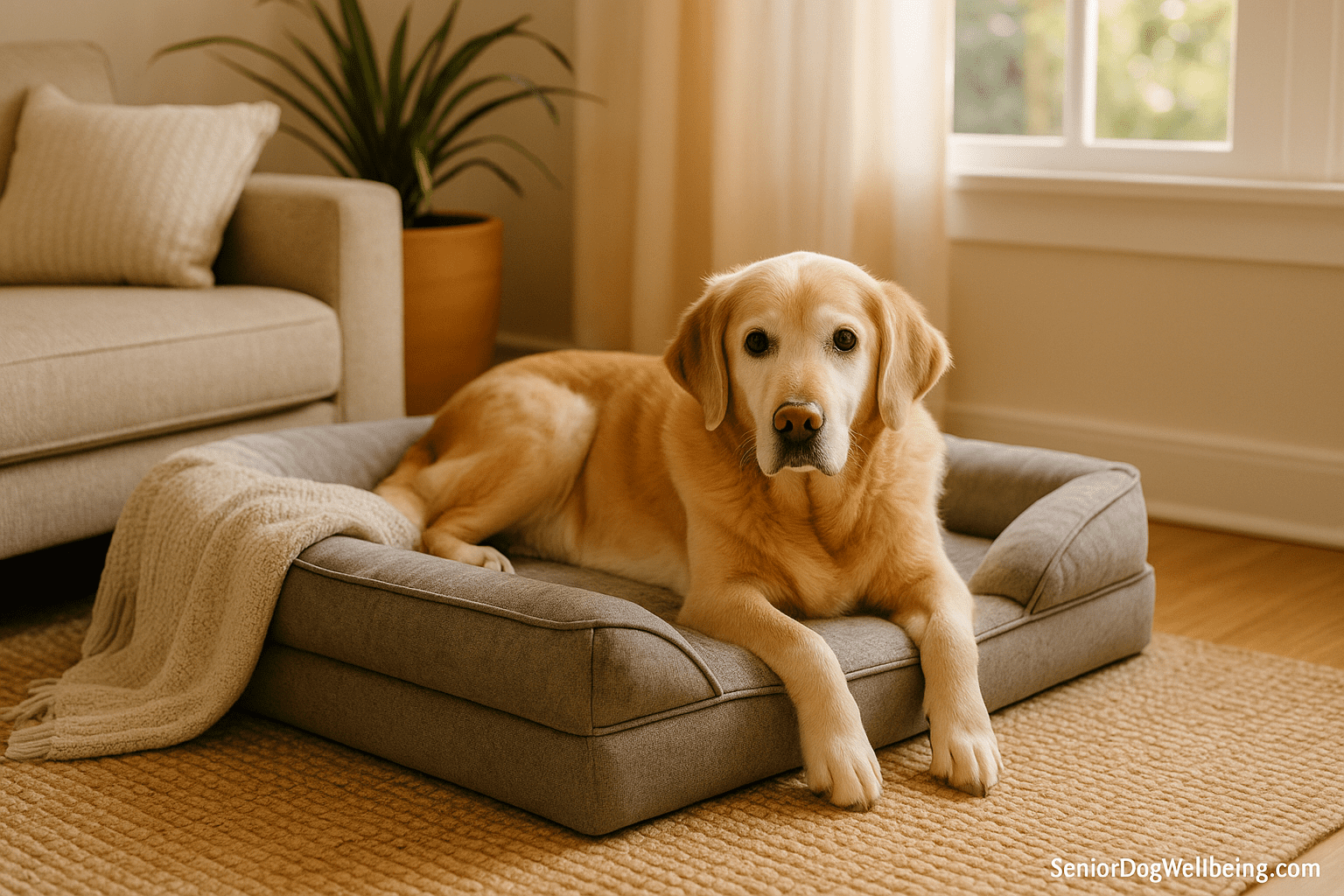
Why a Comfortable Home Matters for Senior Dogs
As dogs age, comfort becomes a form of care. Senior dogs often face arthritis, reduced mobility, and fading vision, making their environment crucial for well-being. A thoughtfully designed comfortable home for senior dogs can minimize pain, prevent injuries, and help them stay confident in familiar surroundings according to the American Kennel Club’s guide on caring for senior dogs .
Creating a senior-dog-friendly home doesn’t have to be expensive. With a few smart changes—like non-slip flooring, orthopedic beds, and ramps—you can transform your space into a sanctuary that supports your aging companion’s changing needs.
1. Support Aging Joints with Orthopedic Dog Beds
One of the best ways to improve your senior dog’s comfort is by upgrading their bed. A high-quality orthopedic bed for senior dogs cushions joints, reduces stiffness, and encourages deeper sleep. VCA Animal Hospitals explains that arthritis and joint issues are among the most common mobility problems in senior dogs.
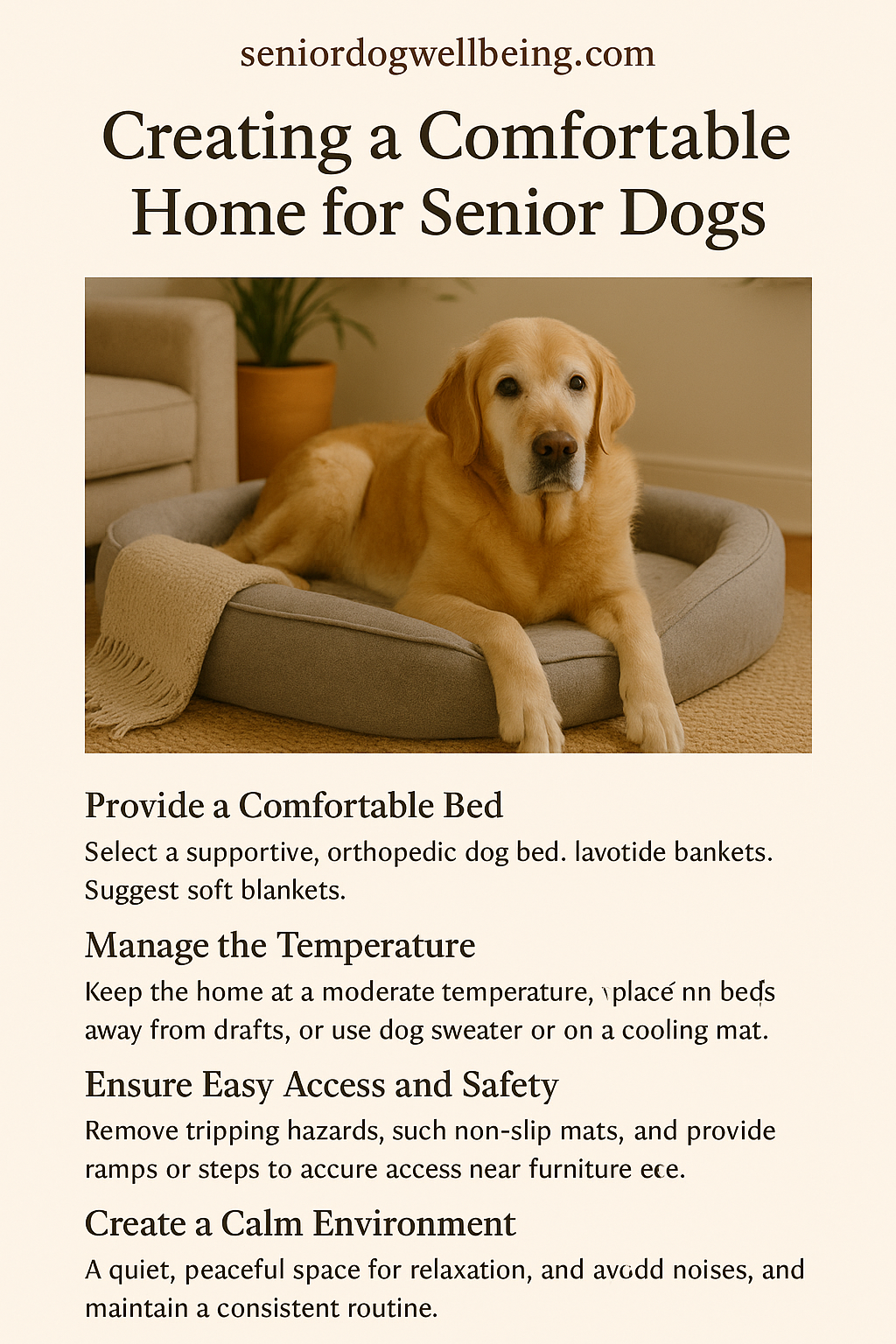
What to look for:
- Memory foam or egg-crate foam for even weight distribution
- Low-entry orthopedic sofa bed designs for easy access
- Washable, waterproof covers to control odors and stains
🦴 Recommended Reading: Best Orthopedic Dog Beds for Senior Dogs
Keyword focus used: orthopedic dog bed for senior dogs, low entry orthopedic sofa bed, comfortable sleeping area for older dogs
2. Make Floors Safe with Non-Slip Surfaces
Slick floors can turn into hazards for dogs with arthritis or weak legs. Simple upgrades make a huge difference in senior dog safety at home.
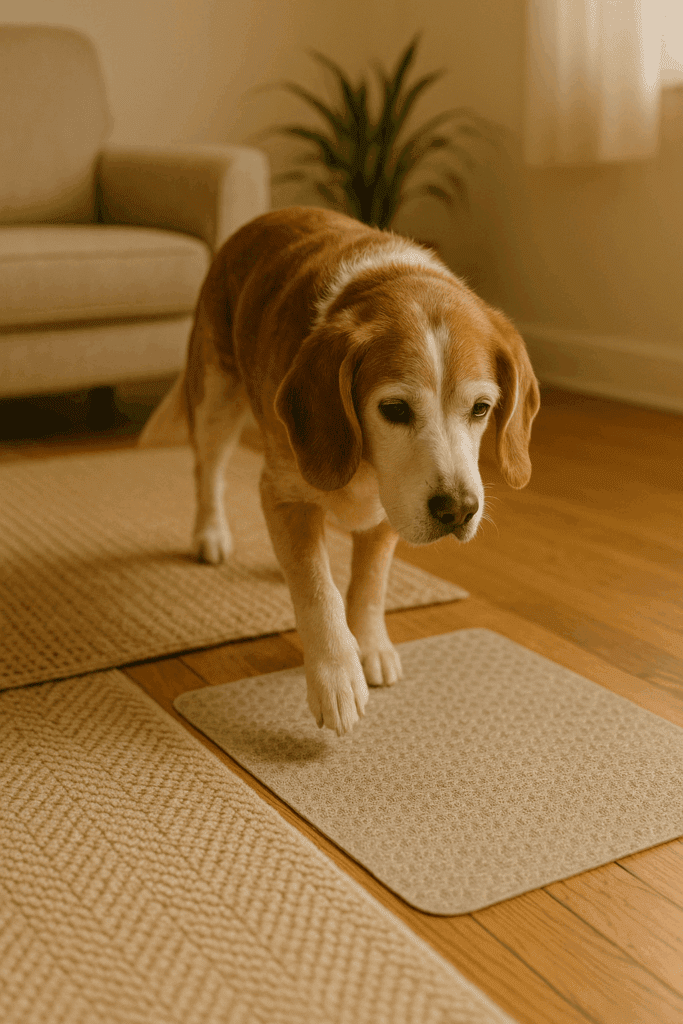
Home safety tips:
- Add anti-slip mats or rugs in walking zones
- Use rubber-backed runners in hallways
- Keep paw fur trimmed for better traction
If your dog uses stairs, install non-slip stair treads or carpet strips. The goal is to create a slip-free environment for senior dogs that prevents falls and supports independence.
3. Use Ramps and Pet Steps for Accessibility
Mobility aids are essential for maintaining your dog’s confidence and freedom. A ramp or set of pet stairs can make everyday activities—like getting onto the couch or into the car—effortless.
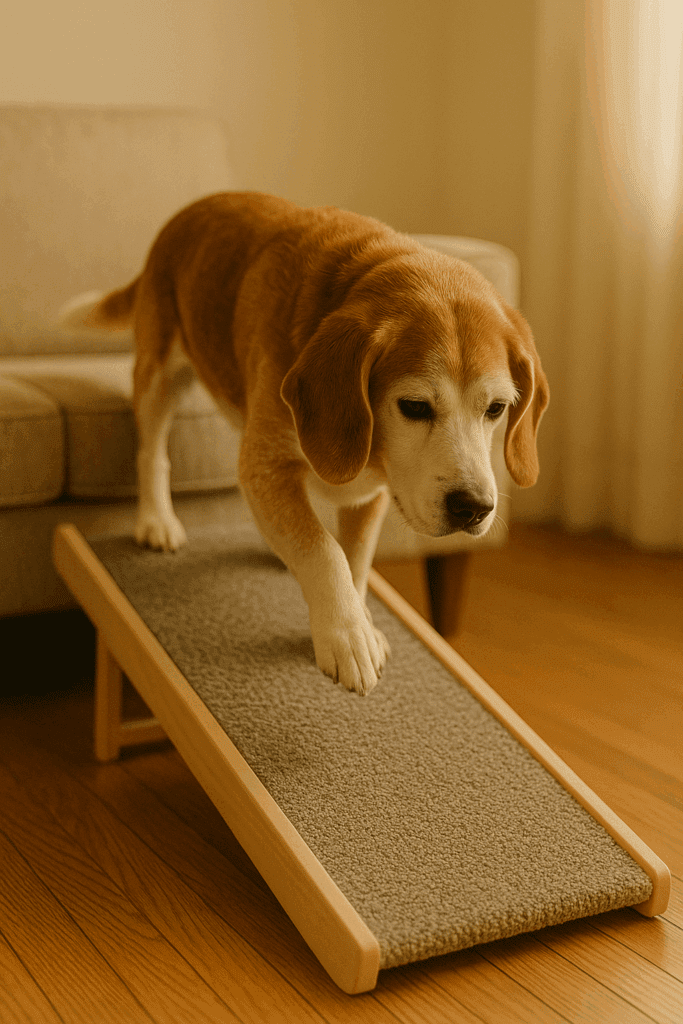
Top mobility aids for older dogs:
- Indoor ramps for beds or sofas
- Folding outdoor ramps for cars
- Sturdy pet steps with non-slip surfaces
🔗 See Also: Mobility Aids for Senior Dogs
Keyword focus used: dog ramps for older dogs, senior dog mobility, home accessibility for aging dogs
4. Maintain Ideal Temperatures Year-Round
Older dogs are sensitive to temperature swings. Keep their home environment for senior dogs cozy and stable:
- In winter: Use heated pads or soft blankets for warmth.
- In summer: Offer cooling mats and shaded spaces.
- Avoid drafty areas and extreme temperature shifts.
If your dog has trouble regulating body temperature, consult your vet about senior-safe heated or cooling beds.
5. Keep Essentials on the Main Floor
Climbing stairs becomes harder with age. Simplify life by setting up a senior dog comfort zone on one level of your home.
Include:
- Food and water bowls
- A comfortable orthopedic bed
- Favorite toys, chews, and blankets
This reduces strain and makes your older dog feel secure and included in family life.
6. Improve Lighting and Navigation
Vision loss is common among senior dogs. Poor lighting can cause disorientation and anxiety.
How to help:
- Install night lights in hallways and by the bed
- Avoid moving furniture frequently
- Use textured mats or scent markers as gentle navigation cues
These simple adjustments help maintain independence and reduce confusion in dogs with declining eyesight.
7. Design a Peaceful Rest Area
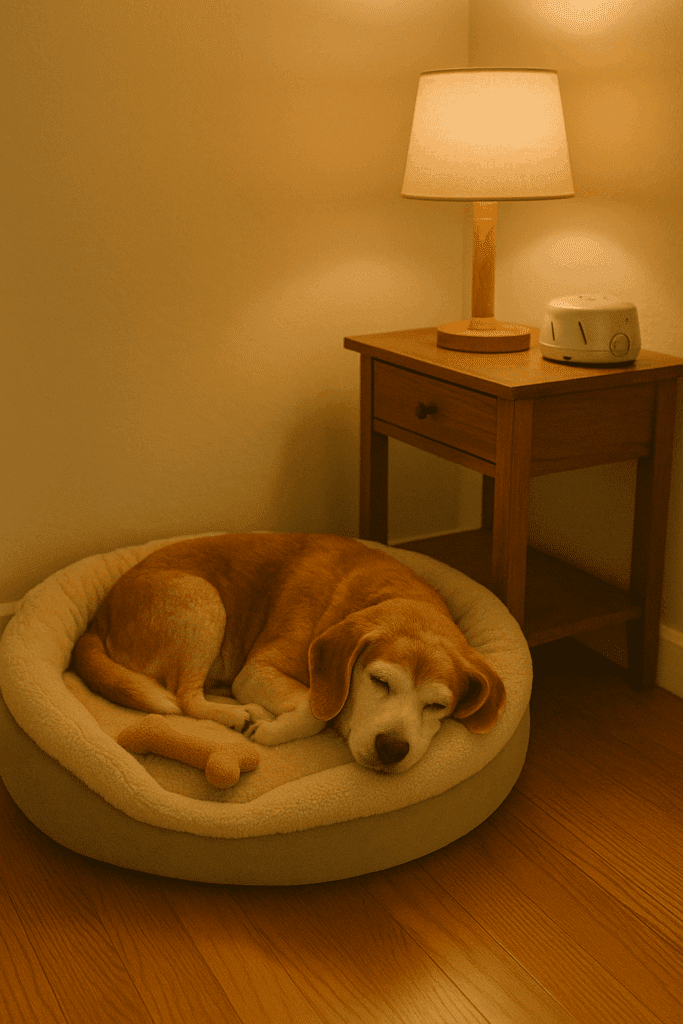
Every senior dog deserves a quiet, restful place to unwind. As your dog sleeps more, provide a soothing environment away from noise and foot traffic.
Pro tips:
- Place the bed in a low-traffic, warm corner
- Add familiar blankets or plush toys for comfort
- Use white noise machines to mask household sounds
Creating a peaceful retreat for senior dogs supports both emotional well-being and quality rest.
8. Make Outdoor Time Safe and Accessible
Gentle exercise helps maintain mobility and mental health. To encourage outdoor activity:
- Install a ramp at doorways instead of steps
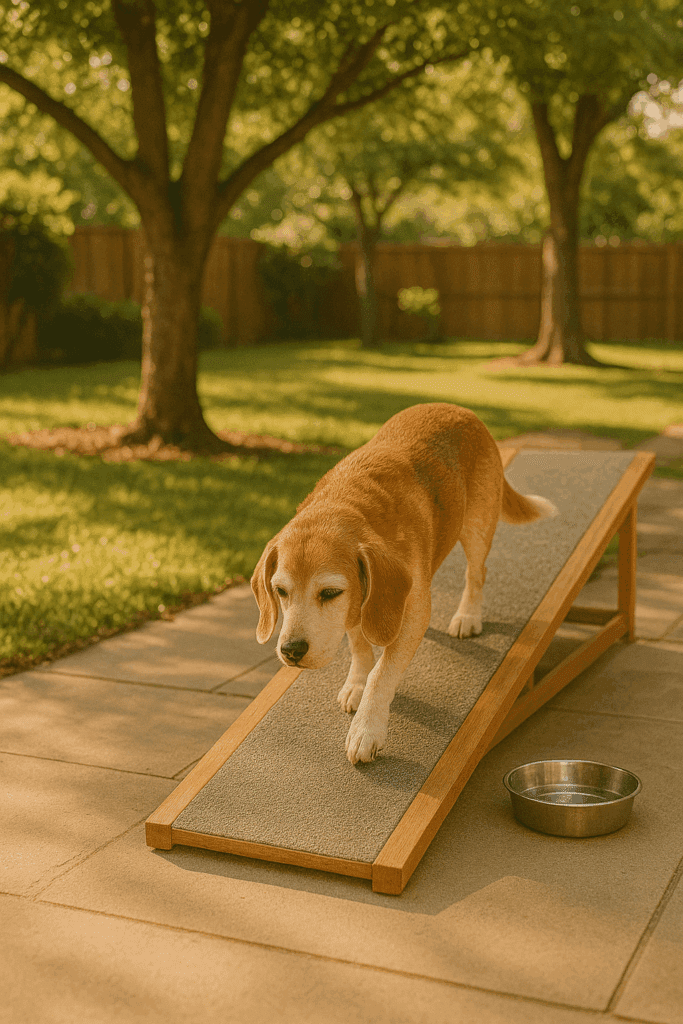
- Keep walkways free of debris and slippery surfaces
- Provide shade and a water bowl for warm days
A safe outdoor area encourages movement while minimizing fall risks—key to maintaining joint health in senior dogs.
9. Regularly Reassess Their Needs
Your senior dog’s abilities will change over time. Reevaluate their comfort regularly by observing:
- Difficulty standing or climbing
- Changes in appetite or movement
- Signs of pain, fatigue, or confusion
Make small updates as needed—like lowering food bowls, upgrading bedding, or adding more rugs. Regular vet check-ups ensure your comfort adjustments align with your dog’s health.
Comfort Equals Compassion
Creating a comfortable home for senior dogs means providing safety, warmth, and love in every detail. With soft beds, slip-free floors, accessible ramps, and thoughtful layouts, you’ll make daily life easier and more enjoyable for your aging best friend.
Your dog may be slowing down—but their need for comfort, security, and affection is stronger than ever. Transform your space into a true senior dog sanctuary, one cozy corner at a time.
Next: Visit our Lifestyle & Comfort Guide