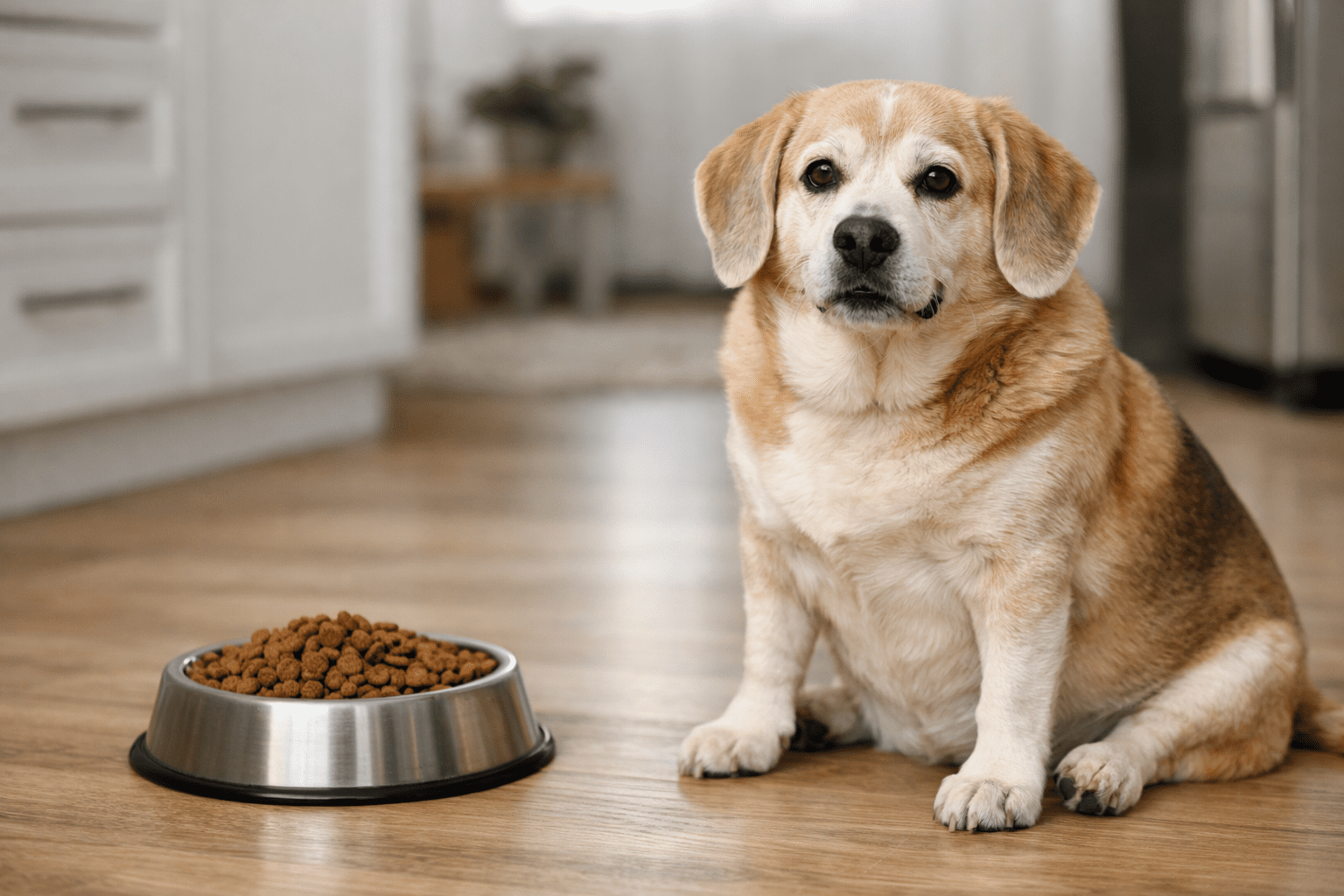
Feeding your dog seems simple—fill the bowl, follow the label, watch them eat. However, over time, many dog owners begin to wonder if they’re feeding too much, especially as their dog ages and becomes less active.
If you’re asking how to tell if you’re feeding your dog too much, you’re already paying attention to one of the most important aspects of long-term health. Overfeeding rarely happens overnight. It’s usually the result of small, well-intentioned habits that accumulate over time.
This guide explains the most reliable signs of overfeeding, why senior dogs are especially vulnerable, and how to make thoughtful adjustments without guesswork or guilt.
Why Overfeeding Is So Common (Especially in Senior Dogs)
Most dogs aren’t overfed because their owners are careless. Overfeeding usually happens because:
- Feeding charts are overly generous
- Treats and chews aren’t counted as calories
- Activity levels decline with age
- Food formulas change, but portions don’t
- Meals are based on routine rather than need
As dogs age, their metabolism slows, and muscle mass often decreases. Calorie needs drop—but appetite and habits usually don’t. This mismatch is why senior dogs are at higher risk of gradual weight gain.
How to Tell If You’re Feeding Your Dog Too Much: 7 Clear Signs
1. You Can’t Easily Feel Your Dog’s Ribs
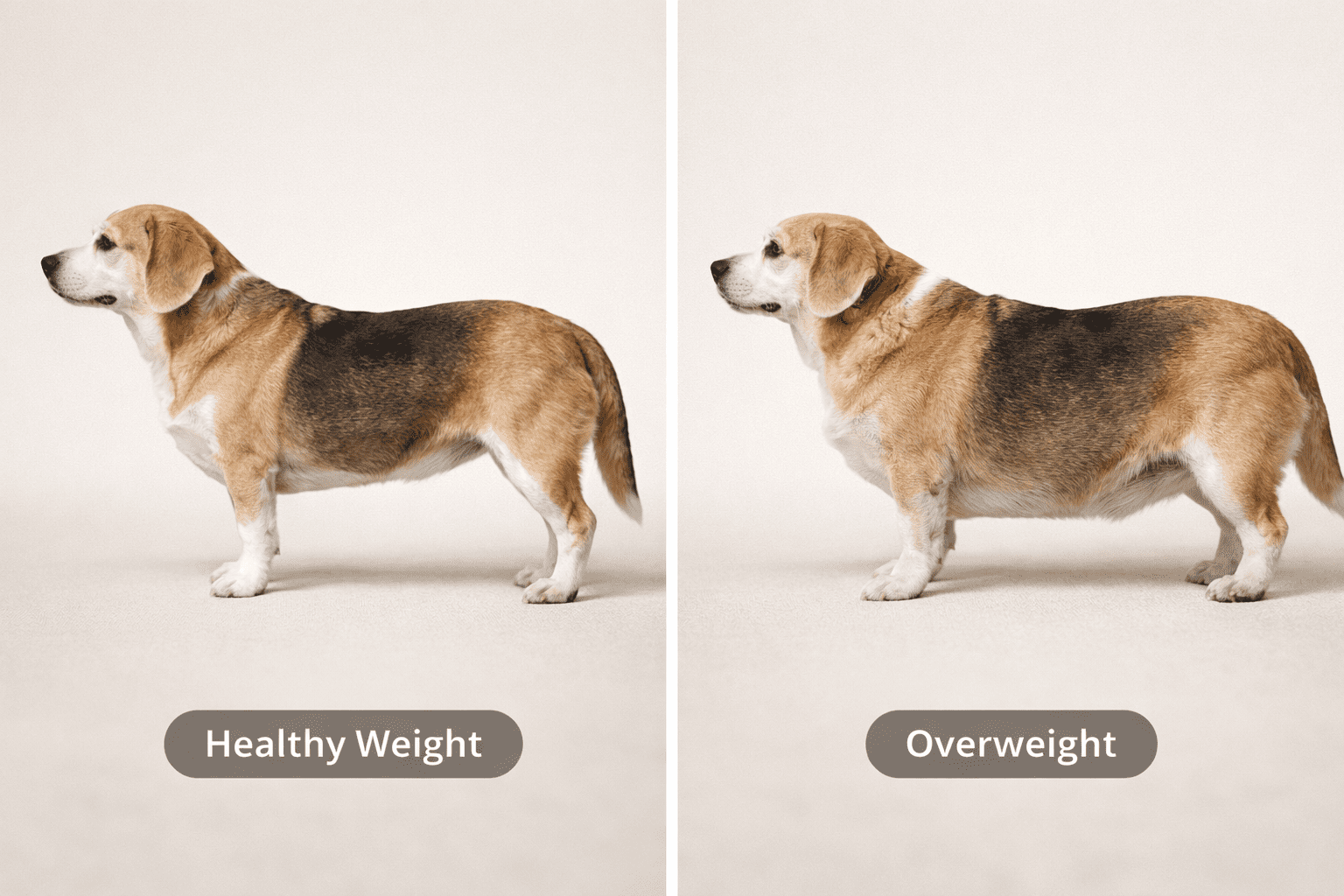
A simple hands-on check can reveal a great deal.
When you gently run your hands along your dog’s ribcage:
- You should be able to feel the ribs with light pressure
- You should not have to press firmly to find them
If the ribs feel buried under a soft layer of fat, your dog is likely carrying extra weight.
2. Your Dog Has Lost Their Waist
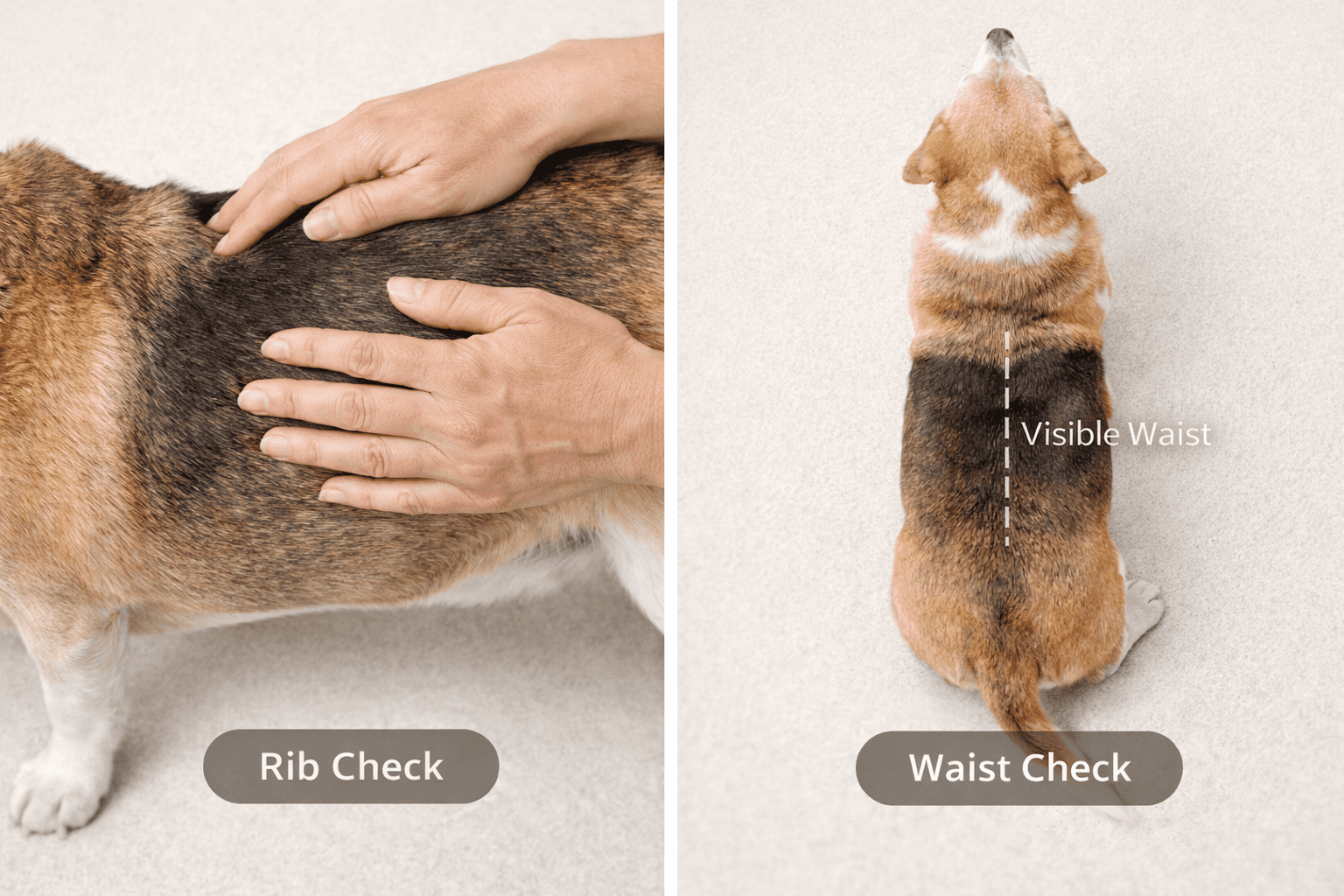
Look at your dog from above.
A healthy dog usually has a visible waist behind the ribs. If your dog’s body looks straight—or rounded—from shoulders to hips, that’s often an early sign of overfeeding.
This change is easy to miss because it happens gradually.
3. The Belly No Longer Tucks Up
Viewed from the side, your dog’s abdomen should slope upward behind the ribcage.
If the belly hangs down or looks level with the chest, excess body fat is likely present. This is especially common in senior dogs who spend more time resting.
4. Gradual Weight Gain Over Time
Even small changes matter.
A gain of:
- 1–2 pounds in a small or medium dog
- 3–5 pounds in a large dog
can significantly increase joint stress and reduce mobility. Because the change is slow, many owners don’t notice until the weight is well established.
5. Reduced Energy or Willingness to Move
Overfeeding doesn’t just affect appearance—it affects how dogs feel.
Signs may include:
- Shorter walks than before
- Hesitation to climb stairs or jump
- Getting tired more quickly
- Choosing rest over play
In senior dogs, extra weight can amplify normal age-related stiffness and make movement uncomfortable.
6. Treats and Chews Are a Daily Habit
Treats are one of the biggest hidden contributors to overfeeding.
Dental chews, biscuits, training treats, and table scraps can easily exceed 10% of daily calorie needs if meals aren’t adjusted to compensate.
If treats are frequent and meal portions haven’t changed, overfeeding is likely—even if meals seem reasonable.
7. Portions Haven’t Changed as Your Dog Aged
If your dog is eating the same amount they did years ago, but is now less active, their calorie intake may simply be outdated.
Dogs don’t need the same portions for life. Aging alone is often enough to require a reduction.
Why Feeding Charts Often Lead to Overfeeding
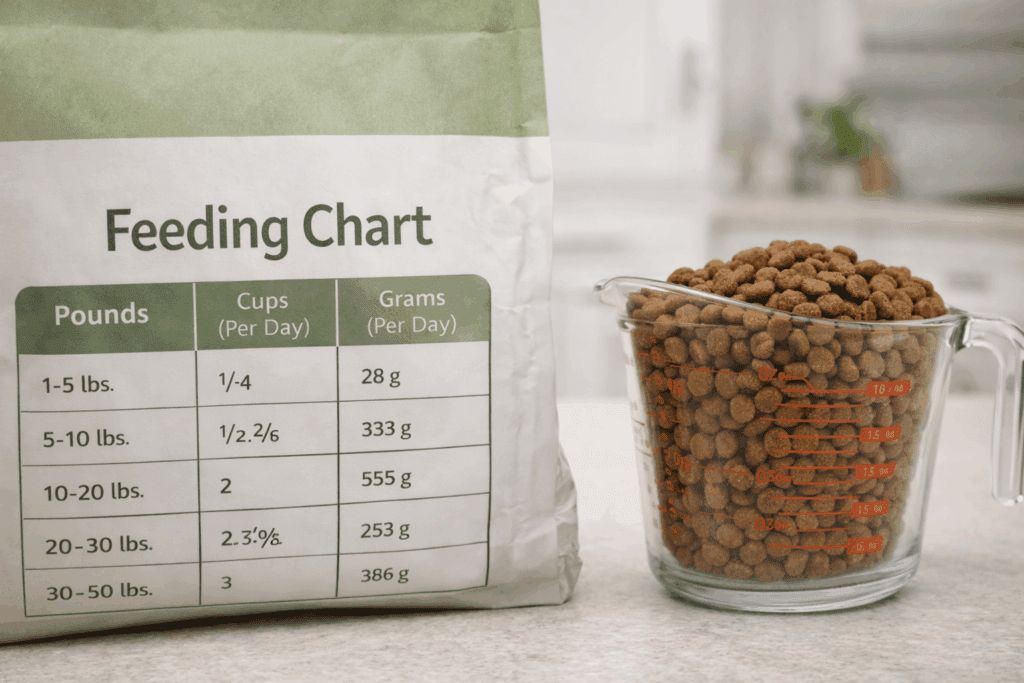
Dog food bag feeding charts are based on broad averages, not individual dogs.
They rarely account for:
- Neutered status
- Senior metabolism
- Treat calories
- Lower activity levels
- Differences between food formulas
Many dogs gain weight even when owners follow the chart exactly. That’s not a failure—it’s a limitation of the chart.
Senior Dogs and Overfeeding: Why It Matters More With Age
As dogs get older:
- Calorie needs decrease
- Muscle mass is harder to maintain
- Extra weight puts more strain on joints
Overfeeding senior dogs can worsen:
- Arthritis and mobility issues
- Back and hip discomfort
- Heat intolerance
- Overall quality of life
For older dogs, accurate portions matter more than ever—not less.
Cups vs Calories: Why Measurement Matters
A “cup” of dog food doesn’t mean much without calorie context.
Dry foods can range from 300 to 450+ calories per cup. Two dogs eating the same volume of food may be getting very different amounts of energy.
A more reliable approach is to:
- Estimate daily calorie needs
- Subtract treat calories
- Convert calories into portions based on your specific food
If you want a clearer starting point, use our dog weight and food calculator to estimate daily calories and portion sizes based on your dog’s needs.
What to Do If You Think You’re Overfeeding
If several of the signs above sound familiar:
- Reduce food portions gradually, not abruptly
- Measure meals consistently
- Keep treats under about 10% of daily calories
- Monitor body condition monthly
- Recalculate portions when activity or food changes
Small adjustments made consistently are far more effective—and safer—than drastic changes.
When to Talk With Your Veterinarian
Always consult a veterinarian if your dog:
- Gains or loses weight rapidly
- Has a medical condition
- Is on a prescription diet
- Shows appetite or behavior changes
Weight changes can sometimes signal underlying health issues that require medical attention.
Awareness Is the First Step
Overfeeding isn’t about overindulgence—it’s usually about outdated portions and hidden calories.
By learning how to tell if you’re feeding your dog too much, and making thoughtful adjustments as they age, you can:
- Reduce joint strain
- Improve comfort and mobility
- Support long-term wellbeing
If you’re unsure where to start, estimating calorie needs and reassessing portions is a practical, responsible first step—especially for senior dogs.
This article is for educational purposes only and does not replace professional veterinary advice.