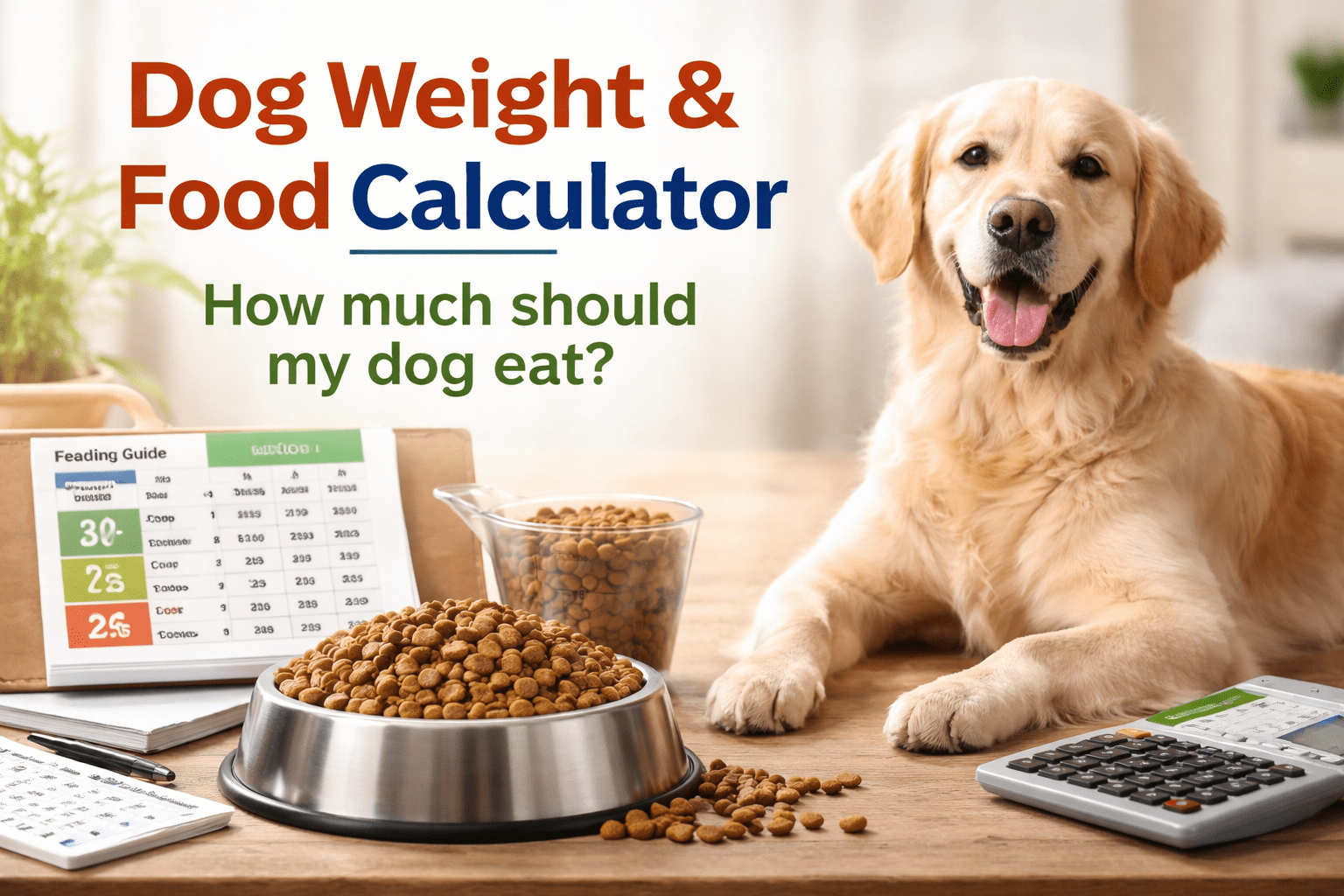
“How much should my dog eat?” is one of the most common—and most misunderstood—questions dog owners ask. Feeding guidelines on dog food bags are broad averages and rarely account for age, activity level, treats, or weight changes, which is why many dogs are unintentionally overfed as they get older.
This Dog Weight & Food Calculator helps you estimate daily calorie needs and food portions based on your dog’s current weight, life stage, activity level, and feeding goals. It’s especially useful if your dog is gaining or losing weight, entering senior years, eating treats or chews regularly, or switching to a food with a different calorie density.
Rather than relying on generic charts, this tool uses widely accepted canine calorie formulas to give you a practical starting point you can adjust over time based on your dog’s body condition and response.
👉 Use the calculator below to estimate daily calories and meal portions for your dog.
Why “How Much Should My Dog Eat?” Is So Hard to Answer
Most dog food bags include a feeding chart — but those charts are generic averages, not personalized recommendations.
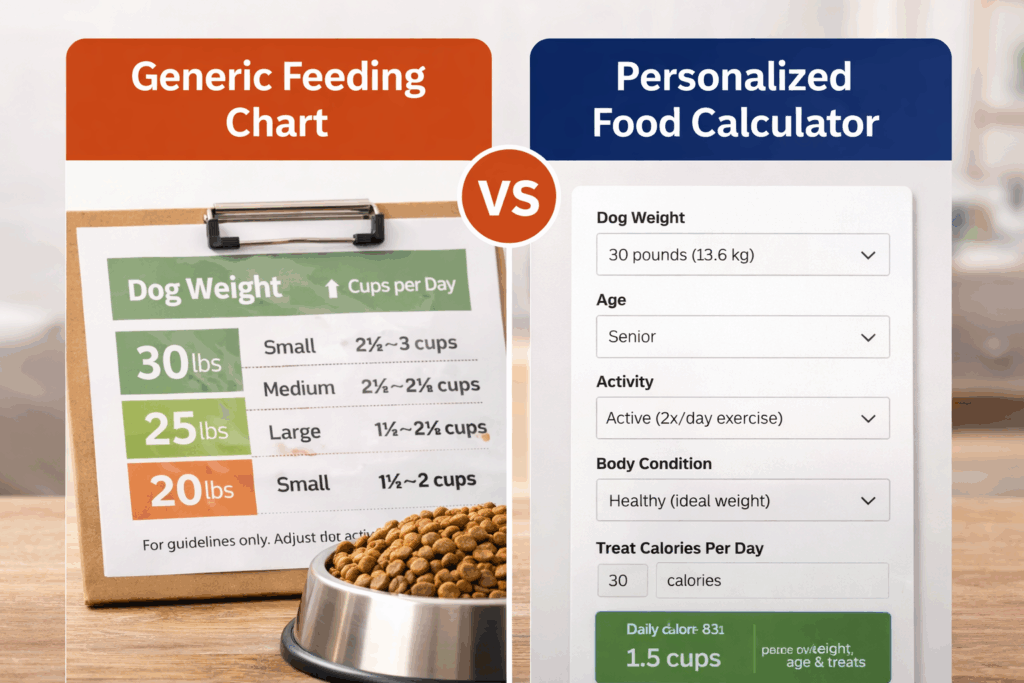
They don’t account for:
- Age (puppy vs adult vs senior)
- Neutered vs intact metabolism
- Activity level (sedentary vs active)
- Current body condition (underweight, ideal, overweight)
- Treats, chews, and table scraps
As a result, many dogs are unintentionally overfed, especially as they age and slow down.
That’s why a calculator that adjusts portions based on your dog — not a label — matters.
Dog Weight & Food Calculator
Estimate Your Dog’s Daily Food Needs
Dog Weight & Food Calculator
Estimate daily calories and food portions based on weight, life stage, activity, and goals.
Results
Show calculation details
Disclaimer: This tool provides educational estimates only. Dogs with medical conditions (diabetes, kidney disease, pancreatitis, etc.) or special life stages should follow veterinarian guidance.
This calculator estimates:
- Daily calorie requirements
- Recommended cups of food per day
- Adjustments for age, activity, and weight goals
It’s designed to support:
- Healthy adult dogs
- Weight loss or weight gain plans
- Senior dogs with slower metabolisms
Important: This calculator provides estimates, not veterinary prescriptions. Dogs with medical conditions should always follow vet guidance.
How Dog Calorie Needs Are Actually Calculated
At the core of feeding math is something called Resting Energy Requirement (RER).
Step 1: Resting Energy Requirement (RER)
RER estimates how many calories a dog needs at rest to maintain basic bodily functions.
The formula:
RER = 70 × (body weight in kg)⁰·⁷⁵
You don’t need to do this math — the calculator does it for you — but this explains why two dogs of the same weight may need different amounts of food.
Step 2: Daily Energy Requirement (DER)
RER is then multiplied by a factor based on life stage and activity:
| Dog Type | Multiplier |
|---|---|
| Neutered adult | 1.6 |
| Intact adult | 1.8 |
| Active dog | 2.0 |
| Senior dog | 1.2–1.4 |
| Weight loss | 1.0 |
| Weight gain | 1.8–2.0 |
Your Dog Food Calculator automatically applies these adjustments so you don’t have to guess.
Why Senior Dogs Need Fewer Calories (But Better Nutrition)
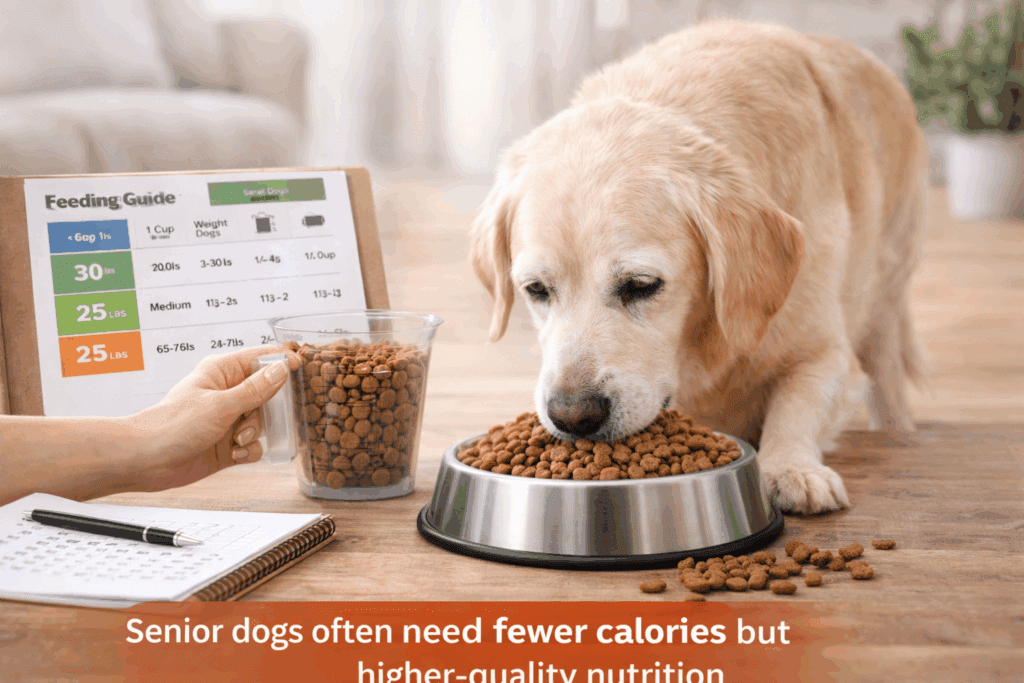
As dogs age, their metabolism slows — often dramatically.
Common senior changes include:
- Reduced activity
- Muscle loss (sarcopenia)
- Increased fat storage
- Lower calorie tolerance
This means senior dogs often need fewer calories but higher-quality protein.
Overfeeding a senior dog is one of the fastest ways to:
- Worsen arthritis
- Increase insulin resistance
- Reduce lifespan
That’s why this calculator includes senior-specific adjustments, rather than treating older dogs like younger adults.
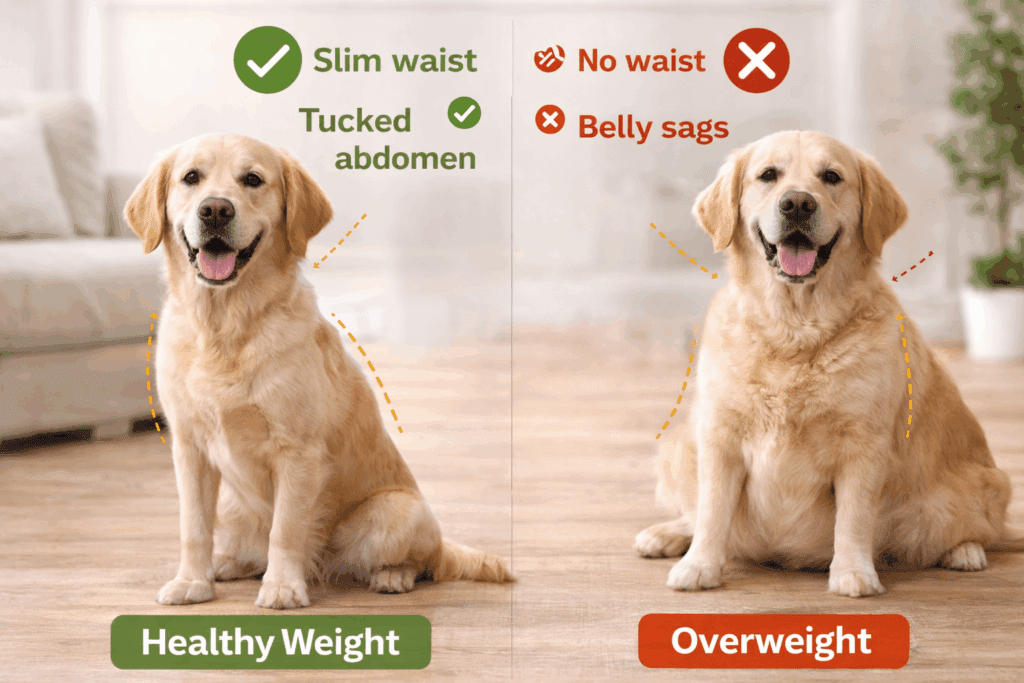
How to Tell If Your Dog Is Overweight or Underweight
Before adjusting food, you need to know your dog’s body condition, not just their scale weight.
Signs Your Dog May Be Overweight
- Ribs are hard to feel
- No visible waist from above
- Belly hangs instead of tucks
- Tires quickly on walks
Signs Your Dog May Be Underweight
- Ribs and spine are very visible
- Loss of muscle in the hips
- Low energy
- Poor coat quality
Pro tip: The calculator works best when paired with an honest body condition assessment.
How to Convert Calories Into Cups of Dog Food
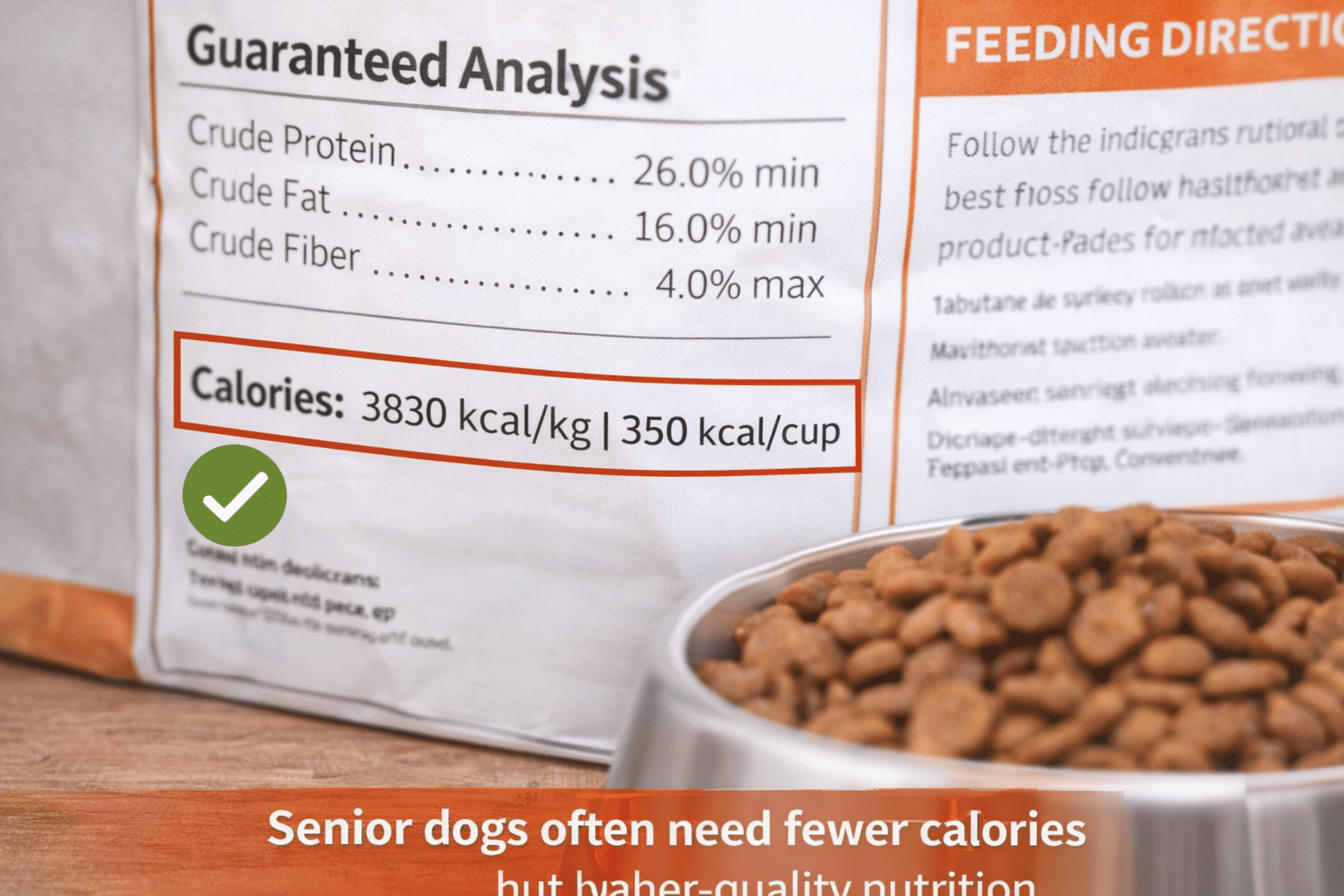
One of the biggest feeding mistakes is assuming:
“One cup is one cup.”
In reality:
- Kibble ranges from 300–450 calories per cup
- Wet food varies even more
- Senior formulas often differ from adult formulas
Example:
If your dog needs 900 calories/day:
- 300 cal/cup food = 3 cups/day
- 450 cal/cup food = 2 cups/day
Always check your specific food’s calories per cup — the calculator allows you to adjust for this.
Treats Count More Than You Think
Treats are the #1 reason feeding plans fail.
If treats exceed 10% of daily calories, they must be accounted for.
Examples:
- One medium biscuit: ~50 calories
- Dental chew: 70–120 calories
- Table scraps: unpredictable
Solution:
Reduce meal portions slightly when treats are used — the calculator can help you rebalance.
How Often Should You Recalculate Your Dog’s Food?
Recalculate when:
- Weight changes by 5–10%
- Activity level changes
- Switching dog food brands
- Aging into senior years
- Health conditions develop
For senior dogs, reassessing every 3–6 months is ideal.
Common Dog Feeding Mistakes (And How to Avoid Them)
❌ Feeding by habit instead of need
❌ Trusting bag feeding charts blindly
❌ Ignoring age-related changes
❌ Not adjusting for treats
❌ Free-feeding without portion control
✅ Use a calculator
✅ Measure portions consistently
✅ Monitor body condition monthly
✅ Adjust gradually, not abruptly
Feeding the Right Amount Can Add Years
“How much should my dog eat?” isn’t a one-time question — it’s an ongoing adjustment.
A healthy weight:
- Reduces joint stress
- Improves mobility
- Supports heart health
- Extends lifespan — especially in senior dogs
Use this Dog Weight & Food Calculator as a starting point, then observe, adjust, and refine.
How Much Should My Dog Eat?
Estimate daily calories and food portions based on weight, life stage, activity, and goals.
Results
Show calculation details
Disclaimer: This tool provides educational estimates only. Dogs with medical conditions (diabetes, kidney disease, pancreatitis, etc.) or special life stages should follow veterinarian guidance.
Frequently Asked Questions – Dog Weight & Food Calculator
How much should my dog eat per day?
The amount your dog should eat depends on their weight, age, activity level, and metabolism. Rather than using generic feeding charts, a dog food calculator estimates daily calories and converts them into portions based on your specific dog and the calories in their food.
How do I know if I’m feeding my dog too much?
Signs of overfeeding include weight gain, difficulty feeling ribs, loss of a visible waist, and reduced stamina. Many dogs are overfed unintentionally by following bag feeding charts. Measuring portions and adjusting based on body condition is more reliable than feeding by habit.
Should senior dogs eat less food?
Most senior dogs need fewer calories than younger adults because their metabolism slows and activity levels decrease. However, seniors still need high-quality protein to maintain muscle. Feeding smaller portions of nutrient-dense food is usually better than simply cutting meals.
How accurate is a dog food calculator?
A dog food calculator provides a scientifically based estimate using Resting Energy Requirement (RER) and activity multipliers. It’s accurate for healthy dogs but should be adjusted based on real-world results. Dogs with medical conditions should always follow veterinary guidance.
How often should I recalculate my dog’s food?
You should recalculate whenever your dog’s weight changes by 5–10%, activity level changes, you switch foods, or your dog enters a new life stage. For senior dogs, reassessing every 3–6 months helps prevent gradual weight gain.
How many meals per day should my dog eat?
Most adult dogs do well with two meals per day. Senior dogs often benefit from two to three smaller meals to improve digestion and energy levels. Puppies typically need more frequent meals to support growth and blood sugar stability.
Is it better to feed by cups or by calories?
Calories are more accurate than cups. Cups measure volume, but calories measure energy. Two foods with the same cup size can have very different calorie counts. Feeding by calorie needs and converting to cups helps prevent over- or underfeeding.
Can I use this calculator for weight loss?
Yes, the calculator includes conservative weight-loss estimates designed to reduce calories safely. Weight loss should be gradual. If your dog has obesity-related health issues or fails to lose weight, consult your veterinarian for a tailored plan.
Related Senior Dog Resources
- Learn how feeding needs change with age in our senior dog nutrition guide
- Understand how aging affects metabolism using the dog age in human years calculator
- Track weight, diet, and health signals with our senior dog health checklist
- See how treats and chews impact calories in chews for senior dogs
If your dog is gaining weight despite portion adjustments, review the signs you may be feeding your dog too much before making further changes.
About This Dog Weight & Food Calculator
This Dog Weight & Food Calculator is designed to help dog owners estimate daily feeding amounts using widely accepted canine calorie formulas, rather than generic feeding charts printed on dog food bags.
The calculator begins with your dog’s current body weight to estimate Resting Energy Requirement (RER), then applies conservative adjustments for life stage, activity level, neuter status, and weight goals. Food portions are calculated using the calorie content of your specific dog food, which can vary significantly between brands and formulas.
An optional treat calorie adjustment is included to help prevent unintentional overfeeding, one of the most common causes of gradual weight gain—especially in senior dogs.
All results are intended as starting estimates, not exact prescriptions. Feeding needs can vary based on breed, metabolism, muscle mass, and health status, and should be adjusted over time based on your dog’s body condition and response.
Methodology & Standards
This calculator is based on commonly used veterinary nutrition principles, including:
- Resting Energy Requirement (RER)
RER = 70 × (body weight in kilograms)⁰·⁷⁵ - Life-stage and activity multipliers commonly used in canine feeding recommendations
- Conservative calorie targets for senior dogs and weight-loss scenarios
Calculations are intentionally cautious to prioritize long-term health and weight stability.
Responsible Use & Disclaimer
This tool provides educational estimates only and is not a substitute for professional veterinary advice.
Dogs with medical conditions such as diabetes, kidney disease, pancreatitis, thyroid disorders, or those on prescription diets should always follow guidance from a licensed veterinarian.
If your dog experiences unexpected weight changes, appetite changes, or health concerns, consult your veterinarian before adjusting feeding amounts.
About the Publisher
SeniorDogWellbeing.com provides practical, research-informed guidance focused on senior dog nutrition, weight management, mobility, and long-term quality of life. Our content and tools are designed to help dog owners make informed, responsible decisions using established care principles and real-world experience.
Last reviewed: 1/6/26
Recalculate feeding amounts if your dog’s weight, activity level, food brand, or life stage changes.