
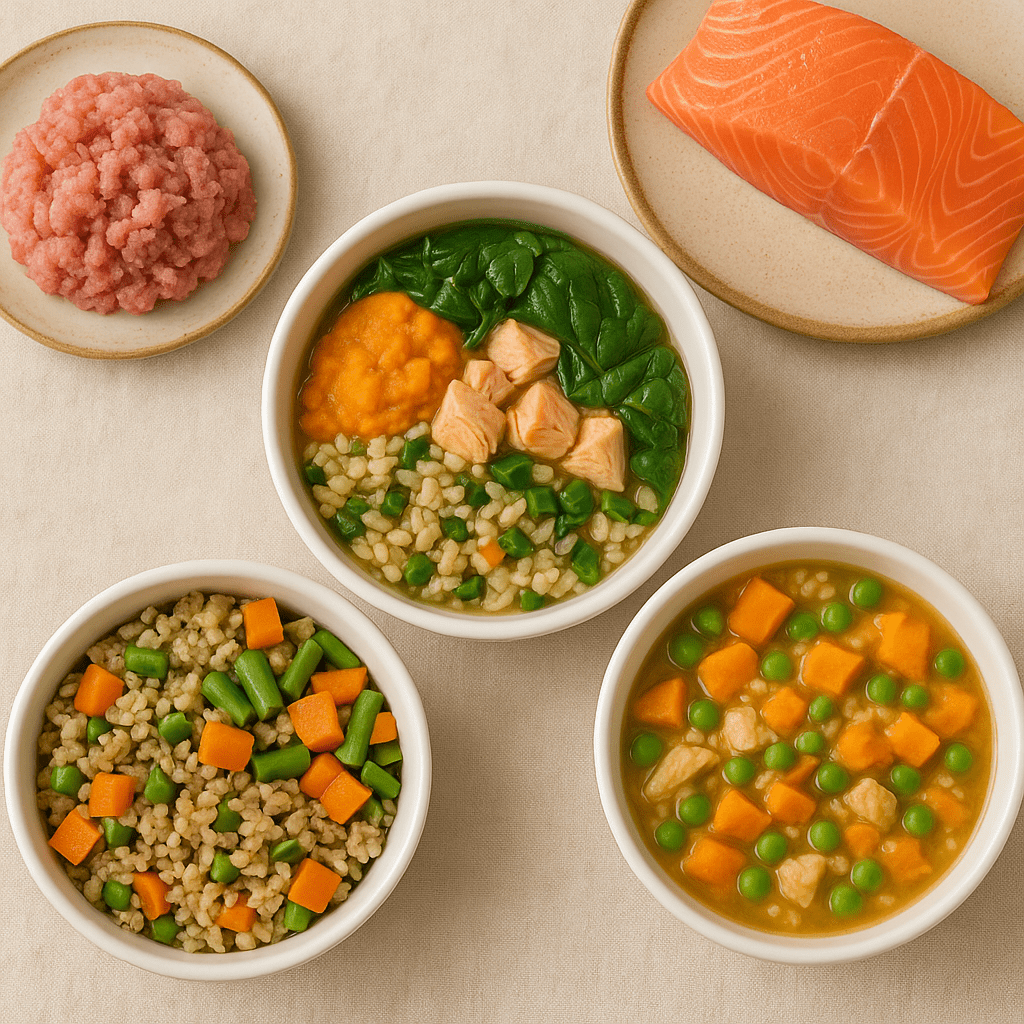
As dogs enter their golden years, their dietary needs change dramatically. Senior dogs often need fewer calories, highly digestible proteins, and support for mobility and digestion. Many owners are exploring homemade food for senior dogs because it gives them more control over ingredients, nutrition, and quality.
But creating a balanced homemade diet for senior dogs is not as simple as cooking meat and vegetables. Without careful planning, meals may lack essential vitamins and minerals. That’s why we’ve prepared this vet-approved guide to homemade senior dog food recipes, complete with nutritional tips and safety considerations. Many pet owners wonder whether homemade or store-bought meals are better. You can also explore our guide to the Best Food for Senior Dogs for top vet-recommended commercial options.
Why Homemade Food for Senior Dogs?
Feeding an older dog can be challenging, especially with so many commercial kibbles and canned diets that may not address individual needs. For many pet parents, homemade senior dog food recipes offer a healthier and more personal option. Veterinary experts at Tufts University’s Petfoodology caution that many homemade diets are unbalanced if not reviewed by a vet nutritionist.
Benefits
- Ingredient control – No fillers, additives, or artificial preservatives.
- Fresh and natural – Whole food ingredients tailored to your dog.
- Customization – Recipes can be adapted for dogs with arthritis, kidney disease, or dental problems.
- Digestibility – Softer, easy homemade food for senior dogs supports digestion.
Risks & Challenges
However, not all homemade diets are safe. Unbalanced homemade senior dog meals can cause deficiencies if not designed correctly.
- Nutrient imbalance – Missing calcium or essential fatty acids.
- Time and cost – Homemade feeding requires planning.
- Food safety – Always cook meat thoroughly and store properly.
👉 For peace of mind, ask your vet to review your homemade senior dog diet plan before switching.
Nutritional Needs of Senior Dogs
Nutritional needs shift once your dog reaches their golden years. If you’re unsure about your pet’s stage of life, check out our guide: When is a dog considered senior?. For a deeper dive into balanced diets and supplements, explore our complete Senior Dog Nutrition Guide.
Senior dogs have unique nutritional requirements compared to younger adults. Understanding these needs ensures your homemade dog food for older dogs is safe and effective. According to the American Kennel Club’s guide on dog nutrition, older dogs require careful balance of protein, fat, and fiber to stay healthy.
Protein
- Provides muscle maintenance and energy.
- Best sources: chicken, turkey, salmon, eggs.
- Dogs with kidney disease may need low-protein homemade senior dog food (vet required).
Fat
- Healthy fats like fish oil, flaxseed, or coconut oil support joint health.
- Limit saturated fats to prevent obesity.
Calories
- Most seniors are less active, so low-calorie homemade food for senior dogs helps maintain a healthy weight.
Fiber
- Promotes bowel health and keeps digestion smooth.
- Use pumpkin, oats, carrots, and green beans.
Vitamins & Minerals
- Calcium, potassium, magnesium, and antioxidants protect against age-related decline.
- Supplements may be necessary for a balanced homemade diet for senior dogs.
Tips Before Cooking Homemade Senior Dog Food
Before diving into recipes, follow these tips to make feeding safer and easier:
- Transition slowly – Mix homemade dog food with commercial food over 7–10 days.
- Measure meals – Overfeeding leads to obesity, a common senior dog issue.
- Cook in batches – Freeze portions for easy meal prep.
- Choose safe methods – Boil, steam, or bake; never fry.
- Avoid toxic foods – Grapes, onions, garlic, raisins, chocolate, avocado, and xylitol.
The ASPCA lists onions, garlic, grapes, and chocolate among foods that should never be included in homemade senior dog food.
Vet-Approved Homemade Food Recipes for Senior Dogs
These recipes are vet-approved, balanced, and tailored to senior dog nutrition. They address different health needs, from arthritis to dental problems.
Recipe 1: Turkey, Brown Rice & Veggie Medley
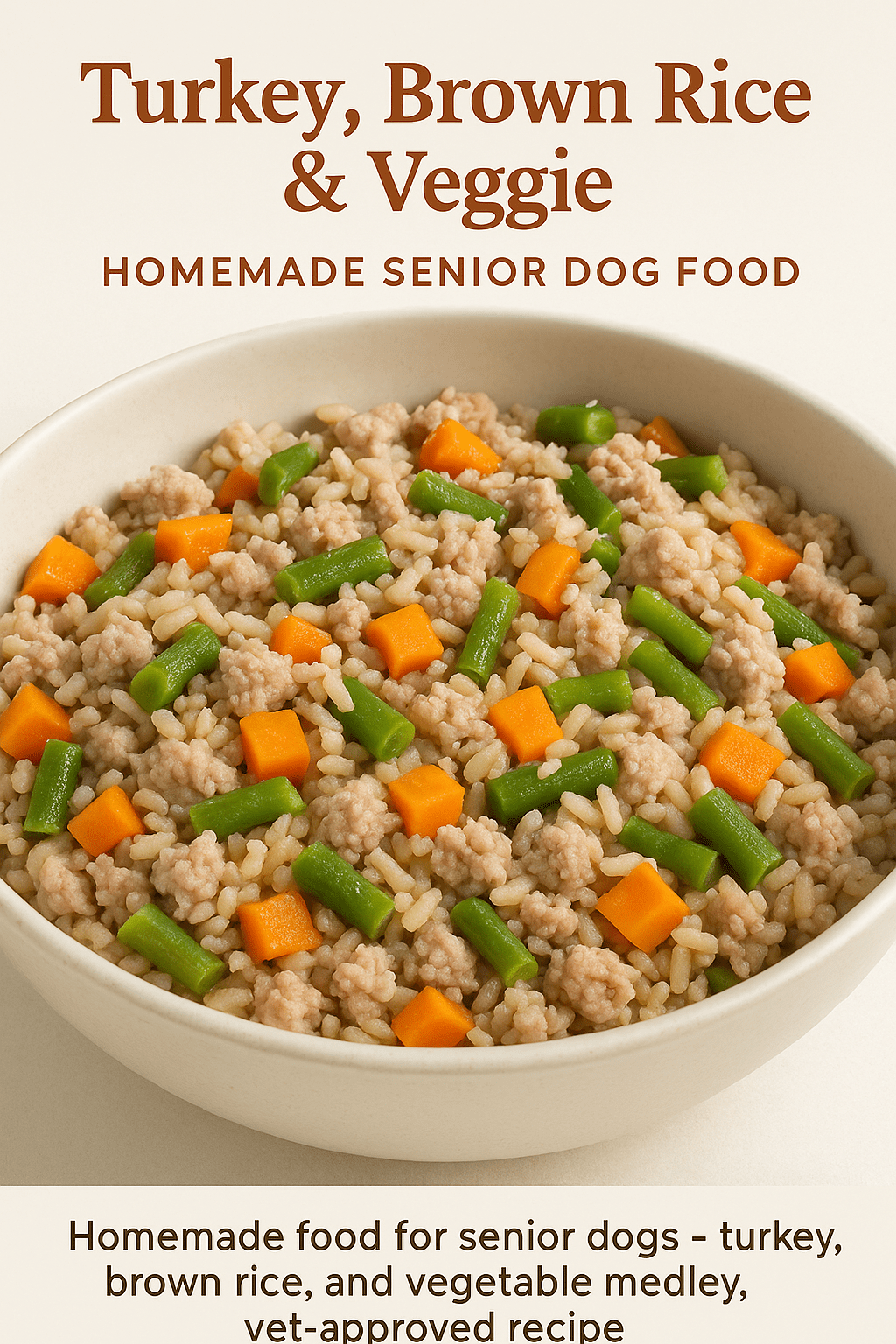
If you’re new to homemade food for senior dogs, this recipe is a safe and simple starting point. It’s nutrient-rich, easy to digest, and budget-friendly.
Best for: General senior health, easy digestion, moderate calories.
Ingredients
- 1 lb lean ground turkey
- 1 cup brown rice (uncooked)
- 1 ½ cups carrots, diced
- 1 cup green beans, chopped
- 1 tbsp olive oil
- ½ tsp salmon oil
- ½ tsp ground eggshell powder
Instructions
- Cook rice, set aside.
- Brown turkey, drain excess fat.
- Steam vegetables until tender.
- Mix all together, add oils and calcium.
- Portion and refrigerate up to 4 days.
How to Make It:
Start by cooking the brown rice, since it takes the longest. While that’s cooking, brown the turkey in a skillet and steam the vegetables until soft. Once everything is ready, combine rice, turkey, and veggies in a large bowl. Mix in olive oil, salmon oil, and calcium powder for balance. Let the mixture cool before serving to your dog, and divide into daily portions for storage.
Pro Tips:
- Store portions in the freezer for up to 2 months. Defrost in the fridge overnight.
- Swap brown rice for quinoa or barley for variety.
- Add a spoonful of pumpkin puree for extra fiber if your senior dog has digestive issues.
- Use this recipe as a base and rotate veggies (zucchini, broccoli, peas) to keep meals interesting.
Recipe 2: Salmon, Quinoa & Spinach Bowl
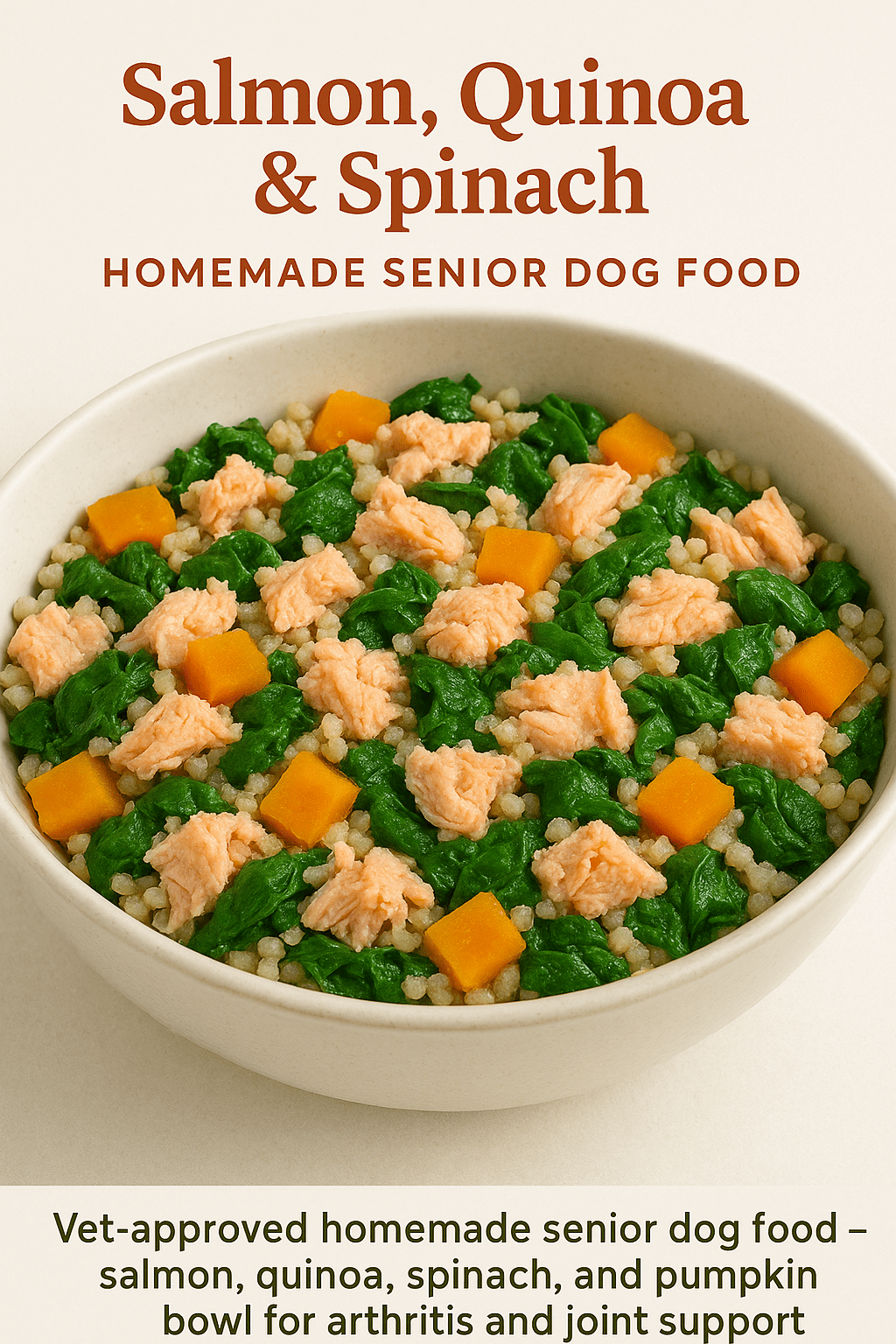
This recipe is designed for dogs needing extra joint support. The omega-3s in salmon make it a vet-approved homemade dog food for arthritis relief.
Best for: Senior dogs with arthritis or sensitive digestion.
Ingredients
- 1 lb salmon, boneless
- 1 cup quinoa
- 1 cup spinach, chopped
- ½ cup pumpkin puree
- 1 tbsp coconut oil
- ½ tsp calcium powder
Instructions
- Cook quinoa as directed.
- Bake salmon at 350°F until done.
- Steam spinach.
- Mix ingredients, add coconut oil and calcium.
How to Make It:
Rinse and cook the quinoa according to the package directions. While it’s cooking, bake the salmon in the oven until it flakes easily. Steam the spinach lightly to preserve nutrients. Combine all ingredients in a bowl, stirring in pumpkin puree for digestion and coconut oil for healthy fats. Add calcium powder to balance minerals. Cool the meal and store in airtight containers.
Pro Tips:
- Use canned salmon (in water, no salt added) if fresh isn’t available.
- Substitute spinach with kale or collard greens for variety.
- Add turmeric (a tiny pinch) for extra anti-inflammatory benefits.
- Portion into small freezer-safe containers for easy weekly meal prep.
Recipe 3: Chicken & Sweet Potato Stew (Soft Food)
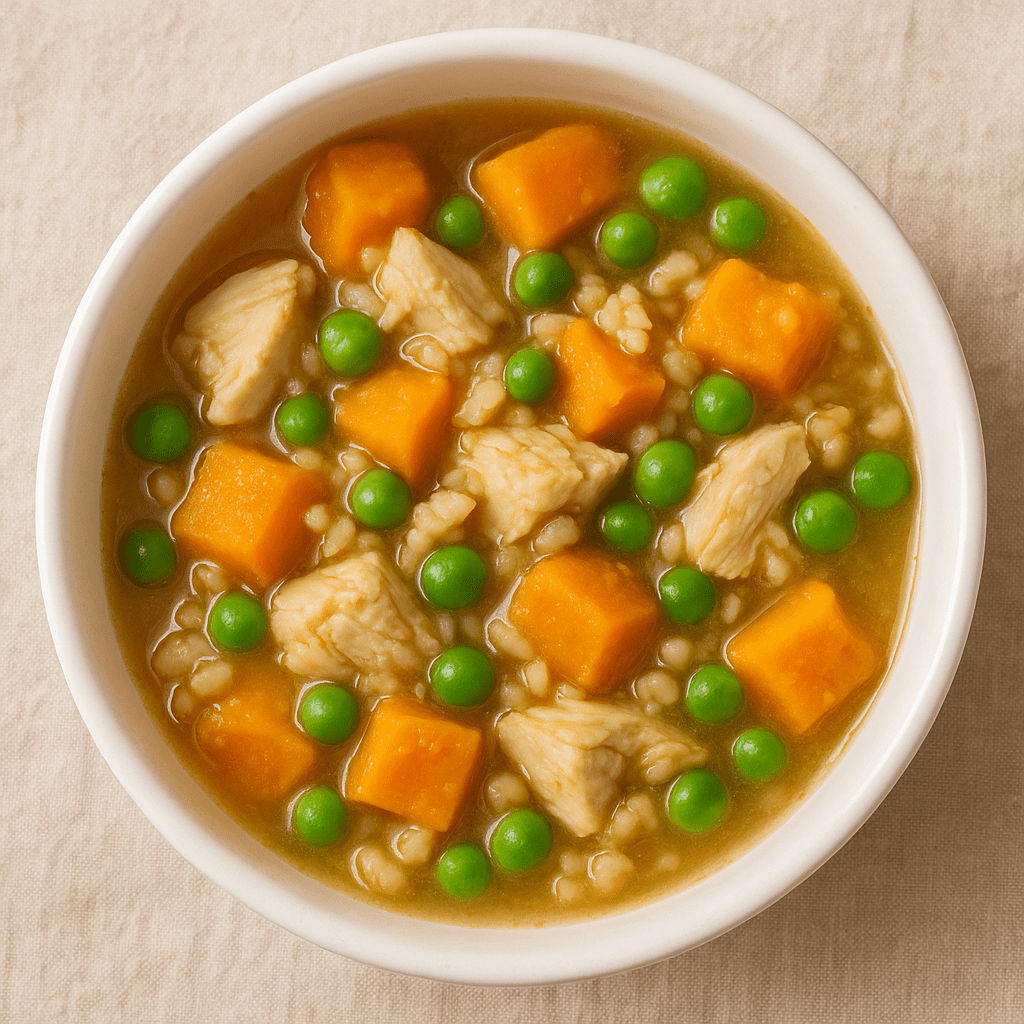
For senior dogs with dental issues, kibble can be painful. This homemade soft food for dogs is flavorful, chewable, and full of nutrients.
Best for: Dogs with dental problems or reduced appetite.
Ingredients
- 1 lb chicken thighs, diced
- 2 sweet potatoes, cubed
- 1 cup peas
- 2 cups low-sodium chicken broth
- 1 tbsp olive oil
- ½ tsp flaxseed
Instructions
- Add chicken, potatoes, peas, broth to pot.
- Simmer until tender.
- Add oil + flaxseed.
- Mash lightly or puree for extra softness.
How to Make It:
This recipe is cooked in one pot, making it simple and convenient. Add the diced chicken, sweet potatoes, peas, and broth, then simmer until the chicken is cooked and potatoes are soft. Stir in olive oil and ground flaxseed at the end for extra nutrients. For senior dogs with severe dental issues, you can mash the stew or blend it into a smooth puree. Cool before serving, and store leftovers in the fridge for up to four days.
Pro Tips:
- Freeze in silicone molds for single-serving portions.
- Substitute peas with green beans or zucchini for variety.
- If your dog prefers softer food, blend into a puree and serve lukewarm.
- Add a sprinkle of parsley for fresh flavor and digestive support.
Special Considerations for Homemade Senior Dog Diets
No two senior dogs are alike. Adjust recipes depending on age, weight, and health conditions.
- Weight loss → Lean meats, high fiber, low-calorie senior dog meals.
- Kidney disease → Vet-guided low-protein homemade food.
- Arthritis → Add salmon, flaxseed, or fish oil.
- Dental issues → Serve soft stews or purees.
Research published in the National Library of Medicine shows that omega-3 fatty acids from fish oil can significantly improve mobility in dogs with arthritis. For some older pets, supplements are needed to complete a homemade diet. See our roundup of the best supplements for senior dogs to support joint, heart, and digestive health.
Monitoring Your Senior Dog on a Homemade Diet
Switching to homemade food for senior dogs requires close observation. Watch these signs to ensure your dog thrives:
- Weight stability → Prevent obesity or muscle loss.
- Energy levels → Balanced meals = more vitality.
- Coat quality → Shiny fur means good nutrition.
- Stool consistency → Firm stools = good digestion.
- Mobility → Omega-3s may reduce stiffness.
When Homemade Isn’t Enough
For some dogs, a fully homemade diet isn’t sustainable. That’s where combination feeding works: mix homemade dog recipes with quality kibble or canned food.
Your vet may also recommend prescription diets for conditions like kidney disease. Supplements (multivitamins, probiotics, glucosamine) can ensure a complete homemade diet for senior dogs.
The Best Way to Love Your Dog
Feeding homemade food is one of the best ways to give your pet love, comfort, and longevity. With vet-approved recipes, proper supplements, and a little planning, you can make safe, balanced meals at home.
👉 Download our Senior Dog Recipe & Shopping Guide (PDF).
👉 Read more: Best Food for Senior Dogs or Foods for Senior Dogs With Sensitive Stomachs
❓ FAQ: Homemade Food for Senior Dogs
What is the best homemade food for senior dogs?
The best homemade food for senior dogs combines lean protein, vegetables, healthy carbs, and calcium supplements. Balanced meals keep older dogs active and healthy.
Is homemade food good for senior dogs with arthritis?
es, especially when meals include omega-3-rich foods like salmon, flaxseed, or fish oil. These reduce inflammation and stiffness.
Can senior dogs eat homemade food every day?
Yes — as long as meals are nutritionally balanced and vet-approved. Many owners combine homemade and commercial food for convenience.
What homemade food is easiest for senior dogs with dental problems?
Soft meals like chicken and sweet potato stew or pureed turkey and rice are perfect for dogs with dental issues.
How do I transition my senior dog to homemade food?
Transition slowly over 7–10 days, mixing homemade and commercial food to avoid digestive upset.
What foods should I avoid when making homemade senior dog food?
Avoid onions, garlic, grapes, raisins, chocolate, avocado, macadamia nuts, and xylitol — all toxic to dogs.