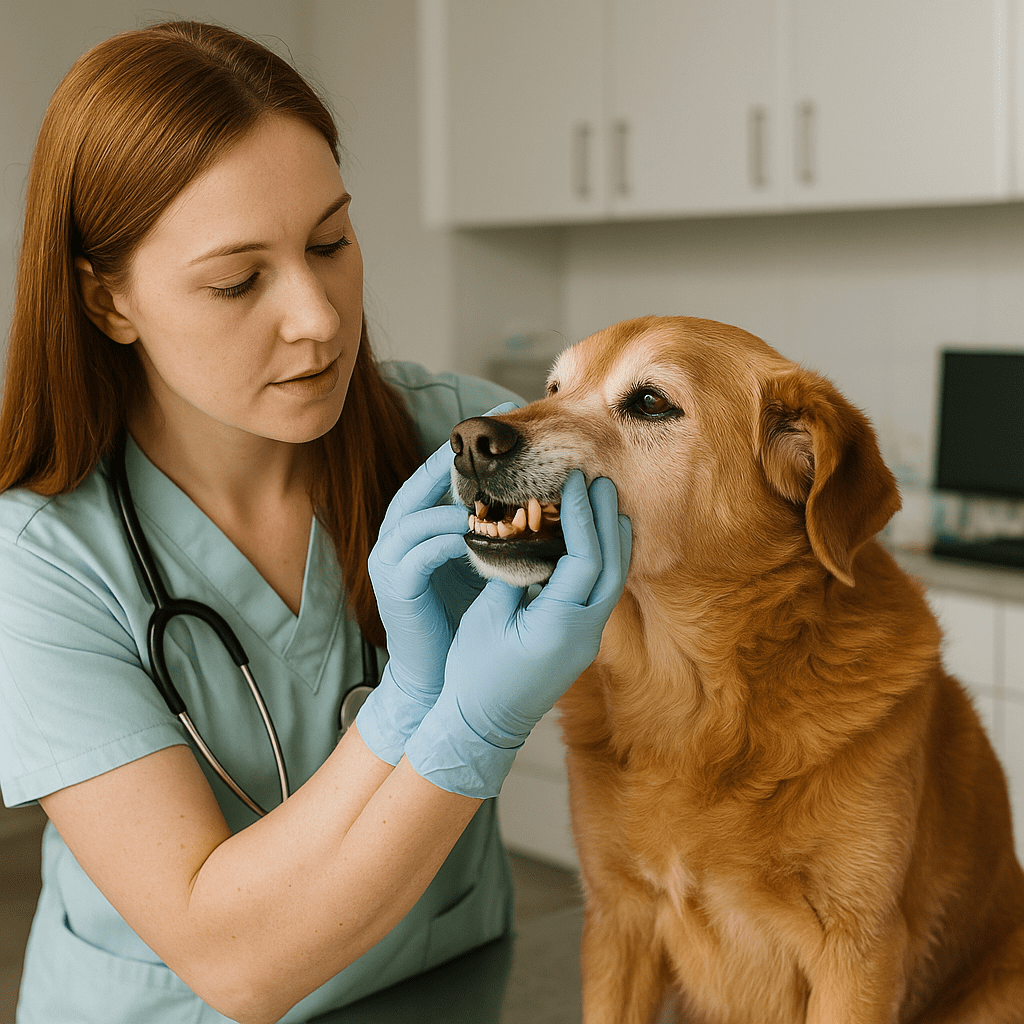
As dogs get older, dental problems become more common — and more serious. Plaque buildup, gum disease, tooth loss, and chronic pain can all affect your senior dog’s comfort and overall wellbeing. Poor dental hygiene can even lead to infections that impact the heart, kidneys, and liver.
If you’re building a complete care routine, make sure you visit our Senior Dog Health Guide for nutrition, mobility, grooming, and dental care advice. This guide combines real-world dog owner experience with veterinarian-supported practices to help you protect your senior dog’s teeth and overall health.
Why Dental Care Becomes Critical for Senior Dogs
Once a dog reaches 7–8 years old, tartar hardens more quickly, gums become more vulnerable, and infections become more dangerous. According to the American Veterinary Dental College, over 80% of dogs over age eight develop periodontal disease.
Untreated gum disease allows bacteria to travel into the bloodstream, negatively affecting vital organs including the heart, kidneys, and liver — a risk emphasized by the American Animal Hospital Association.
Nutrition also plays a key role in dental disease prevention. Explore best practices in our Senior Dog Nutrition Guide.
Common Signs of Dental Disease in Senior Dogs
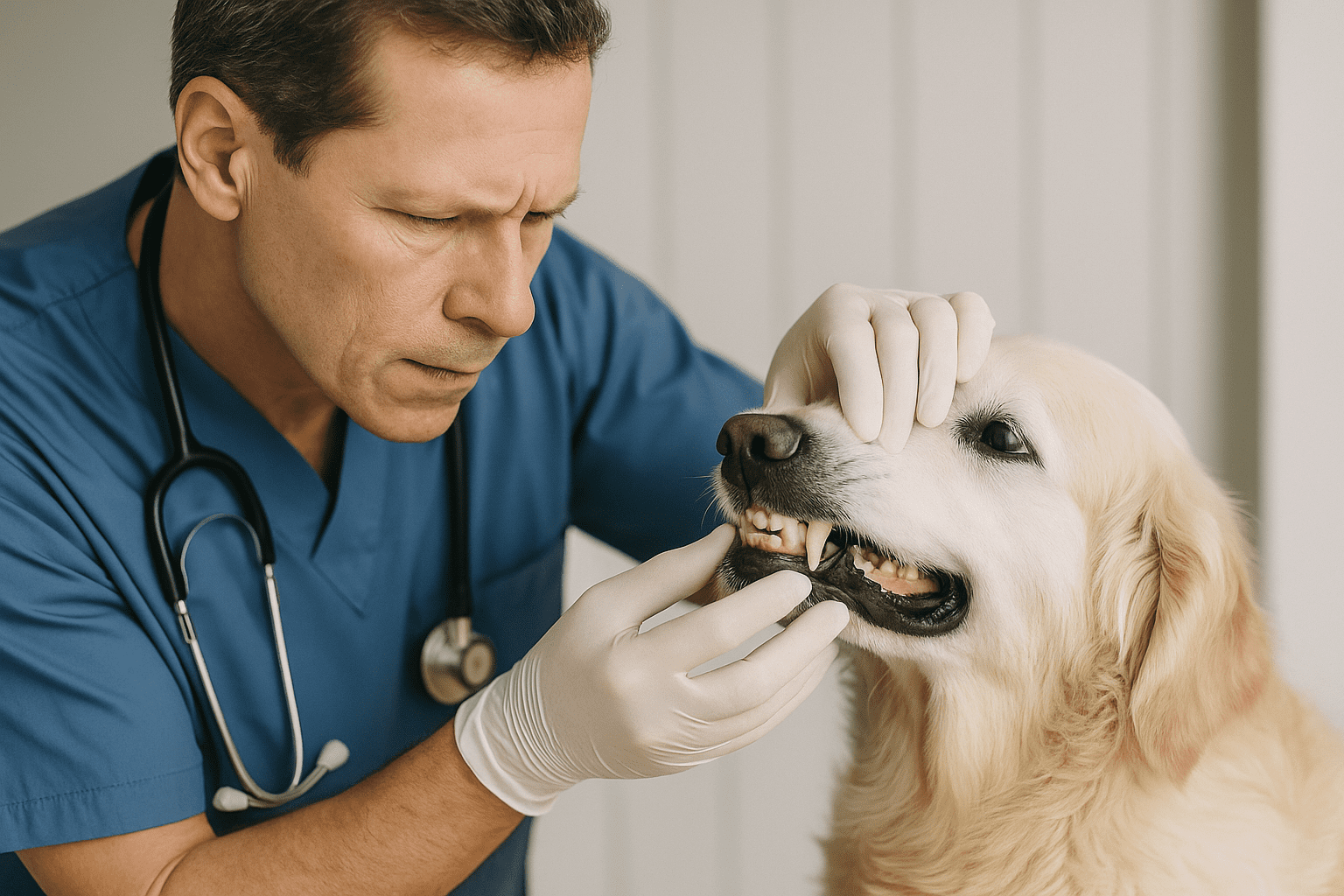
Watch for these symptoms:
- Persistent bad breath
- Tartar buildup
- Red or bleeding gums
- Pawing at the face
- Dropping food
- Chewing on one side
- Loose or missing teeth
- Difficulty eating
- Swelling around the mouth
- Excessive drooling
If your dog shows these signs, they may also be in pain. Learn more about subtle discomfort cues in our Signs of Pain in Senior Dogs. While dental issues and digestive changes are common, unexplained weight loss in senior dogs can also be an early warning sign of cancer that shouldn’t be ignored.
At-Home Dental Care for Senior Dogs
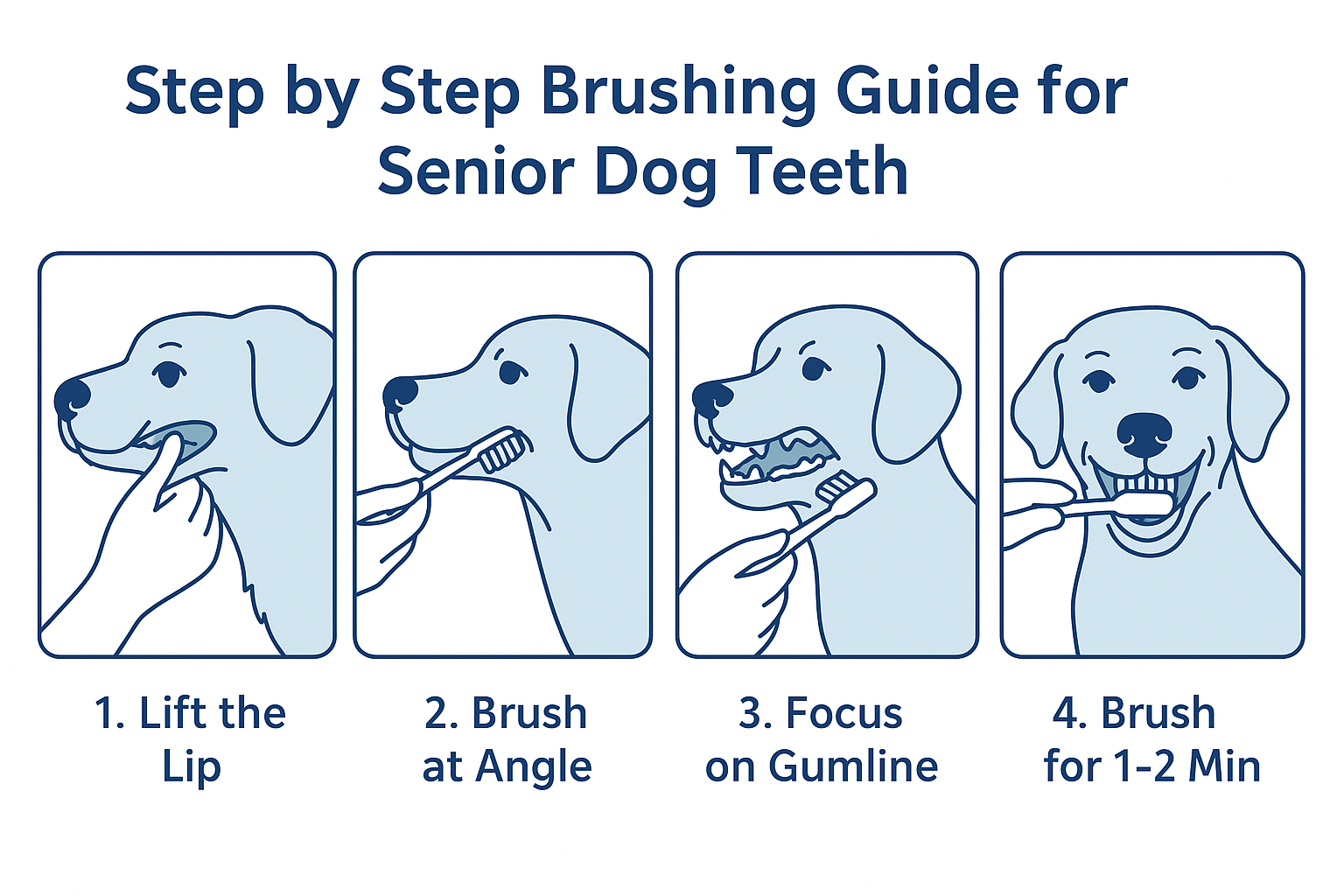
1. Brush Your Senior Dog’s Teeth
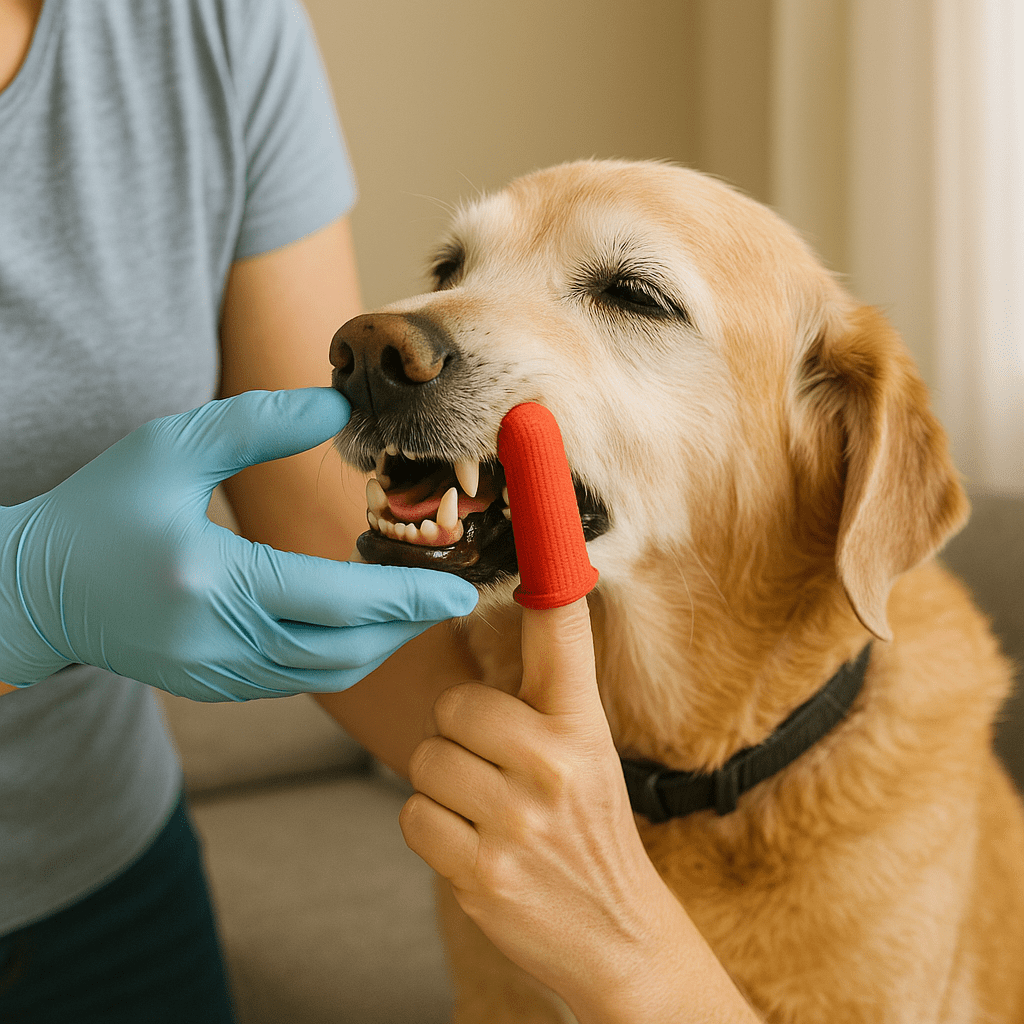
Brushing is the gold standard for preventing gum disease. Use a dog-safe enzymatic toothpaste — never human toothpaste.
For a step-by-step demonstration, visit our How to Brush a Senior Dog’s Teeth Guide.
For evidence-based product recommendations, check the Veterinary Oral Health Council Accepted Products List.
Brushing tips:
- Focus on the gum line
- Use slow, circular motions
- Start with short sessions
- Brush 3–7 times per week
If your dog has arthritis or resists brushing, dental wipes or chlorhexidine gels are helpful alternatives.
You can see our our top dog toothbrush picks in Best Dog Toothbrushes for Senior Dogs (Buyer’s Guide)
2. Choose Safe Dental Chews for Older Dogs
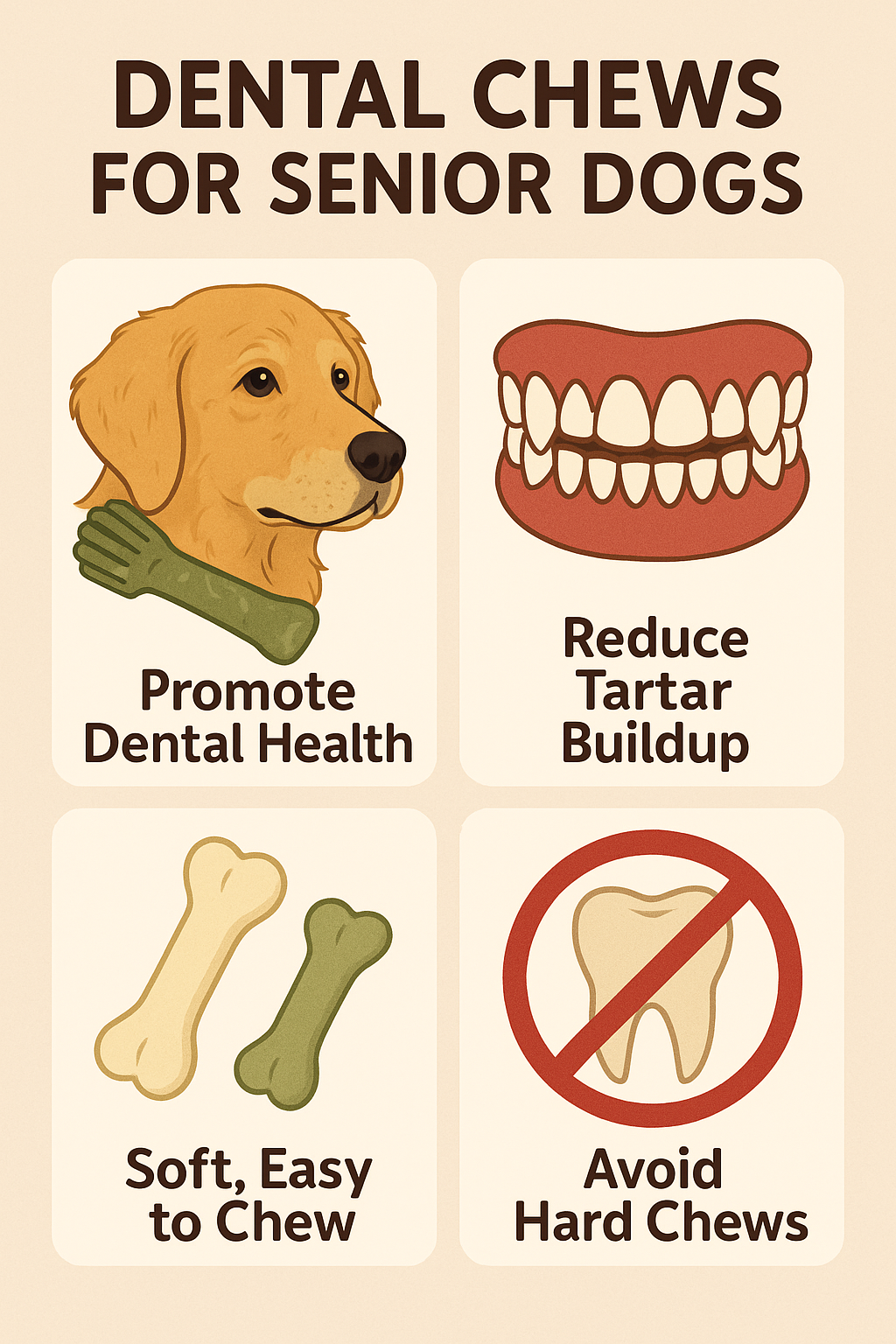
Dental chews encourage chewing and saliva production, both of which help reduce plaque.
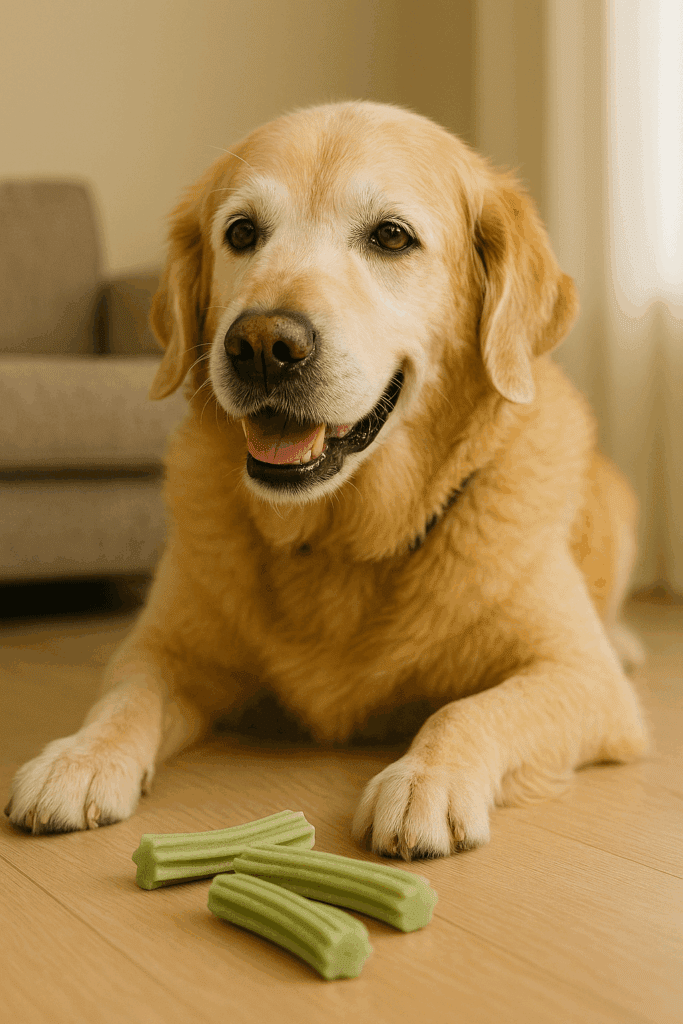
You can explore our top picks in Best Chews for Senior Dogs.
Best senior-friendly options:
- Soft-textured dental chews
- VOHC-approved products
- Rubber dental toys
Refer to the Veterinary Oral Health Council for authoritative chew safety guidance.
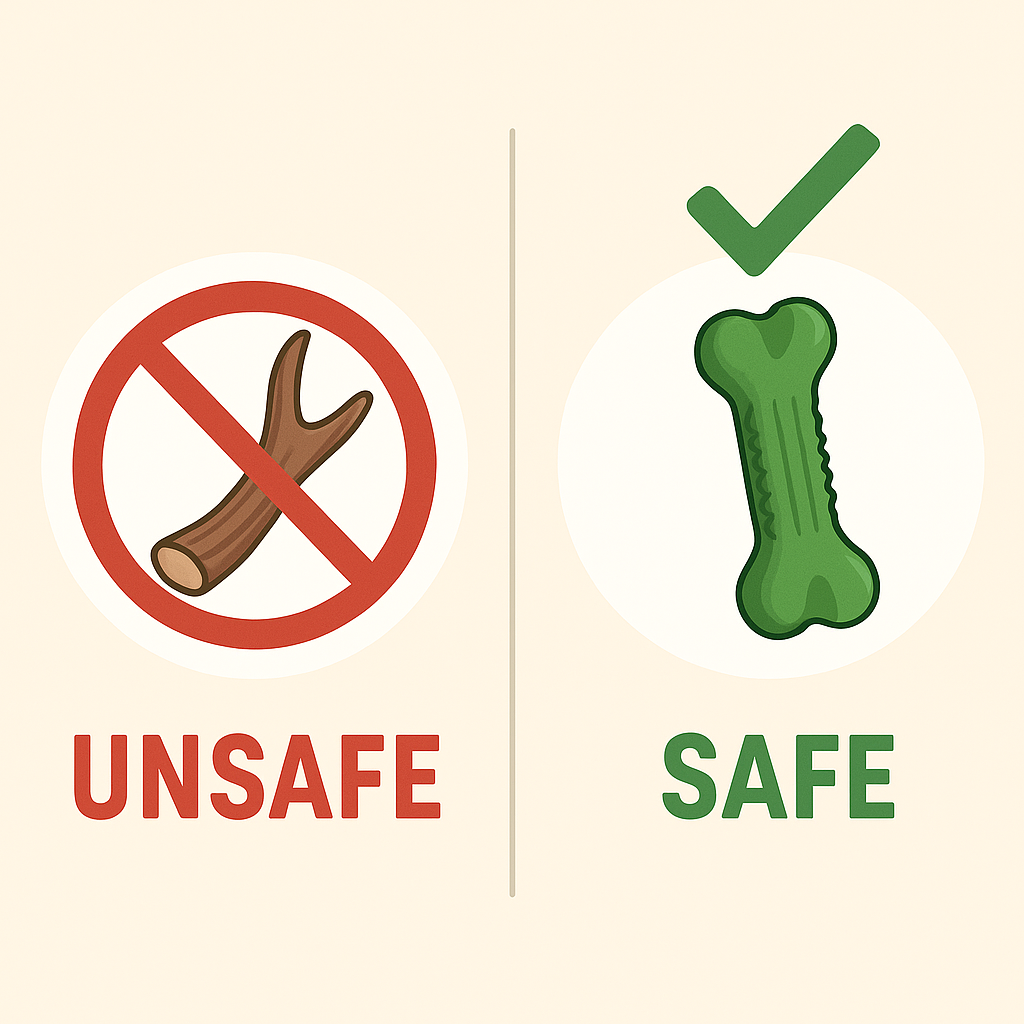
Avoid:
- Antlers
- Hard bones
- Hooves
- Hard nylon chews
These can easily crack senior dog teeth.
3. Support Oral Health Through Diet
Nutrition is closely tied to dental health in senior dogs. High-quality proteins, antioxidants, and omega-3s support gum tissue and immune health.
Learn more in our Best Food for Senior Dogs Guide.
Supportive additions include:
- Senior dental diets
- Dental water additives
- Omega-3 supplements
- Crunchy, plaque-reducing kibble textures
While diet alone cannot prevent gum disease, it provides crucial long-term support.
Professional Dental Cleanings for Senior Dogs
Even with great home care, tartar eventually develops below the gum line — where brushing can’t reach. That’s why professional dental cleanings are essential for senior dogs.
Most veterinarians recommend professional cleanings every 6–12 months for dogs over age seven.
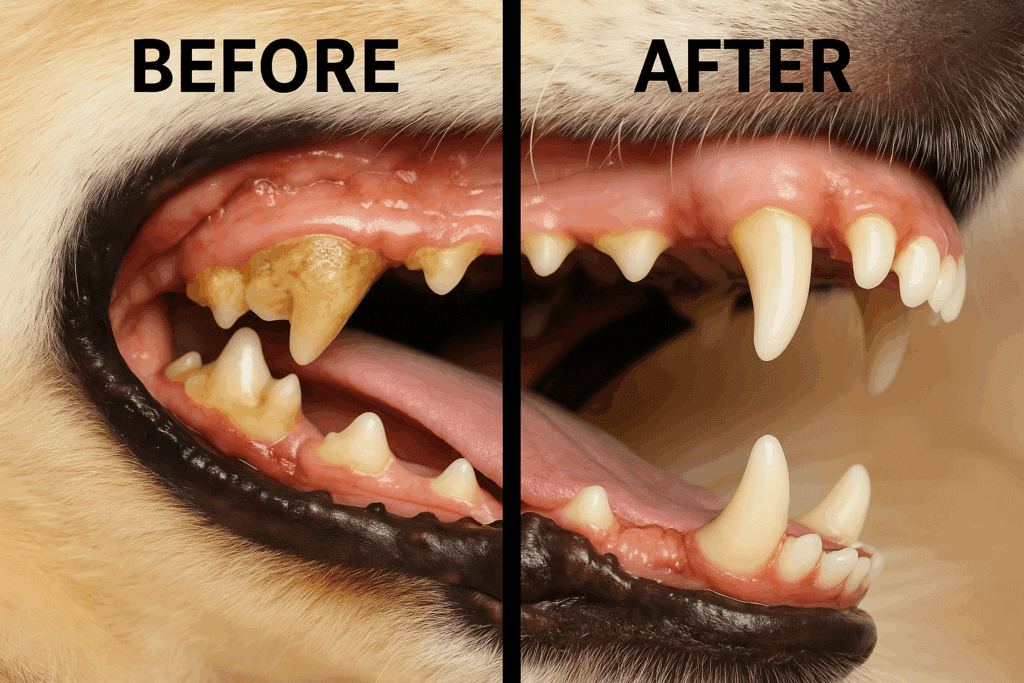
What a professional cleaning includes:
- Pre-anesthetic bloodwork
- Dental X-rays
- Gum line and subgingival scaling
- Tooth polishing
- Extractions (if needed)
- Pain management plan
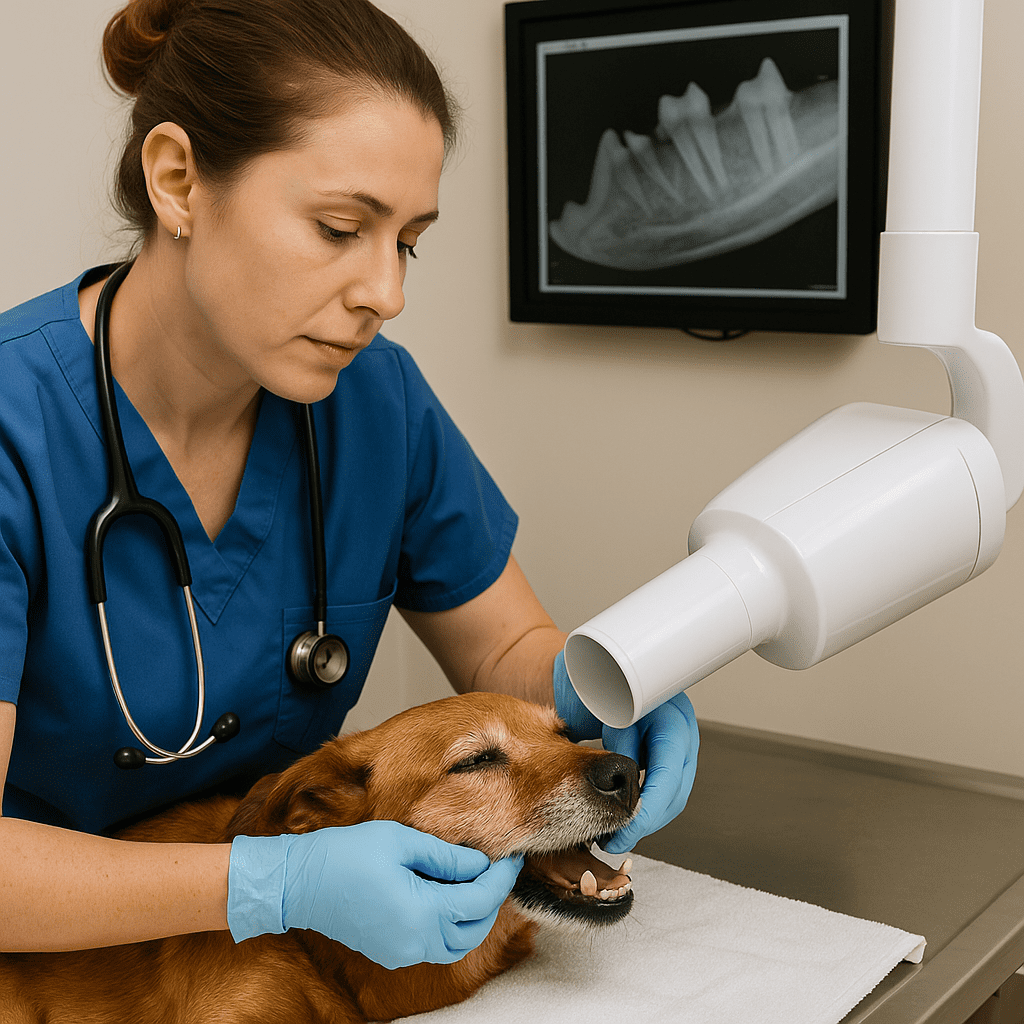
For a deeper look at what veterinarians evaluate during checkups, refer to our Senior Dog Vet Checkup Schedule.
To understand dental cleaning standards, see the Foundation for Veterinary Dentistry’s Pet Owner Guide.
Is Anesthesia Safe for Older Dogs?
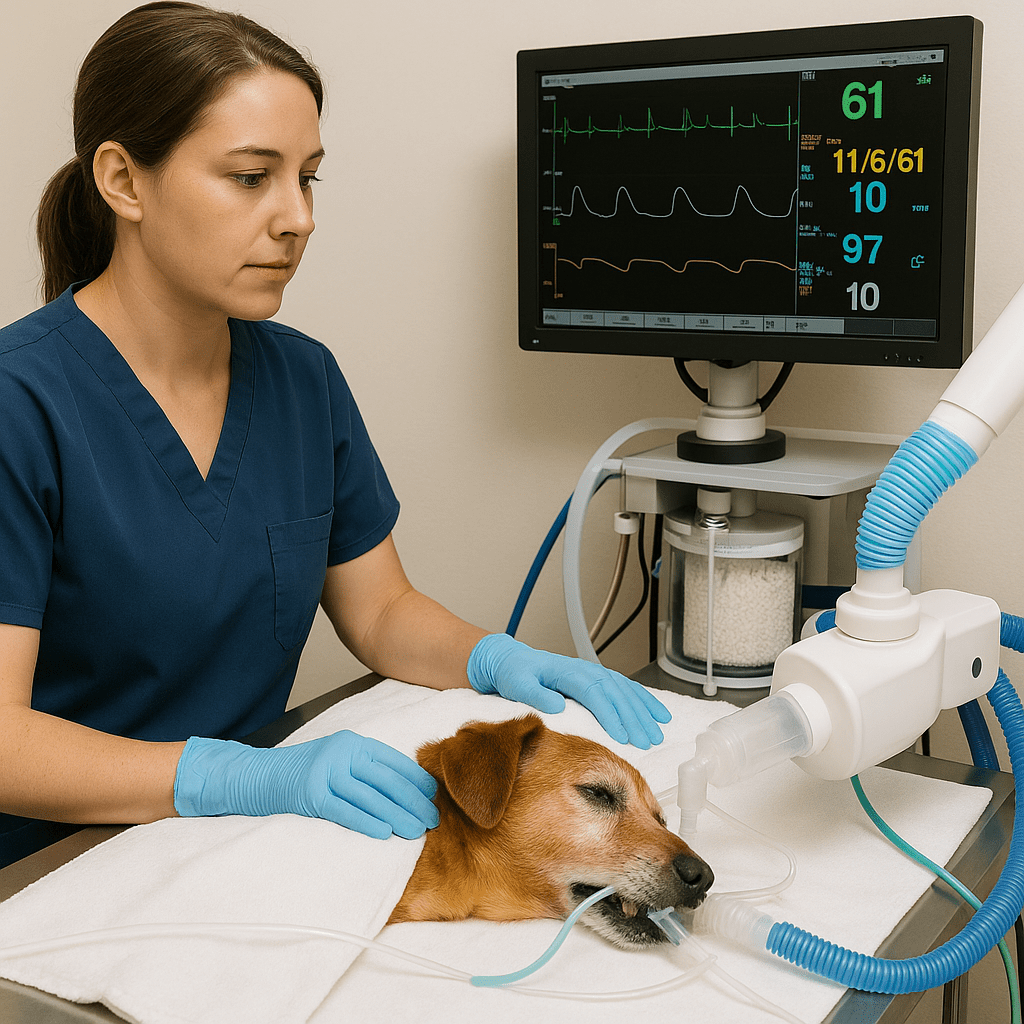
Many owners worry about anesthesia for senior dogs, but modern veterinary medicine has made the process significantly safer. According to the Veterinary Information Network, anesthesia is generally safe for older dogs with appropriate screening and monitoring.
Current protocols tailor anesthesia to your dog’s age, breed, organ function, and medical history.
Comparison: At-Home Dental Solutions
| Dental Solution | Effectiveness | Best For | Pros | Cons |
|---|---|---|---|---|
| Daily Brushing | ★★★★★ | All seniors | Best at preventing gum disease | Requires consistency |
| Dental Wipes | ★★★☆☆ | Dogs who resist brushing | Easy, gentle | Less effective |
| Dental Chews | ★★★★☆ | Light–moderate tartar | Enjoyable for dogs | Not enough for severe tartar |
| Water Additives | ★★☆☆☆ | Supplemental care | Helps reduce bacteria | Minimal effect alone |
Comparison: Vet Cleaning vs Non-Anesthetic Cleaning
| Procedure | Depth of Cleaning | Safety | Best For | Notes |
|---|---|---|---|---|
| Vet Dental Cleaning (Anesthesia) | Full, above + below gum line | High with proper screening | Most senior dogs | Required for X-rays & periodontal treatment |
| Non-Anesthetic Cleaning | Surface only | Safe | Mild tartar | Cosmetic; cannot treat disease |
Senior Dog Dental Care Checklist
- Brush teeth 3–7× per week
- Use VOHC-approved, senior-friendly chews
- Avoid hard bones and antlers
- Inspect gums weekly for redness or swelling
- Watch for chewing changes
- Schedule dental cleanings every 6–12 months
- Feed a supportive senior diet
FAQ: Senior Dog Dental Care
How often should I brush my senior dog’s teeth?
Daily brushing is ideal. If that’s not possible, aim for at least 3–4 times per week.
For technique and tools, see our Senior Dog Teeth Brushing Guide.
Are dental chews safe for older dogs?
Yes — as long as you choose softer, VOHC-approved chews. Hard bones can crack aging teeth.
For recommendations, visit our Best Chews for Senior Dogs.
Do senior dogs need professional dental cleanings more often?
Usually yes. Older dogs accumulate tartar faster and often need cleanings every 6–12 months. Your veterinarian’s guidance is essential.
Is anesthesia too risky for senior dogs?
With modern screening and monitoring, anesthesia is considered safe for most older dogs. Veterinarians explain the process clearly in the VIN anesthesia safety guide.
Dental Care is Senior Dog Wellbeing
Dental care is one of the most important — and most overlooked — parts of senior dog wellbeing. By brushing regularly, choosing safe chews, feeding a supportive diet, and scheduling professional cleanings, you’ll dramatically improve your dog’s comfort, happiness, and overall health.
With the right routine, your senior dog can enjoy their golden years pain-free, energetic, and full of life.