

By Gary Bennett
Last Updated: 12-6-25
Caring for a dog with arthritis can feel overwhelming, especially as mobility changes appear gradually and symptoms vary from day to day. At SeniorDogWellbeing.com, we combine research-backed guidance with practical experience caring for older dogs to help you understand arthritis, manage pain, and improve your dog’s comfort and quality of life. This guide outlines proven, veterinarian-supported strategies you can begin using right away.
When your best friend starts slowing down
If your senior dog isn’t as quick to hop up on the couch or seems stiff after naps, you’re not alone. Arthritis is one of the most common health issues older dogs face — but here’s the good news: with the right senior dog arthritis care, you can make a huge difference in their comfort and happiness.
Let’s walk through what to look for, how to help, and what really works to keep those golden years full of tail wags.
Many arthritis-related changes — like stiffness after rest or reluctance to move — are also common senior dog pain symptoms, which you can assess using a structured pain level checker.
What You Should Know About Arthritis in Senior Dogs
Osteoarthritis is one of the most common chronic conditions in aging dogs. It involves the gradual degeneration of cartilage and joint structures, often affecting:
- Hips
- Elbows
- Knees
- Spine
Arthritis cannot be “cured,” but the right combination of lifestyle changes, pain management, mobility support, and environmental adjustments can significantly extend your senior dog’s comfort and slow disease progression.
For additional senior-care guidance, see:
👉 Senior Dog Health Guide
👉 Best Orthopedic Beds for Senior Dogs
Spotting the early signs of arthritis
Most owners first notice little changes — maybe your dog hesitates on the stairs or struggles to get into the car. Sometimes they just seem “off.”
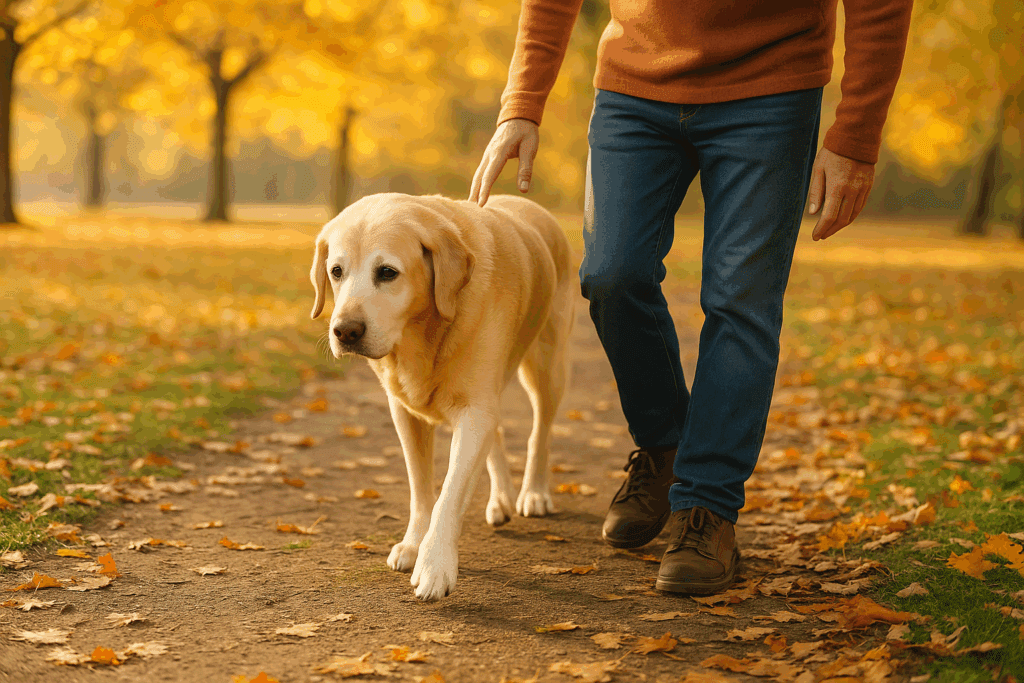
Common signs include:
- Limping or favoring one leg
- Stiffness, especially in the morning or after resting
- Trouble jumping up or lying down
- Avoiding walks or playtime
- A new “slower” version of your once-energetic pup
If any of this sounds familiar, it’s worth chatting with your vet. Early action is one of the best gifts you can give when it comes to senior dog arthritis care. According to the veterinary experts at Canine Arthritis Resources & Education (CARE), many early arthritis signs are subtle and often mistaken for “normal aging,” which delays treatment.
If you’ve noticed your older dog bumping into furniture or not responding to cues, our guide on senior dog vision and hearing loss explains what’s normal and when it’s time to contact your vet.
What your vet can do
Your vet can check for arthritis through a simple physical exam and, if needed, X-rays. From there, they might recommend:
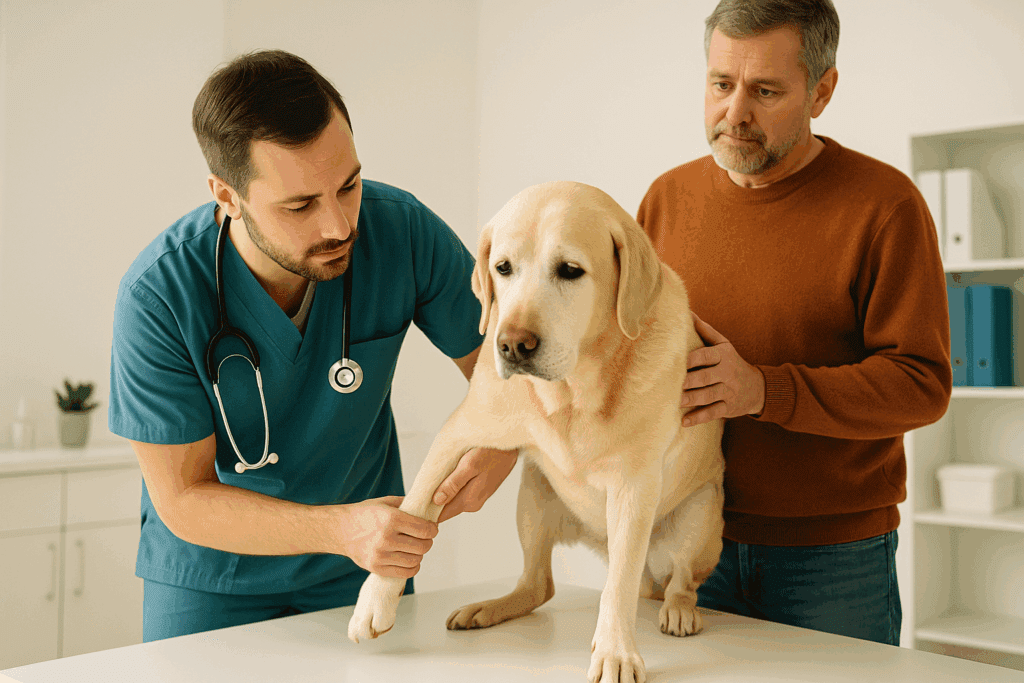
- Pain-relieving medication (like safe NSAIDs for dogs)
- Joint supplements such as glucosamine or omega-3s
- Physical therapy or hydrotherapy sessions
The goal isn’t to “cure” arthritis — it’s to help your dog live comfortably, move easily, and stay happy. With a little teamwork, that’s completely possible. The American Kennel Club (AKC) notes that multimodal treatment — combining medication, weight control, supplements, and physical therapy — offers the best long-term results for senior dogs with arthritis.
Why weight control matters so much
Extra pounds are tough on aging joints. In fact, weight management might be the single most effective way to help an arthritic dog.

Try these small changes:
- Measure food portions carefully
- Use healthy treats like green beans or blueberries
- Add light exercise (short, gentle walks) daily
Keeping your pup lean takes pressure off their joints and improves mobility — it’s a must-do for any senior dog arthritis care plan.
Gentle movement keeps joints happy
You don’t need long hikes or intense playtime anymore. Instead, think low impact and consistent.

A few ideas:
- Short walks on soft grass
- Swimming or underwater treadmill therapy (great for joint pain)
- Light stretching or slow indoor games
Avoid slick floors and hard pavement when possible. And if you haven’t already, invest in rugs or traction mats — it’s a small change that prevents a lot of slips.
Create a cozy, arthritis-friendly home
Comfort makes a world of difference for older dogs. Start with an orthopedic or memory-foam bed that supports their joints.
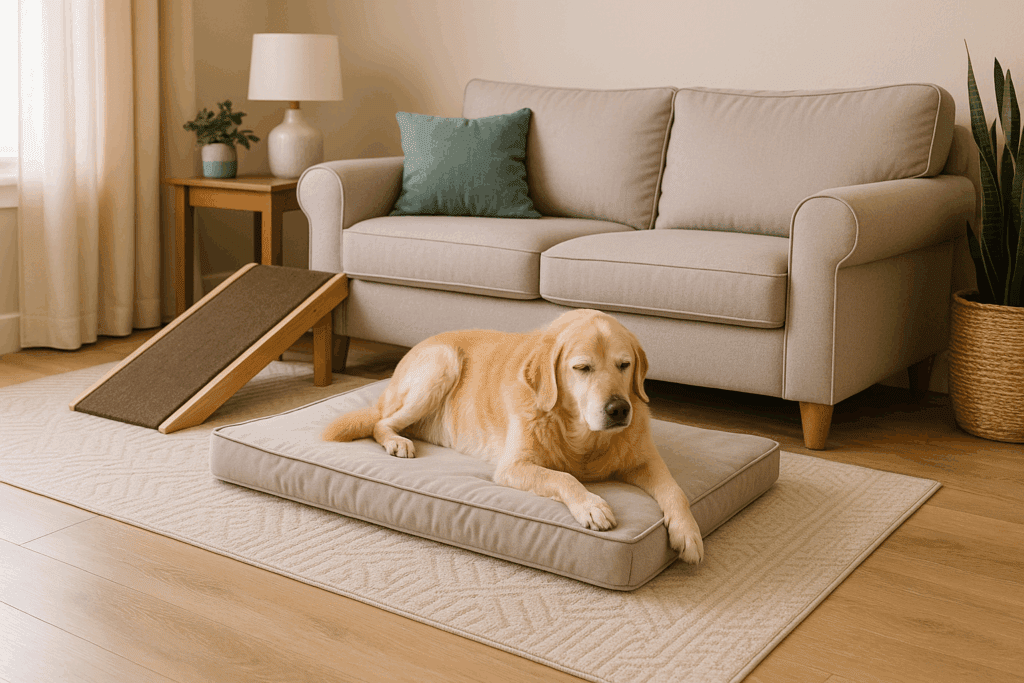
Other home adjustments:
- Add ramps or stairs to help them reach favorite spots
- Keep food and water bowls raised to reduce neck strain
- Make sure resting areas are warm and draft-free
- Use non-slip rugs wherever your dog walks
Think of your house as their “aging-in-place” zone — a safe space for a senior who still wants to be close to you.
For dogs with arthritis, a thicker orthopedic bed like Big Barker can reduce joint pressure during rest.
Supplements that actually help

There are a lot of joint supplements out there, but a few stand out:
- Glucosamine + Chondroitin – support cartilage repair
- Omega-3 fatty acids – reduce inflammation naturally
- Green-lipped mussel – powerful joint soother
- Turmeric (curcumin) – gentle, natural anti-inflammatory
Always check with your vet before adding new supplements — they’ll help you find the right combo for your dog’s condition.
🐾 Bonus: Check out our Top Senior Dog Joint Supplements roundup for vet-approved favorites.
Try alternative therapies too

Modern senior dog arthritis care isn’t just pills and beds. Many pet parents swear by:
- Gentle massage therapy
- Laser or acupuncture treatments
- Hydrotherapy for strengthening muscles without impact
You might be surprised how much more relaxed and mobile your dog feels after just a few sessions.
Keep track and adjust as you go
Every dog is different, and arthritis changes over time. Keep a little “mobility journal” — jot down how they move each week, their mood, or any limping you notice.
If things worsen, your vet can tweak medication, add supplements, or adjust exercise routines. Staying flexible (pun intended!) is key.
Pain in older dogs isn’t always caused by arthritis alone—some symptoms overlap with the signs of cancer in senior dogs, especially when discomfort appears suddenly or worsens quickly.
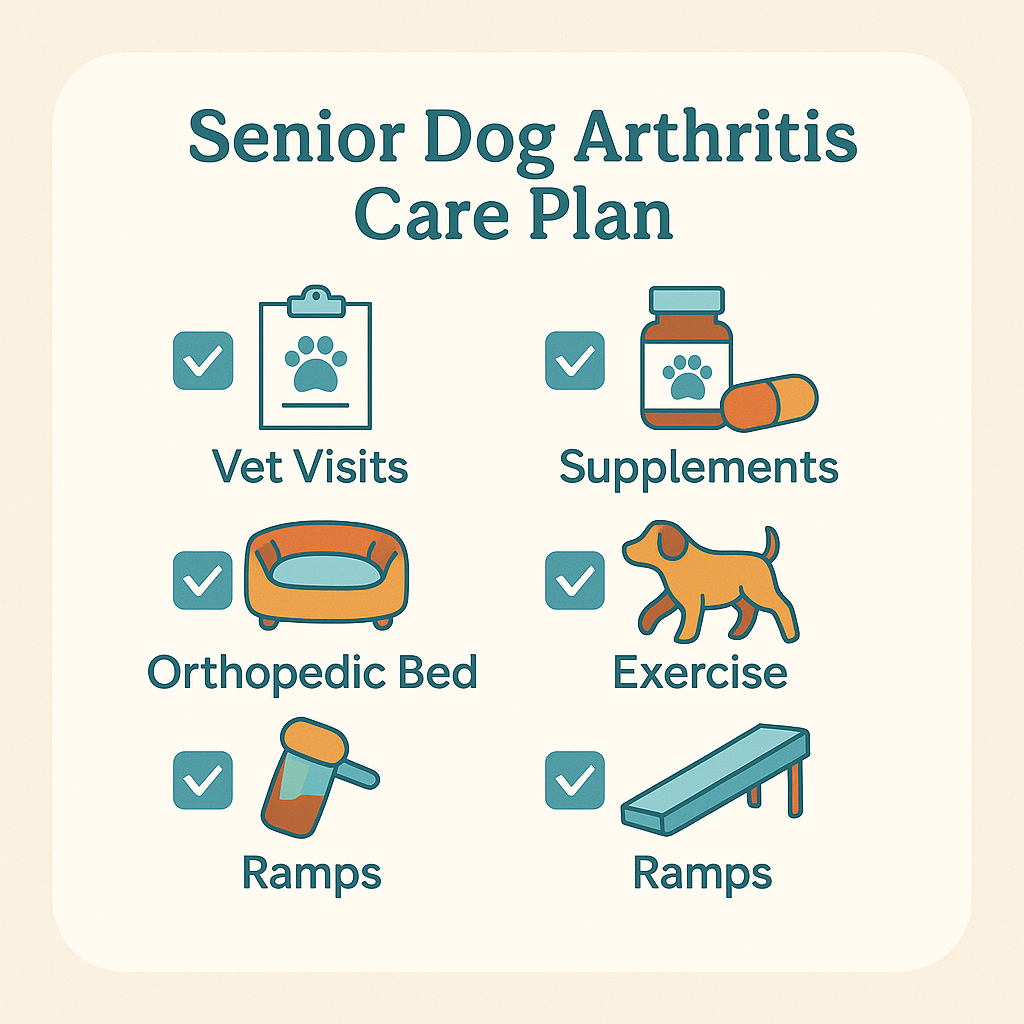
Your quick senior dog arthritis care checklist 🐶
- Vet visit + official diagnosis
- Weight management plan
- Pain relief and joint supplements
- Soft orthopedic bed
- Non-slip flooring or rugs
- Gentle daily exercise
- Home ramps or steps
- Regular progress check-ins
Next: Get our Senior Dog Health Checklist (Free PDF), Senior Dog Health Guide: Complete Wellness for Your Aging Dog, and How to Brush Dogs Teeth at Home.
FAQs
Can arthritis be cured?
No, but it can be managed beautifully. With the right plan, most dogs stay active and comfortable for years.
Is it OK for my senior dog to still play?
Absolutely! Just keep it low-impact and stop if they seem sore or tired.
Do supplements really work?
Yes, especially when combined with proper diet, exercise, and vet care.
How can I tell if my dog’s arthritis is getting worse?
Watch for limping, stiffness, or avoiding stairs — and don’t wait too long to check with your vet.

Here’s the Truth
Caring for an arthritic dog can feel emotional — we all hate seeing our pets slow down. But here’s the truth: senior dog arthritis care is all about giving them more good days.
With the right mix of vet care, comfort, movement, and love, your senior pup can still enjoy the simple joys that make life so sweet — a walk in the sun, a soft bed at night, and your hand resting gently on their paw.
Evidence-Based Arthritis Care Approaches
This article incorporates proven strategies including:
- Pain-control plans under veterinary supervision
- Environmental modifications to reduce joint stress
- Multimodal arthritis treatment (exercise, supplements, meds)
- Weight optimization to extend mobility and lifespan
- Ongoing monitoring and adjustments as dogs age
We update this guide as new arthritis research becomes available.
About the Author — Gary Bennett
Gary Bennett is the founder of SeniorDogWellbeing.com, specializing in senior dog longevity, mobility support, arthritis care, and evidence-based wellness strategies. He studies canine aging, pain management approaches, nutrition, and lifestyle interventions to help pet parents improve their dog’s comfort and quality of life.
Editorial Review
This article was reviewed by the SeniorDogWellbeing Editorial Team, which focuses exclusively on senior dog wellness, canine aging, mobility, and arthritis management. Content is evaluated for clarity, accuracy, and alignment with current veterinary recommendations.
Last Reviewed: 12/6/25
Disclaimer
This content is for informational purposes only and is not a substitute for professional veterinary advice. Always consult your veterinarian before changing your dog’s medications, supplements, exercise routines, or arthritis treatment plan.
Sources & References
- American College of Veterinary Surgeons (ACVS) – Canine Osteoarthritis
- American Veterinary Medical Association (AVMA) – Senior Pet Care Guidelines
- AAHA Pain Management Guidelines for Dogs and Cats
- Canine Arthritis Management (CAM) — Evidence-Based OA Resources
- Veterinary Clinics of North America: Small Animal Practice – Musculoskeletal Disorders
- Peer-reviewed studies on canine osteoarthritis, mobility, and joint supplements