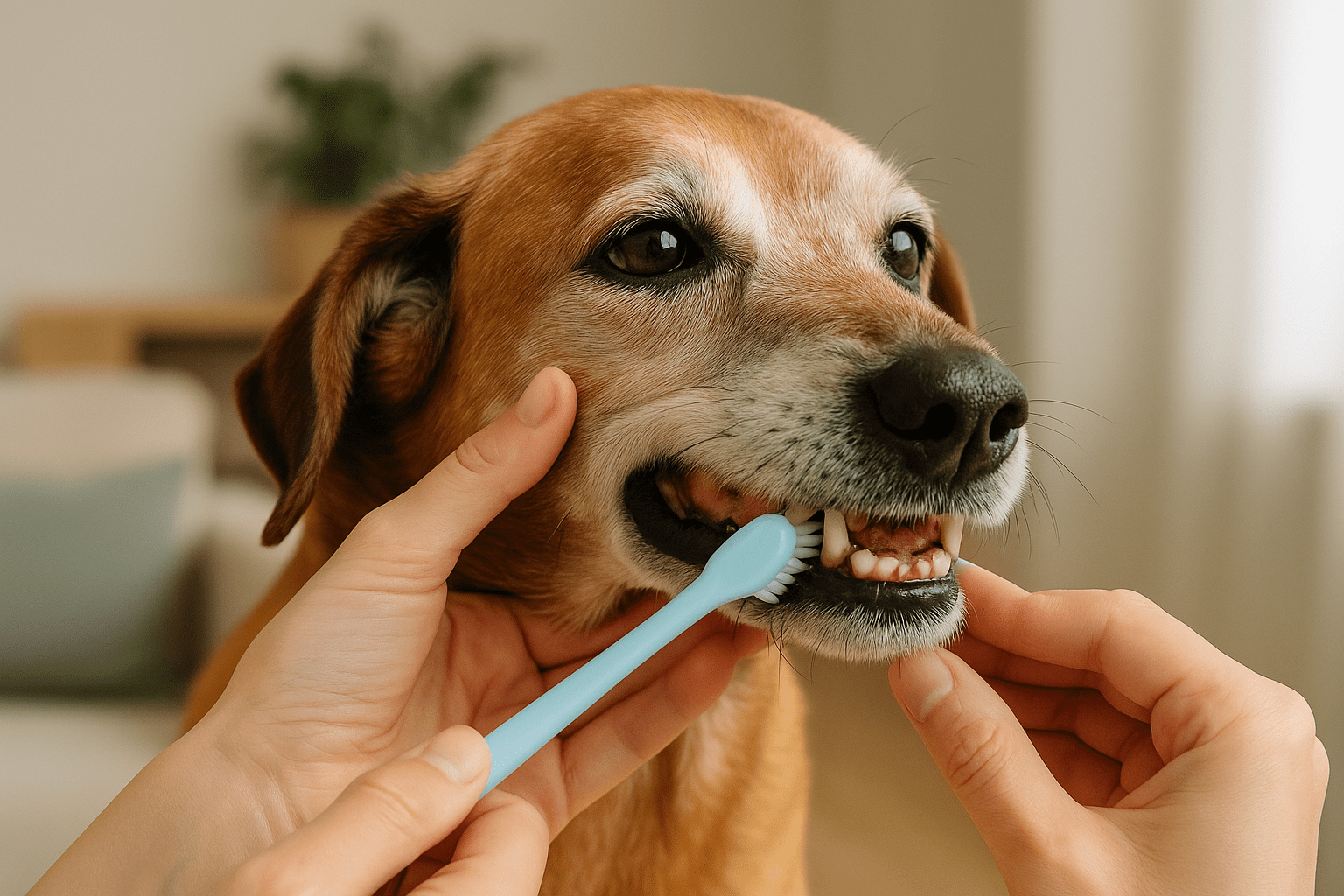
Brushing your older dog’s teeth can feel intimidating—especially if you’ve never done it before. But learning how to brush a dog’s teeth is one of the most effective ways to protect your senior dog from pain, infection, and expensive dental procedures.
This guide shows you exactly how to brush a senior dog’s teeth step-by-step, with senior-specific tips you won’t find in generic pet-care articles. It also includes dog-friendly tools, professional dental care advice, and alternatives if your older dog simply won’t tolerate brushing.
For deeper context on dental issues, see our full guide on senior dog dental problems.
Why Senior Dog Dental Care Matters More Than Ever
Dental disease is one of the most common and overlooked issues in aging dogs. By age 3, over 80% of dogs already have dental problems—and the risks only increase as your dog enters their senior years.
Why plaque and tartar build up faster in older dogs
- Years of eating and chewing cause plaque to accumulate.
- Senior dogs often have receding gums, making teeth more vulnerable.
- Infections in the mouth can spread and affect the heart, kidneys, and liver.
- Older dogs may already have loose or painful teeth, making early prevention crucial.
If you’re trying to improve your senior dog’s oral health at home, learning how to brush their teeth correctly is the single most important habit you can establish.
Is It Safe to Brush an Older Dog’s Teeth?
In most cases—yes. Brushing an older dog’s teeth is safe, effective, and recommended.
But consult your vet first if your dog has:
- Heavy tartar buildup (thick yellow or brown deposits)
- Bleeding gums
- Loose, broken, or missing teeth
- Facial swelling or reluctance to let you touch their mouth
- Drooling, dropping food, or refusing kibble
Most senior dogs benefit from a professional dog dental cleaning before starting a home routine. Once their mouth is treated and comfortable, at-home brushing becomes much easier.
What You Need to Brush a Senior Dog’s Teeth
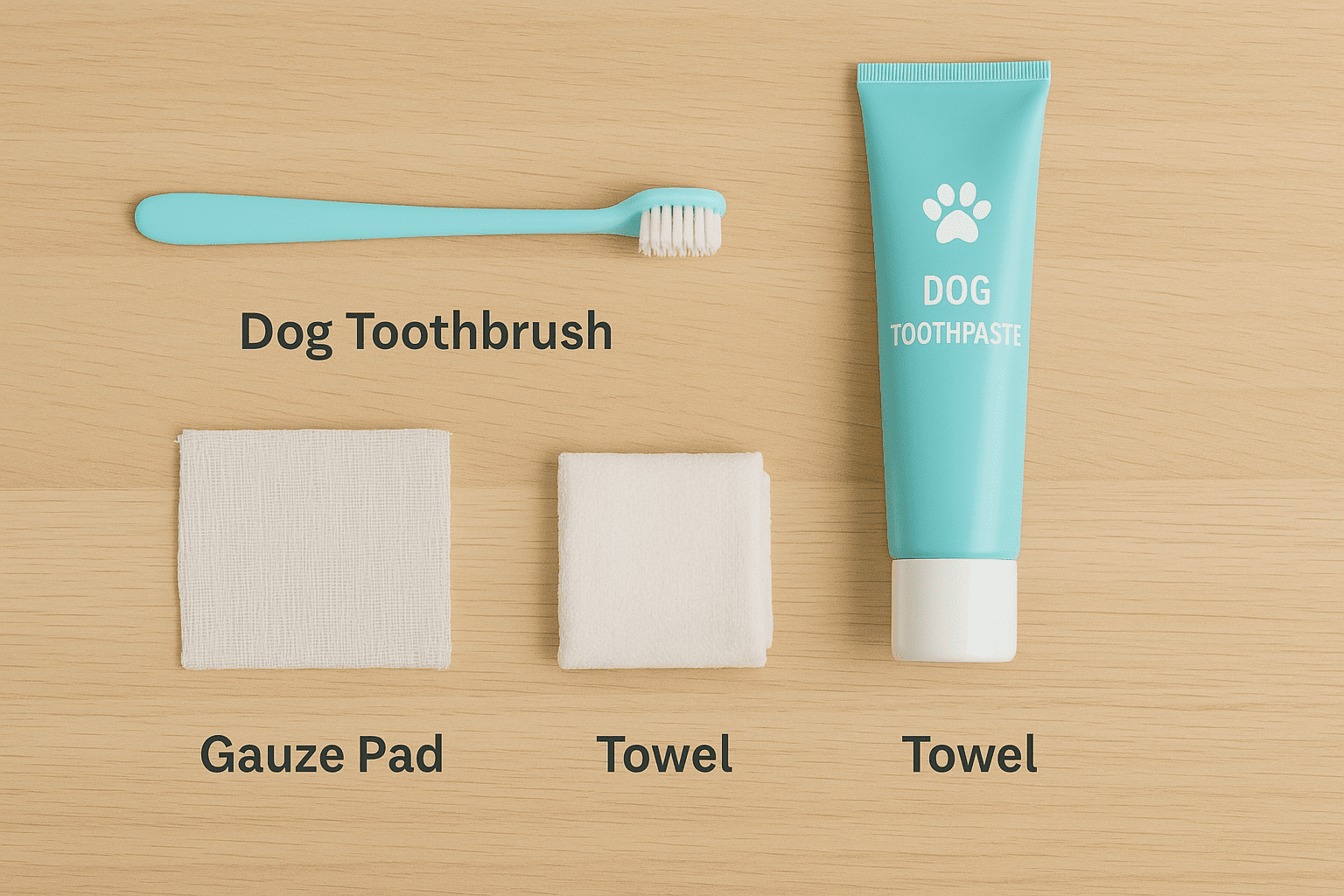
Before starting your senior dog dental care routine, gather these tools:
- Soft-bristled dog toothbrush or double-headed dog toothbrush
- Finger brush — often better for older dogs with small mouths or anxiety
- Dog-safe enzymatic toothpaste (never use human toothpaste)
- Dental wipes or gauze (useful for dogs who won’t tolerate brushes)
- Calming treats or a senior-friendly reward
- A stable, non-slip mat
These tools make brushing easier and safer—especially for senior dogs with arthritis, stiffness, or reduced mobility. Looking for product recommendations? See our comparison of the best toothbrushes for senior dogs and best dental chews for senior dogs.
Step-by-Step: How to Brush a Dog’s Teeth at Home (Senior-Friendly Method)
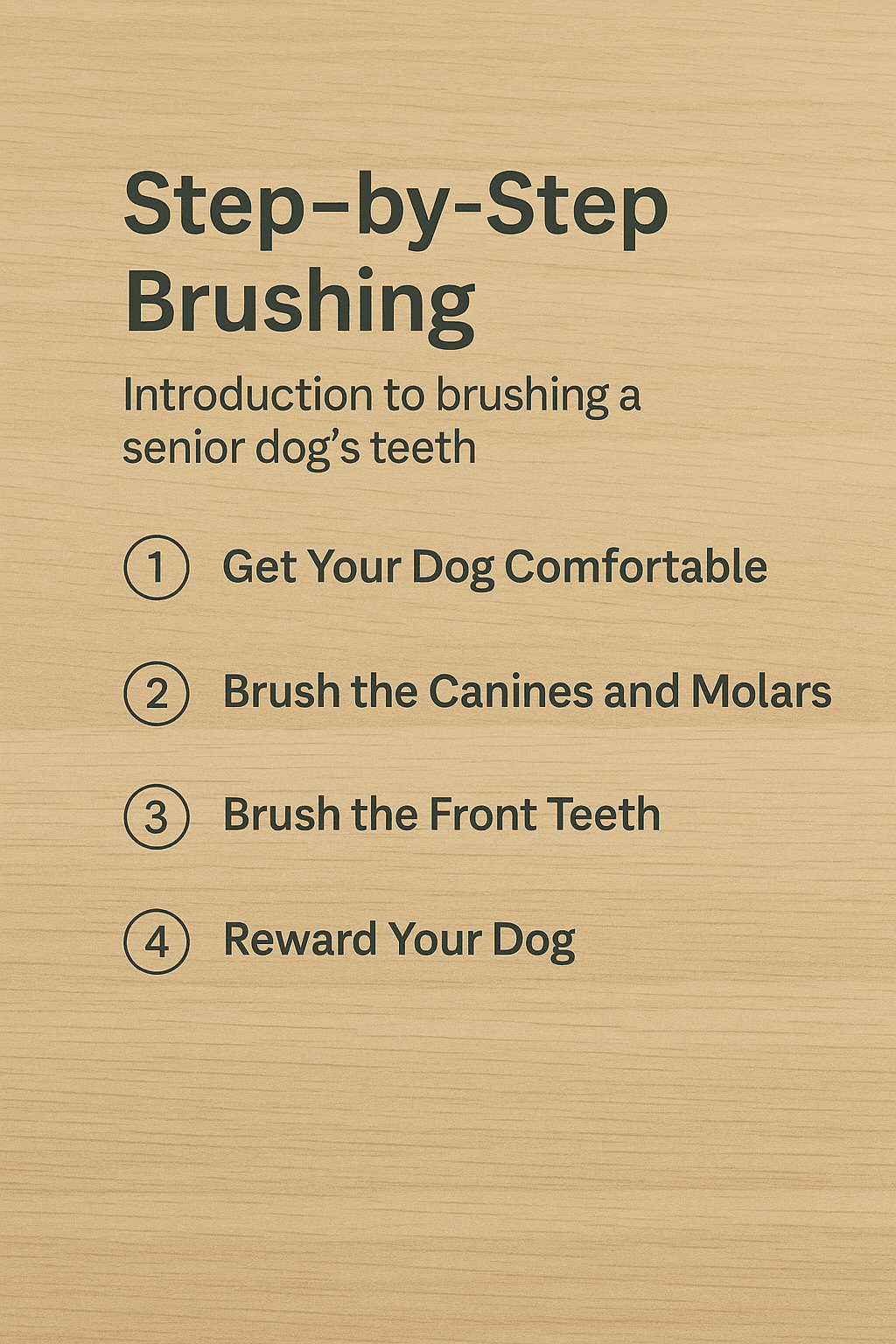
Step 1: Choose a Calm Time and Comfortable Setup
Senior dogs thrive on routine. Choose a quiet time, ideally when your dog is already relaxed—after a walk or in the evening.
Make the space senior-friendly:
- Use a comfortable dog bed or couch spot
- Avoid slippery floors
- Sit at your dog’s level so they feel safe
If your dog struggles with grooming or new experiences, see our senior dog comfort guide.
Step 2: Help Your Dog Get Comfortable With Mouth Handling
Before focusing on how to brush a dog’s teeth, you need to desensitize your dog to the process.
For a few days:
- Gently pet your dog’s muzzle and cheeks.
- Lift their lip for just 1–2 seconds, then reward.
- Touch their teeth and gums with your finger.
- Praise them for calm behavior.
This is especially important for older dogs with anxiety, arthritis, or cognitive decline.
Step 3: Introduce Dog Toothpaste as a Treat
Let your dog lick a pea-sized amount of toothpaste from your finger.
Use senior-dog-friendly flavors like chicken or peanut butter to make the process enjoyable.
Once your dog gets excited about the toothpaste, you’re ready to start brushing.
Step 4: Start With a Finger Brush or Gauze
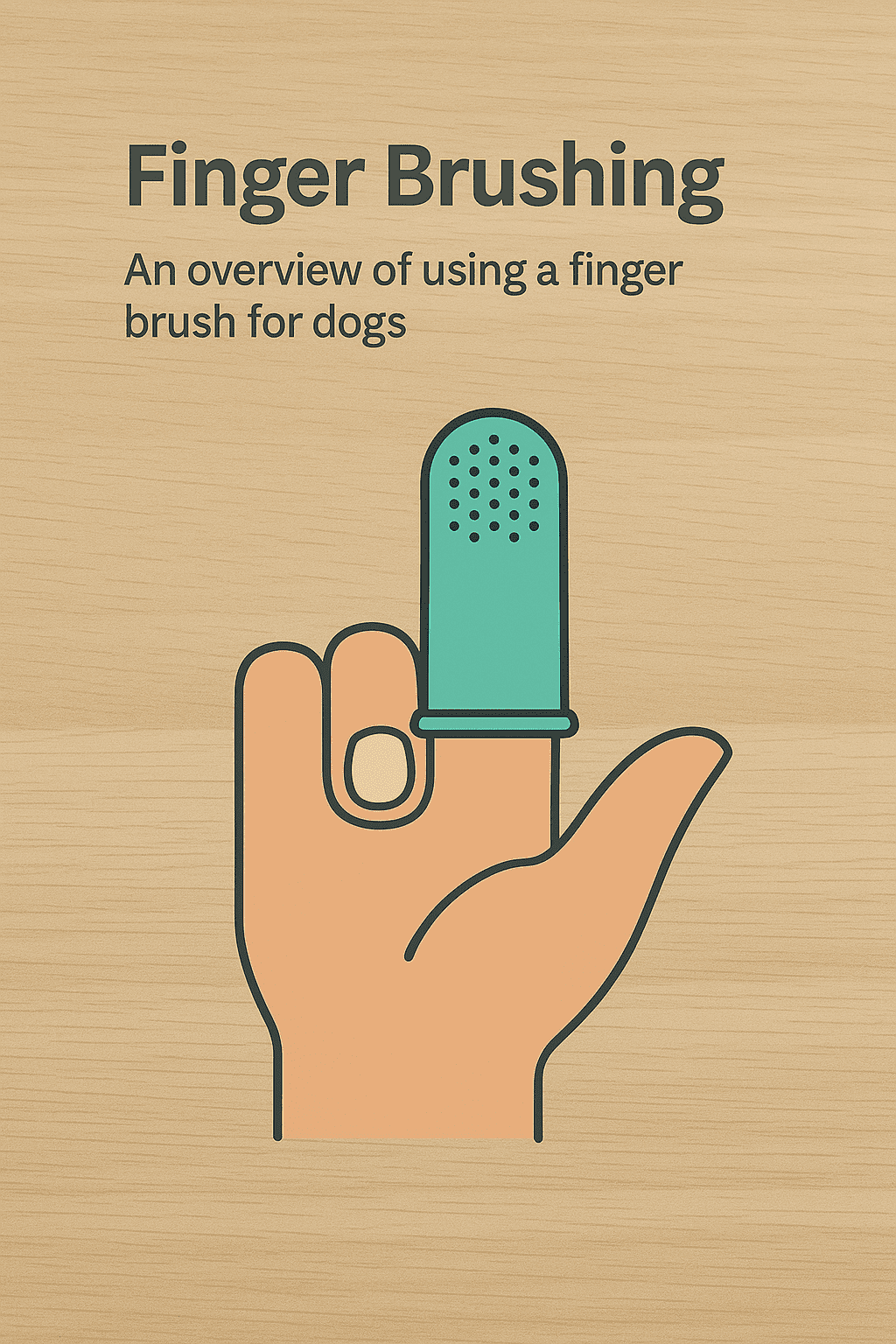
Senior dogs often prefer a finger brush because it’s softer and less intimidating.
- Apply toothpaste
- Lift the lip gently
- Rub the outer surfaces of the teeth
- Focus on back teeth (where most tartar develops)
- Keep the session under 20–30 seconds at first
This is the easiest entry point into dog teeth cleaning at home. If your dog avoids brushing due to discomfort, see our article on arthritis in senior dogs to help make the process less painful.
Step 5: Transition to a Soft Dog Toothbrush
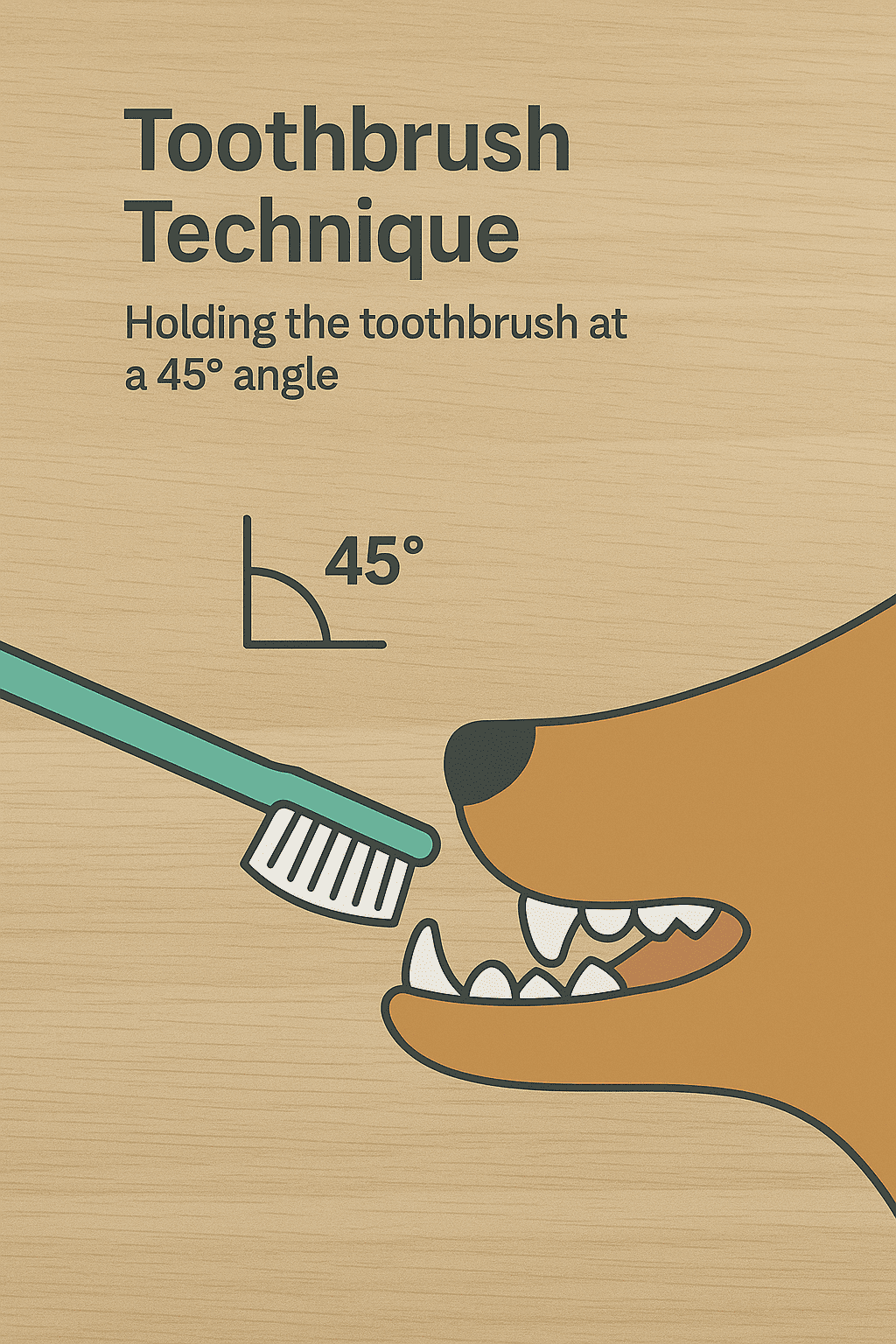
Once your senior dog tolerates your finger near their teeth:
- Let them sniff and lick the toothpaste off the brush.
- Hold the brush at a 45° angle.
- Use gentle circular motions.
- Focus mostly on the outside of the upper molars and premolars.
- Aim for a total brushing time of 1–2 minutes.
Tip: Most plaque is on the outer surfaces. You don’t need to pry the mouth open. For product ideas, visit our list of best toothbrushes for senior dogs.
Step 6: Keep It Senior-Dog Friendly
Make brushing comfortable by adjusting to your dog’s needs:
- Support arthritic dogs with cushions
- Keep sessions short for dogs with cognitive decline
- Avoid brushing loose or painfully sensitive teeth
- Use warm water to soften the bristles
Older dogs need compassion and patience—especially if brushing is new to them.
Step 7: Reward, Praise, and End on a Positive Note
Finish each session with:
- A small treat
- A dental chew
- A cuddle or short play session
Your dog should look forward to the brushing routine, not dread it. See our review of best dental chews for senior dogs.
How Often Should You Brush a Senior Dog’s Teeth?
For optimal dental health:
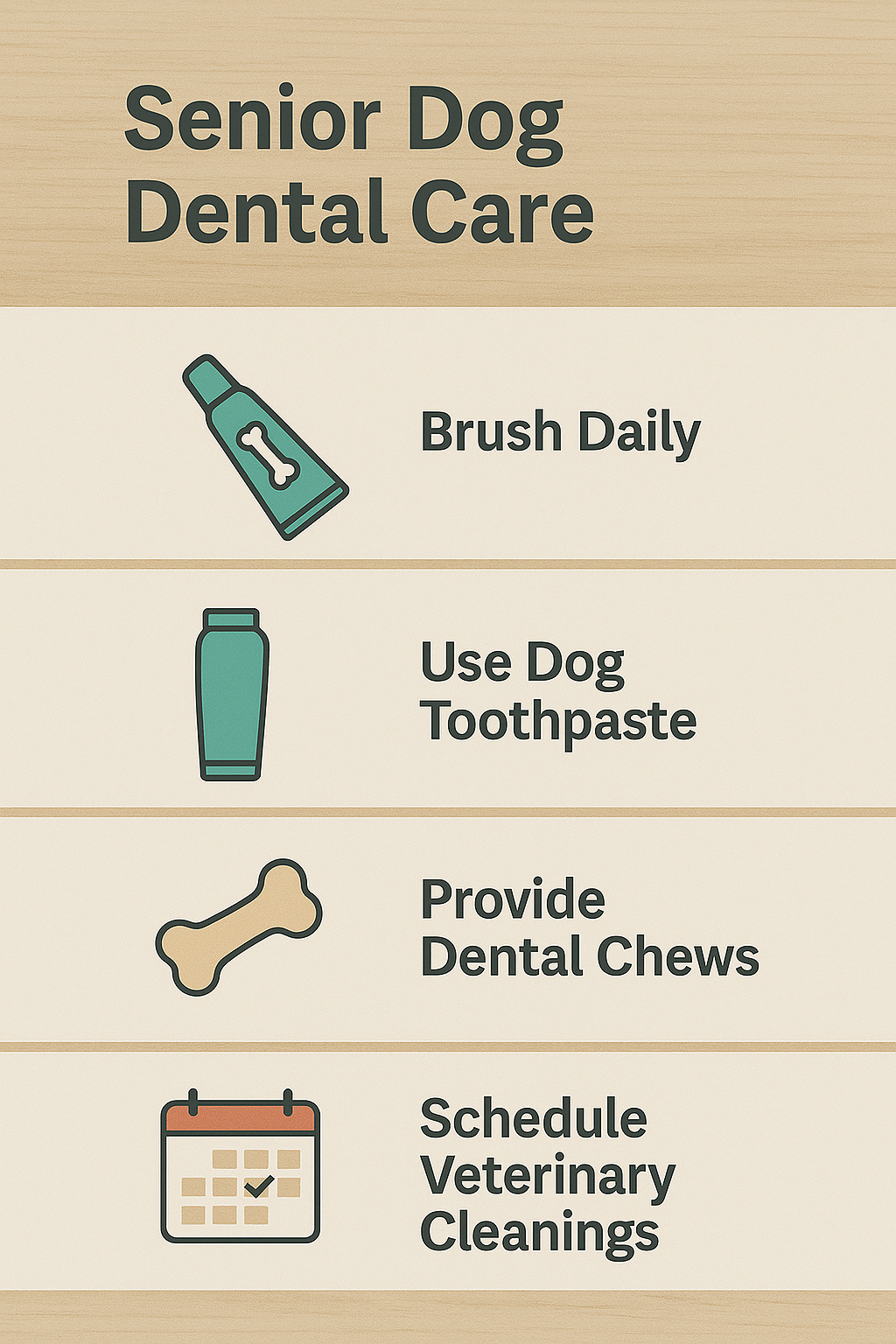
- Daily brushing is best
- 3–4 times per week still provides major benefits
- Yearly professional dental cleanings (sometimes every 6 months for senior or small-breed dogs)
- Combine brushing with VOHC-approved dental chews or wipes
If you’re wondering how often you should brush a dog’s teeth, this is the schedule most vets recommend. For a full plan, check out the Senior Dog Health Checklist.
For more detailed brushing recommendations, you can review the veterinary guidelines for dental care from the American Veterinary Medical Association.
Signs Your Senior Dog Has Dental Disease
Call your vet if you see any of the following:
- Bad breath that persists
- Visible tartar buildup
- Red, swollen, or bleeding gums
- Dropping food, refusing kibble
- Pawing at the mouth
- Excessive drooling
- Weight loss
- Behavior changes (irritability, whining near mealtimes)
These signs mean your dog likely needs professional dog dental cleaning before you resume brushing.
Alternatives to Brushing Your Senior Dog’s Teeth
If brushing is difficult, try:
1. Dental Wipes
Easier for dogs who dislike brushes.
2. Dog Dental Chews (VOHC-Approved)
Helps reduce plaque and tartar.
3. Water Additives or Dental Sprays
Good supplements, but not as effective as brushing.
4. Prescription Dental Diets
Certain kibble shapes help scrape plaque as your dog chews.
Use these alternatives as support—but not replacements—for brushing.
Read more warning signs in senior dog dental problems. If you rely on dental chews or wipes, choose VOHC-accepted dental products to ensure they have proven plaque- and tartar-control benefits.
Senior-Specific Tips for Better Results
- Brush at the same time daily to build routine
- Use softer tools if gums are sensitive
- Warm your dog’s joints before brushing (gentle massage)
- Support their head and neck to reduce strain
- Keep treats tiny and senior-friendly
- Stop immediately if you see pain, blood, or new sensitivity
Frequently Asked Questions
How do you brush a senior dog’s teeth if they hate it?
Start with desensitization: mouth handling only, then toothpaste on your finger, then gauze. Use lots of rewards and keep sessions short.
Can you clean a dog’s teeth without brushing?
You can improve oral health with dental wipes, water additives, and chews—but brushing remains the most effective method.
At what age should I start brushing a dog’s teeth?
As early as possible—but it’s never too late to begin with a senior dog.
What’s the best toothbrush for senior dogs?
Extra-soft dog toothbrushes, finger brushes, or even infant toothbrushes for older dogs with sensitive gums.