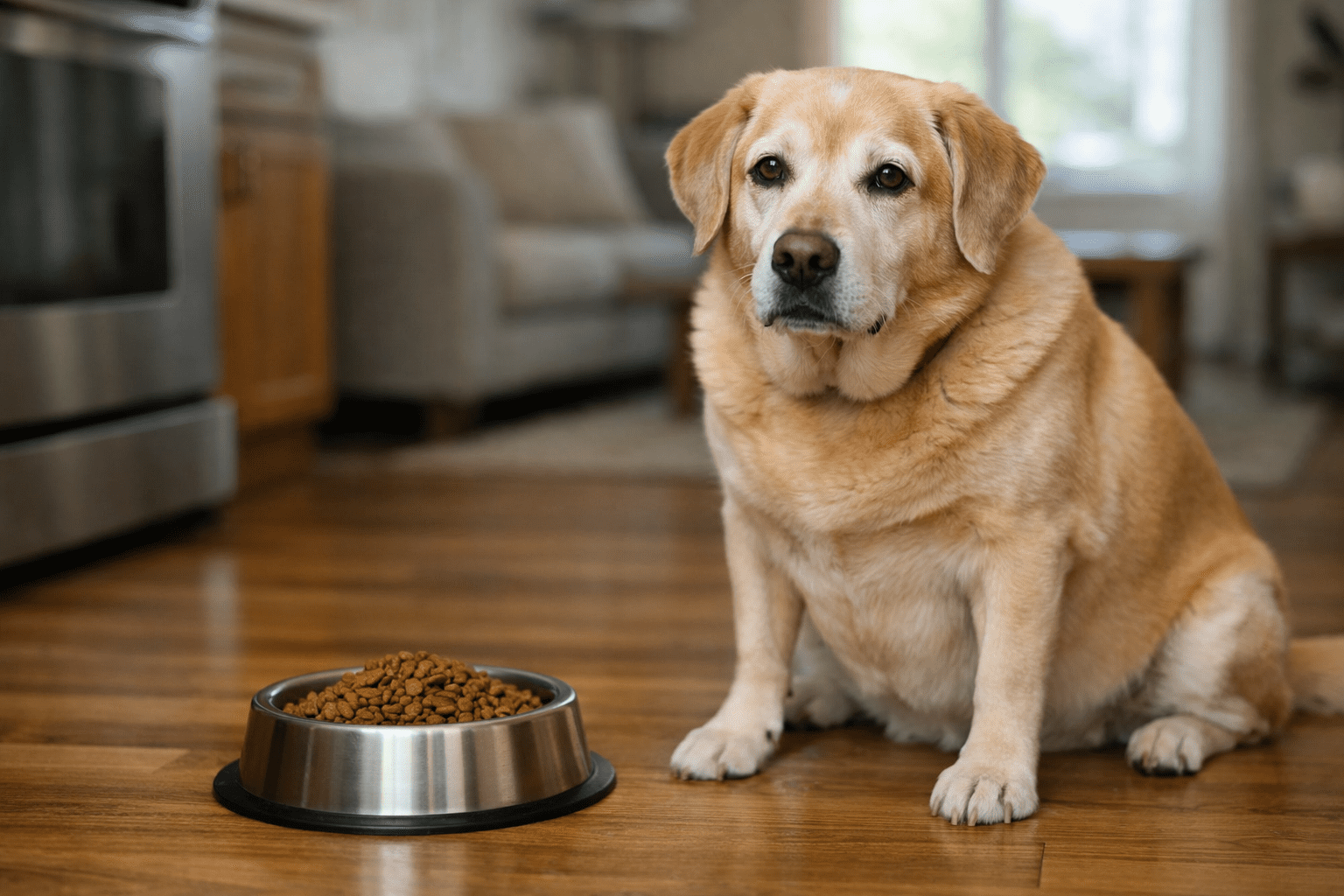
If you’re asking why your dog is gaining weight even though you’re feeding the same amount, you’re not alone. This is a very common—and frustrating—experience for dog owners, especially those caring for aging dogs. You haven’t suddenly become careless, and your dog isn’t “broken.” In most cases, the answer lies in small, gradual changes that add up over time.
Dogs can gain weight without eating more because their calorie needs change as they age, move less, or shift body composition. When intake stays the same but energy use drops, extra calories are stored as fat. The change is often subtle, which is why it catches attentive owners by surprise.
Below, we’ll walk through the most common hidden reasons this happens, with a focus on senior dogs—and what to do next.
The Short Answer: Needs Change, Portions Don’t
When a dog gains weight without an obvious increase in food, it usually means one (or more) of these has changed:
- Activity level has decreased
- Metabolism has slowed with age
- Treats or chews are adding calories quietly
- The food is more calorie-dense than before
- Muscle mass has declined
- Portions have crept up over time
None of these requires a dramatic shift to cause weight gain. Small differences sustained over months are enough.
1) Reduced Activity (Often Without You Noticing)
Many dogs move less as they get older—even if they still seem “normal.”
Common examples:
- Shorter walks
- Fewer bursts of play
- More rest between activities
- Avoiding stairs or jumping
A dog who burns fewer calories each day but eats the same portions will gradually gain weight. This is one of the most common senior dog weight gain causes, and it often happens before owners consciously register a change in routine.
2) Aging Metabolism Uses Fewer Calories
As dogs age, their metabolism slows. This is a normal biological process, not a problem to fix.
What changes:
- Fewer calories are needed to maintain body weight
- The same meal now represents a surplus
- Fat is gained more easily than muscle
This helps explain why a dog may be gaining weight without eating more—their body simply needs less than it used to.
3) Treats and Chews Add Up Quietly
Treats feel small. Calorie-wise, they often aren’t.
Daily extras like:
- Dental chews
- Training treats
- Table scraps
- “Just one more” snack
can push total calories well beyond daily needs if meals aren’t adjusted. This is a frequent reason owners later wonder whether they’re feeding their dog too much—even when meals haven’t changed.
If you’re unsure how to spot overfeeding early, this guide on how to tell if you’re feeding your dog too much can help you assess body condition before making changes.
4) The Food May Be More Calorie-Dense Than Before
Not all dog foods are equal by volume.
Two common scenarios:
- Switching brands or formulas without changing cup size
- Moving to a “premium” or higher-fat recipe
Calories per cup can vary widely. A dog can gain weight even though the bowl looks the same because each cup now delivers more energy.
5) Muscle Loss Lowers Daily Calorie Needs
As dogs age, they may lose muscle mass—even if the scale doesn’t change right away.
Why this matters:
- Muscle burns more calories than fat
- Less muscle = lower daily energy use
- Fat gain becomes easier at the same intake
This body composition shift helps explain a dog gaining weight suddenly after illness, injury, or a quieter phase of life.
6) Portion Creep Happens to Everyone
Portion creep is subtle and common.
Examples:
- Heaping cups instead of level ones
- A slightly larger scoop
- A refill that’s “just a little extra.”
Over time, these small increases can create a steady calorie surplus—without ever feeling like you changed anything.
Why Senior Dogs Are Especially Vulnerable
Senior dogs are more sensitive to all of the factors above at once:
- Slower metabolism
- Reduced activity
- Higher impact of small weight changes on joints
- Greater discomfort from excess weight
What might be harmless in a younger dog can meaningfully affect comfort and mobility in an older one.
What Not to Do First
When weight gain shows up, it’s tempting to react quickly. Try to avoid:
- Cutting food dramatically overnight
- Skipping meals
- Switching foods repeatedly
- Assuming weight gain is “just aging.”
Abrupt changes can create stress and don’t address the underlying cause.
A Smarter Next Step: Observe Before You Adjust
Before changing portions, take a week to observe:
- Daily activity level
- Treat frequency
- Exact portion measurement
- Changes in the waist, ribs, and belly tuck
Weight gain is usually gradual, and correcting it works best when changes are measured and calm, not rushed.
When to Check With Your Veterinarian
Consult your veterinarian if:
- Weight gain is rapid or unexplained
- Appetite changes suddenly
- Your dog seems lethargic or unwell
- There’s a history of endocrine or metabolic conditions
Occasionally, weight gain can be related to medical issues that need professional evaluation.
This Is Common—and Fixable
If your dog is gaining weight even though you’re feeding the same amount, it doesn’t mean you’ve done anything wrong. It usually means your dog’s needs have changed quietly over time.
By understanding the causes, watching for subtle signals, and making small, thoughtful adjustments, most dogs—especially seniors—can return to a healthier, more comfortable weight.
This article is for educational purposes only and does not replace professional veterinary advice.