
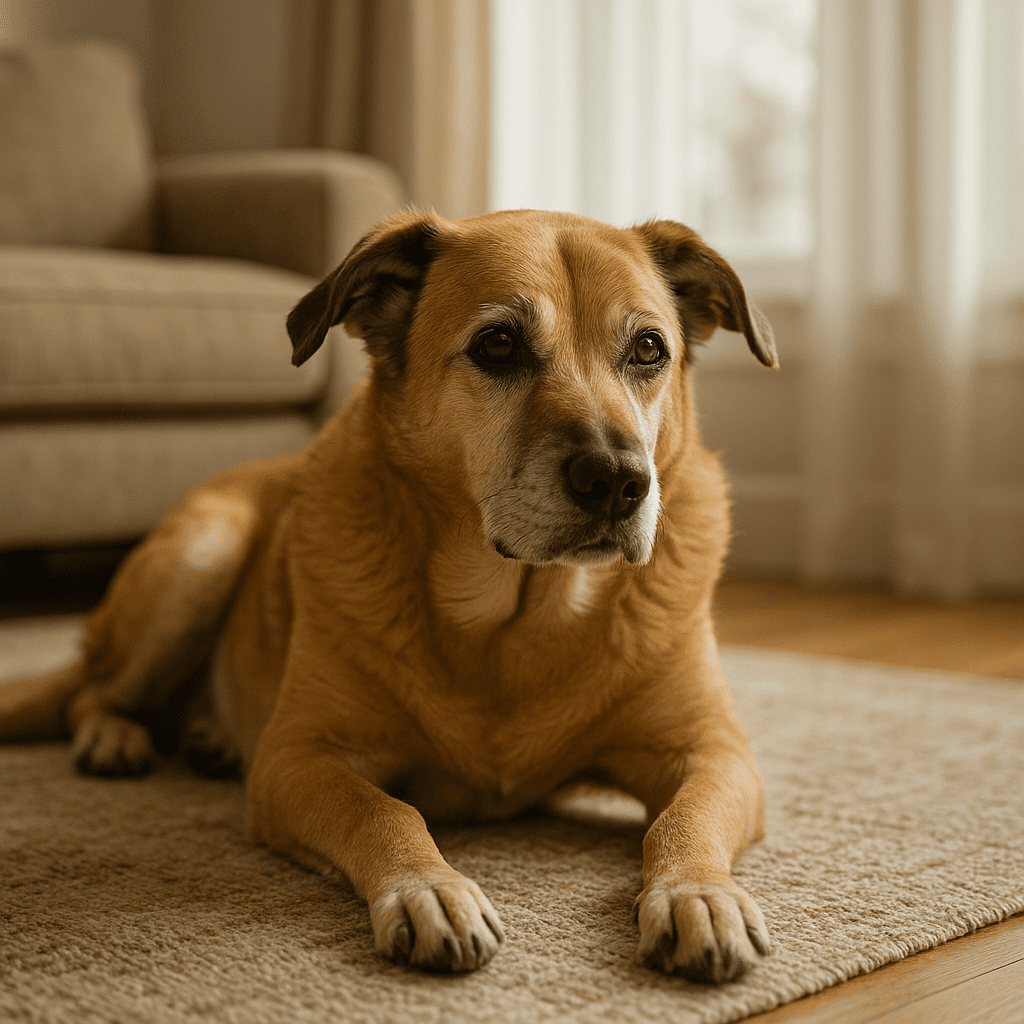
If your dog is slowing down, hesitating on stairs, or just doesn’t seem like themselves anymore, it’s natural to wonder whether it’s simply age or something more.
The hard truth is that senior dogs rarely show pain in obvious ways. Most don’t cry, limp dramatically, or act injured. Instead, discomfort tends to appear as small, gradual changes: stiffness after sleeping, shorter walks, restlessness at night, or subtle behavior shifts that are easy to dismiss as “normal aging.”
That’s why many owners don’t realize their dog is in pain until the quality of life is already affected.
This Senior Dog Pain Level Checker helps turn those small observations into a clearer picture. In just a couple of minutes, you’ll answer simple questions about your dog’s movement, behavior, appetite, and sleep — the same areas veterinarians evaluate when assessing pain in older dogs.
When you’re finished, you’ll get:
- A clear pain score
- An explanation of what that score means
- Next steps based on your results
- A printable summary you can bring to your vet
If you’ve been asking yourself, “Is my senior dog in pain?”, this tool is the fastest way to get clarity.
✔ Based on commonly recognized veterinary pain indicators
✔ Designed to support — not replace — veterinary care
✔ Includes a vet-friendly printable summary
Why Pain Is Often Missed in Senior Dogs
Pain in older dogs is frequently overlooked because dogs instinctively hide discomfort. In the wild, showing weakness is dangerous — and that instinct doesn’t disappear just because your dog lives on a couch.
Many owners assume reduced activity is simply normal aging. In reality, these changes are often early senior dog pain symptoms, especially those related to arthritis, joint degeneration, or spinal issues.
Stiffness after rest, reluctance to jump, or slowing down on walks are some of the most common signs of pain in senior dogs, even when there’s no obvious limp.
Many senior dogs express discomfort through subtle behavioral shifts, which are well-documented as behavioral changes associated with pain in dogs by veterinary professionals.
What This Senior Dog Pain Level Checker Does
This tool helps turn everyday observations into something actionable.
The Senior Dog Pain Level Checker evaluates:
- Mobility and movement
- Behavior and comfort
- Appetite and interest in food
- Sleep quality and restlessness
It then provides:
- A pain score
- A pain category (Low → Urgent)
- Clear guidance on what to do next
- A vet-friendly summary you can print or save
This tool is informational only. It does not diagnose medical conditions, but it can help you recognize potential signs of pain in older dogs sooner.
Common Signs of Pain in Older Dogs
Pain in senior dogs often looks different than pain in younger dogs. It’s usually quieter — and easier to miss.
Mobility & Movement Changes
- Limping or favoring a leg
- Stiffness after sleeping or resting
- Trouble standing up or lying down
- Hesitation with stairs, jumping, or getting into the car
- Shorter walks or stopping earlier than usual
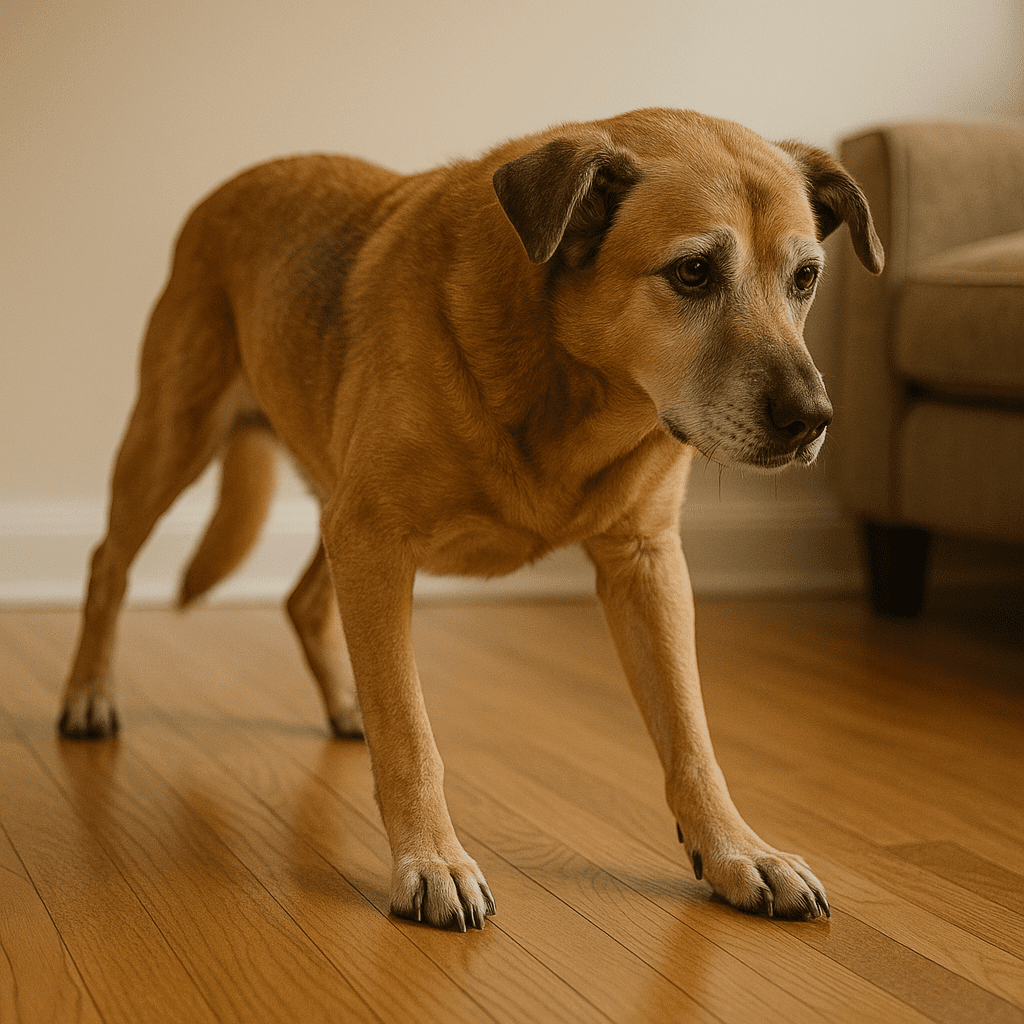
These are some of the most common senior dog arthritis signs and a major source of ongoing discomfort. Stiffness after rest, difficulty rising, and hesitation on stairs are widely recognized as common signs of arthritis in senior dogs.
Pain in older dogs isn’t always caused by arthritis alone—some symptoms overlap with the signs of cancer in senior dogs, especially when discomfort appears suddenly or worsens quickly.
Behavioral & Comfort Changes
- Less enthusiasm for walks or play
- Increased irritability or sensitivity to touch
- Panting or restlessness when not hot or exercised
- Avoiding certain positions or surfaces
Behavior changes are often among the earliest signs of pain in older dogs, especially when they appear gradually.
Subtle Signs Many Owners Miss
- Changes in sleep patterns or frequent repositioning
- Reduced appetite or interest in treats
- Withdrawing from family interaction
- Needing encouragement to move
These quieter signals are exactly why using a senior dog pain checklist can be more reliable than focusing on a single symptom.
Take the Senior Dog Pain Level Checker

Takes about 2 minutes. Includes a printable summary for your vet.
⬇️ Start here:
Senior Dog Pain Level Checker
Answer these quick questions to estimate whether your senior dog may be showing pain signals. This is not a diagnosis.
⚠️ Important Disclaimer
This Senior Dog Pain Level Checker is designed for informational and educational purposes only. It does not diagnose medical conditions and is not a substitute for professional veterinary care.
Pain in dogs can have many causes, including arthritis, injury, neurological issues, dental disease, or internal illness. If your dog shows sudden pain, difficulty standing, collapse, severe limping, vocalizing, loss of appetite, or any rapid behavior change, contact your veterinarian or an emergency clinic immediately.
Always consult a licensed veterinarian before starting, stopping, or changing any treatment, medication, or supplement for your dog.
How This Pain Checker Was Created
This pain checker is based on widely recognized veterinary pain indicators commonly used when assessing comfort and mobility in senior dogs. The questions focus on areas veterinarians routinely evaluate, including:
- Changes in movement and gait
- Difficulty rising, lying down, or climbing
- Behavioral shifts that may signal discomfort
- Appetite and sleep disruptions
- Sensitivity to touch or handling
The scoring system is designed to help dog owners identify patterns, not diagnose conditions. Its purpose is to support earlier conversations with a veterinarian by turning everyday observations into a clearer picture of your dog’s comfort level.
What to Do After You Get Your Score
Your results help guide what action makes sense right now.
Low Pain Signals (0–6)
- Continue monitoring mobility and behavior
- Maintain gentle, consistent exercise
- Reassess if symptoms increase or change
Possible Moderate Pain (7–14)
- Schedule a veterinary visit in the near future
- Limit jumping and repetitive strain
- Track when pain seems worse (morning, after walks, cold weather)
At this stage, many owners explore joint supplements for senior dogs or environmental changes to reduce joint stress.
Likely Significant Pain (15–22)
- Book a vet appointment within days
- Discuss pain management options
- Reduce strenuous activity
Supportive changes like orthopedic dog beds for senior dogs can significantly improve daily comfort.
High Concern (23–30)
- Contact your veterinarian or an emergency clinic immediately
- Restrict movement to prevent injury
- Bring your pain checker summary and any videos of symptoms
Prompt action is critical when pain appears severe or sudden.
Helping Your Senior Dog Stay Comfortable as They Age

If your results suggest ongoing pain, these resources can help you take the next step:
- Learn more about senior dog arthritis signs and treatment options
- Review the best joint supplements for senior dogs
- Explore orthopedic dog beds designed for older dogs
- Find the right dog ramps and stairs for senior dogs to reduce joint strain
- Use our Dog Age in Human Years Calculator for accurate age.
Early awareness leads to earlier support — and often a much better quality of life.
About the Author
Gary Bennett is the founder of SeniorDogWellbeing.com, an educational resource dedicated to helping dog owners recognize age-related changes and support comfort, mobility, and quality of life in senior dogs.
Gary focuses on translating complex veterinary and canine-health information into clear, practical guidance that everyday dog owners can actually use. His work emphasizes early awareness of pain signals, responsible decision-making, and partnering with veterinarians to improve outcomes for aging dogs.
Content on SeniorDogWellbeing.com is developed through:
- Ongoing research into senior dog health, mobility, and behavior
- Review of veterinary guidance and established best practices
- Real-world experience caring for and observing senior dogs
Gary’s goal is not to replace veterinary care, but to help owners ask better questions, notice subtle changes sooner, and advocate more effectively for their dogs as they age.
Content on this site is reviewed regularly and updated to reflect current understanding of senior dog pain, arthritis, and mobility concerns.
Last updated: 12/14/25
Created by SeniorDogWellbeing.com to help dog owners recognize pain early and support comfort, mobility, and wellbeing in senior dogs.