As our dogs grow older, their needs change — and so do the health challenges they face. Just like people, senior dogs are more prone to certain conditions that can impact comfort, mobility, and overall wellbeing. Recognizing these issues early and working with your veterinarian can make a world of difference in helping your dog thrive in their golden years.
In this guide, we’ll cover the most common senior dog health issues you should know about, how to spot early signs, and what steps you can take to support your dog’s long-term health. For a broader overview of aging-related care, see our Senior Dog Health Guide.
Why Senior Dogs Face Different Health Risks
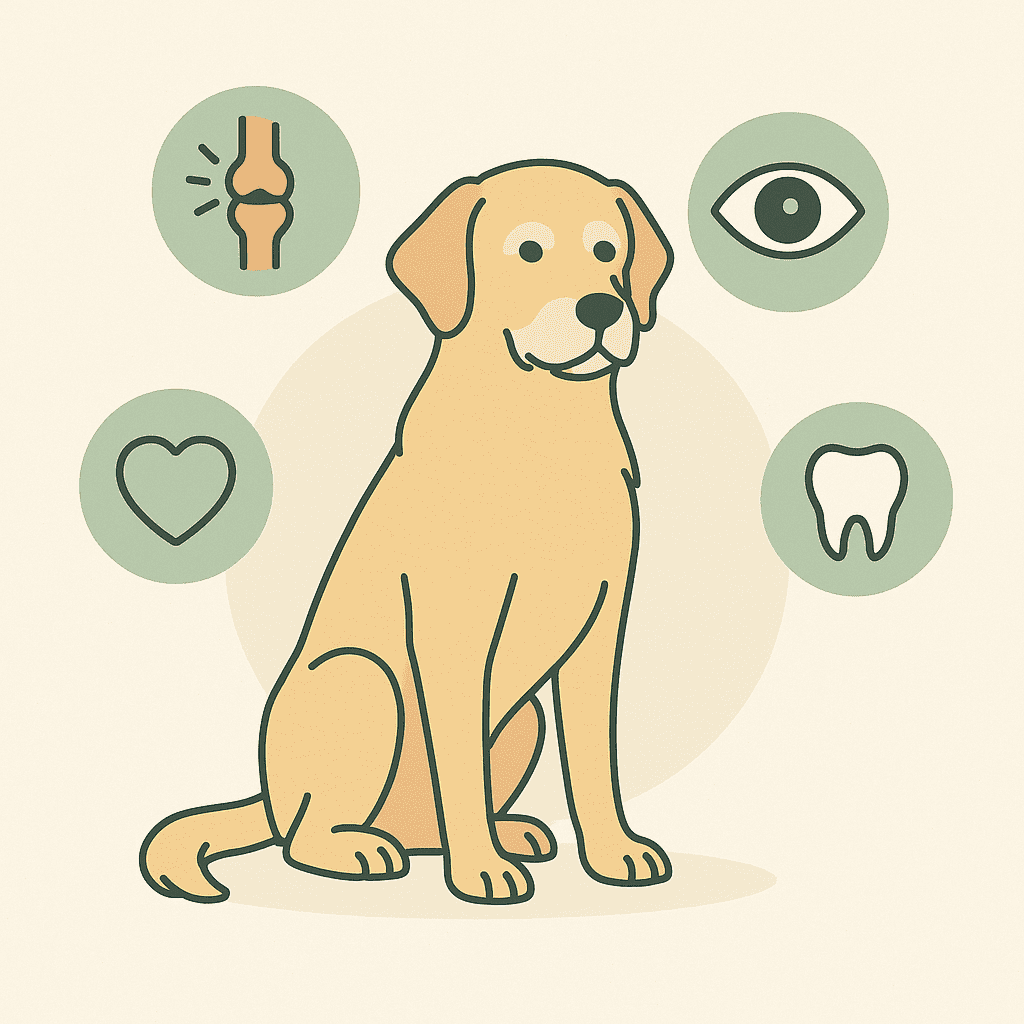
Aging is a natural process, but it brings physical changes that can affect nearly every part of the body. Joints may stiffen, organ function slows, the immune system weakens, and the senses begin to dull. “While this may sound discouraging, many age-related conditions can be managed — or even prevented — with proper care. Understanding exactly when a dog is considered senior helps you prepare for these changes at the right time.”
The first step is being informed about the most common issues your senior dog may encounter.
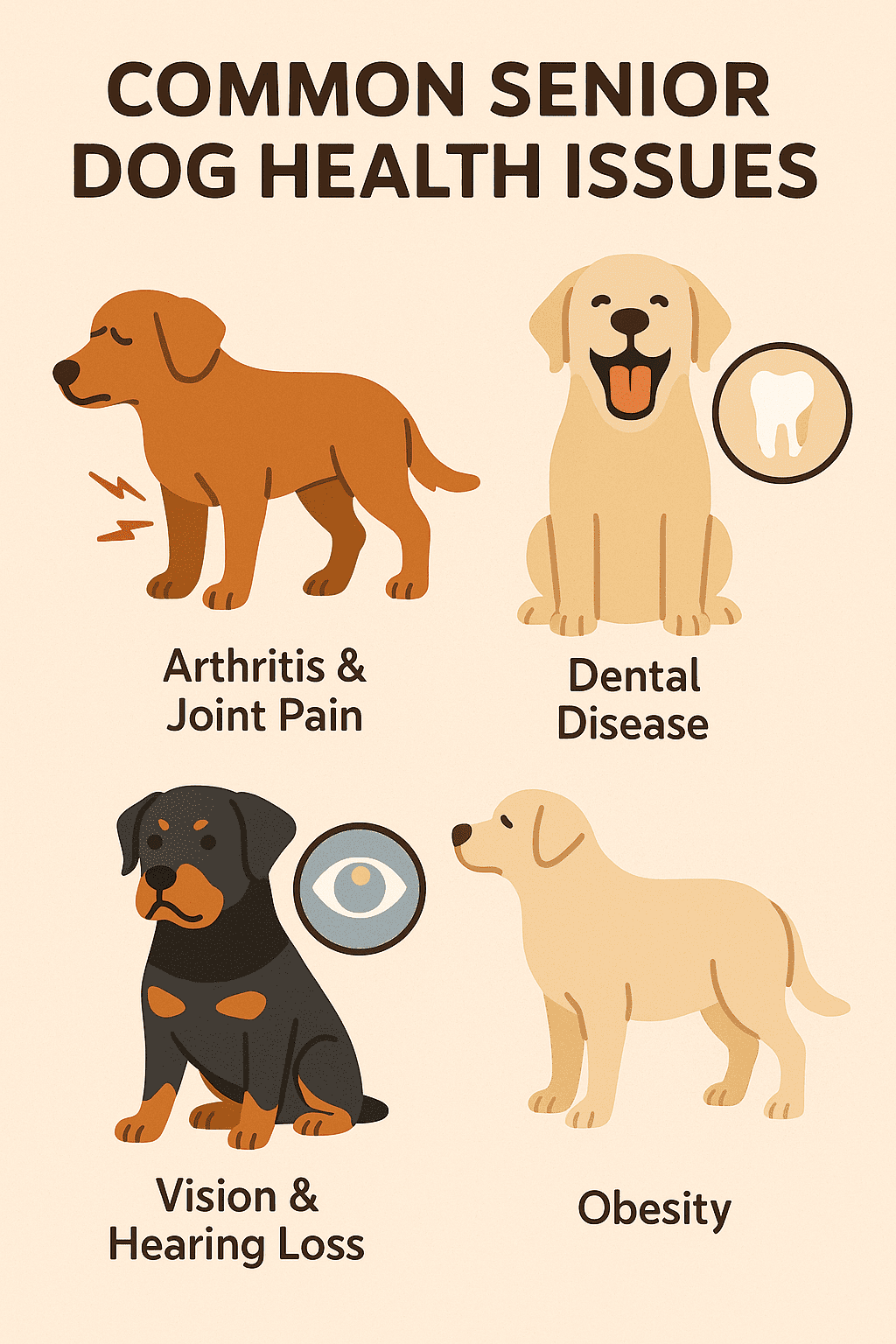
1. Arthritis and Joint Pain
What it is: Arthritis is one of the most common conditions affecting senior dogs. It occurs when cartilage wears down, causing inflammation and pain in the joints.
Signs to watch for:
- Limping or stiffness, especially after rest
- Reluctance to climb stairs or jump into the car
- Slower walking pace or shorter walks
How to help:
Work with your vet to explore pain management options, weight control, joint supplements, and lifestyle adjustments like ramps or orthopedic bedding. You can also explore gentle exercise routines to maintain mobility — see our Exercise & Lifestyle tips.
Monitoring and addressing pain in senior dogs early can significantly improve comfort, mobility, and overall quality of life.
2. Dental Disease
What it is: By age three, most dogs already have some form of dental disease, and it worsens as they age. Senior dogs are especially at risk of painful infections, tooth loss, and systemic illness caused by bacteria entering the bloodstream.
Signs to watch for:
- Bad breath
- Drooling or pawing at the mouth
- Refusal to eat hard food
- Red, swollen gums
How to help:
Regular professional cleanings and at-home brushing are essential. Dental chews and vet-approved rinses can also reduce plaque. Don’t dismiss oral pain as ‘just aging’ — dental health directly affects overall wellbeing. Our Senior Dog Health Checklist includes dental reminders you can track at home. Also see our Best Dog Toothbrushes for Senior Dogs (Buyer’s Guide)
3. Vision and Hearing Loss
What it is: Cloudy eyes, cataracts, or degeneration of the retina can reduce vision, while age-related hearing loss is also common.
Signs to watch for:
- Bumping into objects
- Startling easily when approached
- Ignoring commands they once followed
How to help:
Keep home layouts consistent, add night lights, and use hand signals or gentle touches as communication. Dogs adapt surprisingly well when given support.
4. Cancer
What it is: Unfortunately, cancer is more prevalent in senior dogs, accounting for nearly half of deaths in dogs over age 10. Tumors may be benign or malignant, and early detection is critical.
Signs to watch for:
- Lumps or bumps that don’t go away
- Sudden weight loss
- Loss of appetite or energy
- Persistent coughing or difficulty breathing
How to help:
Perform monthly at-home checks for lumps and bring your dog to the vet for regular exams. Learn more about identifying discomfort in our post on signs of pain in senior dogs.
5. Kidney and Liver Disease
What it is: As organs age, they may lose efficiency. Kidney disease and liver disease are especially common in older dogs and can lead to systemic health issues.
Signs to watch for:
- Increased thirst and urination
- Vomiting or loss of appetite
- Weight loss
- Lethargy
How to help:
Bloodwork and urine tests during annual vet visits (or biannual for seniors) are essential. Special diets and medications can help slow disease progression.
6. Senior Dog Health Issues & Cognitive Decline (Canine Dementia)
What it is: Dogs can suffer from cognitive dysfunction syndrome (CDS), similar to Alzheimer’s in humans.
Signs to watch for:
- Disorientation (getting stuck in corners or lost in familiar places)
- Changes in sleep patterns
- Increased anxiety or confusion
- Forgetting learned commands
How to help:
Mental stimulation, consistent routines, supplements, and medication from your vet can help manage symptoms and improve quality of life.
7. Obesity
What it is: Senior dog health issues often become less active, which can lead to weight gain. Obesity increases the risk of arthritis, diabetes, and heart disease.
Signs to watch for:
- Difficulty feeling ribs under fat
- Tiring quickly on walks
- Reluctance to move or exercise
How to help:
Feed a balanced senior dog diet with controlled portions, reduce treats, and encourage gentle daily activity. See our Senior Dog Nutrition tips and Best Food For Senior Dogs Guide for more guidance.
Preventive Care Is Key
Regular veterinary checkups are the most effective way to catch these health issues early. The American Veterinary Medical Association recommends biannual exams for senior dogs, along with bloodwork and screenings for common diseases.
At home, you can track changes in behavior, appetite, and energy using our free Senior Dog Health Checklist.
Act Early
Knowing the common senior dog health issues gives you the power to act early and improve your dog’s quality of life. With proactive care, regular vet visits, and a little extra patience, your senior dog can stay comfortable, happy, and by your side for many more years.